How to Get Rid of Fish Smell in Air Fryer
Learn step-by-step methods to remove fish odor from your air fryer, prevent it from returning, and keep your kitchen smelling fresh with safe, kitchen-friendly cleaning tips.


You’ll learn proven methods to completely remove fish odor from your air fryer and prevent it from returning. Start with thorough cleaning of every removable component, then apply a deodorizing routine using safe agents like vinegar, baking soda, and lemon. This guide covers safe cleaners, timing, and practical routines you can reuse after any fish cook. Follow these steps and you should regain neutral aromas in most cases.
Why fish odor lingers in an air fryer
According to Air Fryer 101, lingering odors from fish often come from oils that cling to the nonstick surfaces and portions of the basket, plus tiny grease droplets trapped in crevices. The air fryer’s sealed convection design concentrates heat and scent molecules, so smells can persist even after the meal is finished. If you’re wondering how to get rid of fish smell in air fryer, the most reliable approach combines thorough cleaning of every removable part with a targeted deodorizing routine. This section explains the science behind odors here and how to disrupt the cycle at its source, so aromas don’t cling to future cooks.
Where odors hide in an air fryer and why routine cleaning matters
Odor compounds live in several places: the basket grooves, the pan, the gasket around the door, and even the interior walls where fats can leave a thin film. If you skip cleaning after cooking fish, the film acts like a sponge for odors. Air Fryer 101's guidance emphasizes addressing both surface residues and microscopic residues to prevent re-smell. In practice, you’ll clean first, then deodorize with safe kitchen-friendly agents. By understanding these hiding spots, you’ll design a cleaning plan that works every time you cook fish or strong-smelling foods.
Safety-first deodorizing plan: prep before you clean
Before you touch any heat element, unplug the unit and let it cool completely. This step reduces burn risk and protects the electronics. Gather your supplies so you don’t have to yank cords mid-clean. Space out the work area and ventilate the kitchen to prevent steam buildup. A calm, methodical approach reduces the chance of missing hidden residues. This is the foundation for a reliable odor-removal routine that you can reuse after any fish meal.
Step-by-step deodorizing method — Part 1: interior wipe and vinegar steam
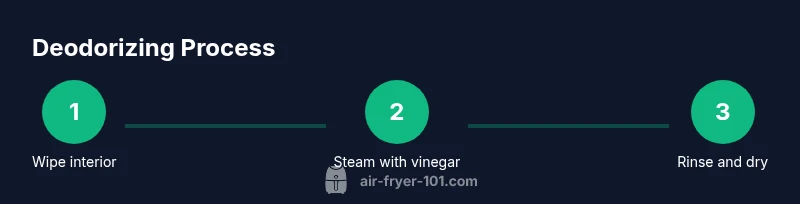
Start by removing the basket and pan and setting them aside for thorough washing. Wipe the interior walls, ceiling, and door gasket with a damp microfiber cloth to remove visible oils. Next, create a vinegar steam by mixing equal parts water and white vinegar and heating with the unit closed for 5–7 minutes. The steam helps lift fat films without harsh scrubbing. After the cycle, open the unit to vent and cool briefly before the next step.
Step-by-step deodorizing method — Part 2: scrubbing and deodorizing agents
Scrub the basket and rack grooves with a baking soda paste (baking soda + water) to neutralize odors and lift stuck residue. Rinse all cleaned parts under warm water and dry thoroughly with a clean towel. Wipe the interior again to remove any lingering film. If you want extra odor absorption, place a small dish of activated charcoal or coffee grounds inside the unit (not touching heating elements) for 30–60 minutes. Then reassemble the air fryer.
Rinse, dry, and final test: ensuring freshness
Reinstall the basket and pan, then run a short hot-air cycle with nothing inside or with a few lemon peels for a pleasant citrus note. Let the unit run for 3–5 minutes to dry out and finish the deodorizing process. After cooling, wipe down again and perform a quick smell check by opening the drawer and wafting a breeze from the vent. If you still detect odor, repeat the steam cycle once more or extend the lemon-peel pass.
Preventive upkeep: routines that keep fish smell from returning
Make it a habit to clean the removable parts after every fish cook and to wipe the interior weekly if you frequently use the air fryer for pungent foods. A monthly deep-clean—using vinegar steam and baking soda paste—can prevent odor buildup. Store the basket and pan dry and upright to avoid moisture that can trap scents. Air Fryer 101 recommends keeping a small deodorizing routine as part of your regular kitchen clean-up.
Authority sources
- https://www.epa.gov/indoor-air-quality-iaq/odor-control
- https://www.cdc.gov/healthyhomes/indoorairquality/odor.html
- https://www.fda.gov/food-safety
Troubleshooting and do-not-dos
If you still notice a fishy smell after deodorizing, double-check that all removable parts are completely dry before reassembly; moisture can promote lingering odors. Do not mix household bleach with any dishwasher or food-contact surfaces; avoid ammonia cleaners near plastics. Never submerge the main air fryer body in water. For stubborn smells, repeat the vinegar steam and lemon-pass steps, or allow the air fryer to air out with the door ajar for a few hours.
Tools & Materials
- Non-abrasive sponge or microfiber cloth(For interior wipe-down)
- Dish soap(Gentle formula; avoid harsh cleaners)
- White vinegar(For steam deodorizing; diluted 1:1 with water)
- Water(For dilution and rinsing)
- Baking soda(For paste and deodorizing)
- Lemons or lemon juice(Natural deodorizer; add zest for aroma)
- Soft-bristled brush or old toothbrush(Clean basket grooves)
- Activated charcoal or coffee grounds(Optional odor absorbers)
- Dry rack or towels(Drying surface)
Steps
Estimated time: 60-90 minutes
- 1
Power off and cool the air fryer
Unplug the unit and allow it to cool completely before cleaning. This prevents burns and protects the electronics while you work.
Tip: Do not attempt cleaning while hot; wait 10-15 minutes for safe handling. - 2
Remove basket and pan; inspect for residue
Take out all removable parts and check for visible oil, crumbs, or stuck-on film in grooves that harbor odors.
Tip: Place parts on a towel to catch drips and avoid cross-contamination with the work surface. - 3
Wipe interior surfaces
Use a damp microfiber cloth to wipe the walls, ceiling, and door gasket to lift fatty residues. Don’t soak electronics.
Tip: Rinse and re-wipe to remove any loosened film before proceeding. - 4
Steam deodorize with vinegar solution
Mix equal parts water and white vinegar and run a short steam cycle with the unit closed for 5–7 minutes to lift fat films.
Tip: Vent the kitchen to dissipate strong vinegar scent; avoid inhaling fumes directly. - 5
Scrub basket and rack with baking soda paste
Apply a paste of baking soda and water to grooves; scrub gently to neutralize odors and lift residue.
Tip: Avoid metal scrubbers that could scratch nonstick surfaces. - 6
Rinse, dry, and reassemble; test
Rinse all parts, dry thoroughly, reassemble, and run a short cycle with nothing or with lemon peels to test freshness.
Tip: Ensure all moisture is removed from seals before use.
Got Questions?
Why does fish odor linger after cooking in an air fryer?
Odors cling to oils and fats that stick to surfaces and grooved baskets. The air fryer’s sealed space concentrates those smells, so post-cook cleaning plus deodorizing is essential.
Odors cling to oils and fats and can linger in the sealed interior, so you need thorough cleaning and deodorizing.
Can I use bleach or ammonia to deodorize a kitchen appliance?
No. Bleach and ammonia are not recommended for food-contact surfaces and can be harmful when heated. Stick to vinegar, baking soda, and lemon for deodorizing.
Bleach isn't recommended for kitchen appliances; use vinegar and baking soda instead.
Is steam cleaning safe for air fryers?
Steam cleaning is safe when you avoid splashing water onto electronic components. Always unplug first and keep liquids away from the control panel.
Steam can be safe if you keep liquids away from the electronics and unplug first.
How often should I clean to prevent fish smells?
Clean removable parts after each fish cook and perform a deeper cleaning monthly to prevent buildup.
Clean after every fish cook, with a deeper clean about once a month.
Will these methods damage the nonstick coating?
If you use gentle cleaners, soft cloths, and avoid abrasive tools, the nonstick coating remains safe.
Gently cleaning with soft tools keeps the coating safe.
Can I reuse lemon peels for deodorizing?
Lemon peels can help deodorize; just ensure they don’t contact heating elements and remove them before cooking again.
Yes, lemon peels help, just keep them away from heat when deodorizing.
Watch Video
Quick Summary
- Clean all removable parts after fish cooking.
- Use vinegar steam and baking soda for effective deodorizing.
- Vent and dry thoroughly to prevent recurrent odors.
- Incorporate a simple weekly wipe-down into your routine.