How to Clean Air Fryer While It’s On: Safe Steps for Maintenance
A comprehensive, safety-first guide on handling exterior wipes and maintenance for your air fryer. Learn when to unplug, how to clean after cooling, and best practices to keep nonstick surfaces in top condition.


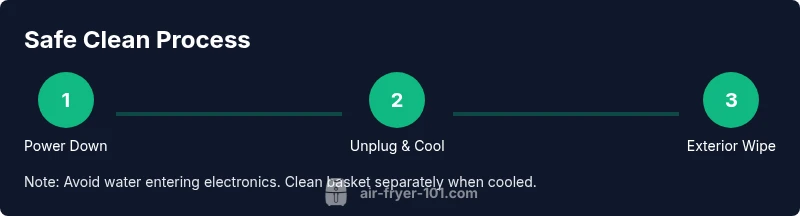
Generally, you should not clean an air fryer while it’s on. For safety, unplug the unit and let it cool completely before wiping the exterior and basket. If you need a quick, safe wipe, use a damp cloth on the exterior and a dry brush for crevices after it has cooled.
Safety-first: cleaning an air fryer with power on is unsafe
Cleaning an air fryer while it is powered on presents real risks. The heated interior, exposed heating element, and electrical components can cause burns, electric shock, or moisture intrusion that damages sensitive parts. According to Air Fryer 101, the safest approach is to power down and allow the unit to cool completely before any cleaning occurs. This not only protects you but also preserves the nonstick surface and wiring. In this section we’ll lay out why power-down matters and provide a calm, methodical plan that minimizes mess while prioritizing safety.
When you must act quickly: safe exterior wipe after cooling
If you notice splatters on the exterior during cooking, resist the urge to wipe while the unit is hot. Instead, wait until it has cooled, then unplug and use a damp microfiber cloth to wipe the front panel, knobs, and outside walls. A dry towel can remove stubborn dust or cooking residues. The goal is to prevent moisture from seeping into control electronics and to avoid scratching the coating on the housing. If you absolutely must address a hot surface, do not spray liquids directly; instead, let it cool fully and then wipe.
Step-by-step safe approach (overall plan)
The following steps outline a conservative, safety-oriented plan that keeps you in control while avoiding risky practices. You will unplug first, remove removable parts for separate cleaning, wipe down accessible surfaces, and then reassemble after everything is dry. Remember: the basket and tray often carry most of the grime, so give them extra attention once detached. This approach aligns with best practices recommended by the Air Fryer 101 team and is designed to minimize downtime without compromising safety.
Exterior cleaning: wipe down the exterior and control panel
Begin with a damp microfiber cloth and mild dish soap if needed. Wipe the body, door, and control panel gently to remove grease, dust, and fingerprints. Avoid soaking or spraying water directly onto the seams or into any openings. If you notice sticky residues, repeat with a clean damp cloth and finish with a dry microfiber to prevent streaks. This exterior care helps keep the appliance looking new and reduces cross-contamination in your kitchen.
Basket, tray, and interior surfaces: what to clean and how
Remove the basket and tray and wash them with warm, soapy water. A soft-bristled brush can reach the grooves and lattice of the basket, while a sponge can tackle the tray’s flat surfaces. For interior surfaces that are reachable, wipe with a damp cloth after unplugging and cooling. Never submerge the main unit, and avoid soaking internal components. Dry all parts thoroughly before reassembling to prevent moisture from cooking onto food later.
Cleaning stubborn grime without soaking: safe methods
For tougher spots, apply a small amount of mild soap to a damp cloth and rub gently. Use a dry brush or cotton swab to loosen grime from crevices without forcing moisture into the electronics. If residue remains, you can rinse the cloth and gently wipe again, ensuring no water drips into vents or the base. Avoid harsh chemicals, abrasive pads, or metal utensils that could scratch coatings. These safe methods balance effectiveness with preservation of the nonstick finish.
Drying, reassembly, and safety check
After cleaning, set all detachable parts on a towel and air-dry completely before reassembly. Once dry, slide the basket and tray back into place and perform a brief, empty test run at a low setting to confirm proper operation and ensure no moisture remains in hidden crevices. This final step confirms the appliance is safe for its next use and reduces the risk of odor or steam issues during subsequent cooking.
Common mistakes and best practices
Common missteps include attempting to clean a hot unit, using excessive water, or neglecting to dry parts thoroughly. The safest practice is to unplug, wait for cooling, and clean with damp cloths followed by a thorough drying. Always avoid soaking, direct spray into vents, or using strong solvents. Regular light cleaning after each use keeps buildup from forming and extends the life of your air fryer.
Maintenance routine to keep it clean
Create a simple maintenance schedule that fits your cooking frequency. Wipe the exterior and control panel after each use, wash the basket and tray weekly or as needed, and perform a deeper clean monthly if you use oil-heavy ingredients. Keeping a consistent routine helps prevent stubborn grime and preserves nonstick surfaces. Air Fryer 101 analysis shows that small, frequent cleanings are more effective than rare, heavy scrubs.
Tools & Materials
- Mild dish soap(Dilute in warm water for washing baskets and trays)
- Microfiber cloth(For exterior surfaces and basket surfaces to avoid fibers shedding)
- Soft-bristled brush(Reach crevices in basket and rack without scratching)
- Non-abrasive sponge(Optional for stubborn grime on flat surfaces)
- Warm water(For washing and rinsing; avoid soaking electronics)
- Cotton swabs or toothpicks(Detail cleaning for hard-to-reach corners)
- Dry towels(Pat dry parts after cleaning to prevent moisture)
- Gloves (optional)(Protect hands from cleaning agents)
Steps
Estimated time: 60-90 minutes
- 1
Power down and unplug
Ensure the unit is completely unplugged and cooled before any handling. This prevents electric shock and protects the nonstick finish.
Tip: Keep hands dry and away from the power cord during cleanup. - 2
Remove basket and tray
Gently lift out the removable parts and place them on a soft towel. These parts are the main sites of grease and should be washed separately.
Tip: Handle the basket with care to avoid bending the nonstick coating. - 3
Wipe exterior surfaces
Using a damp microfiber cloth with a small amount of mild soap, wipe the exterior, door, and control panel. Do not spray water directly onto the unit.
Tip: Dry immediately after wiping to prevent moisture seeping into seams. - 4
Clean basket and rack
Wash basket and rack with warm soapy water. Use a soft brush for grooves and rinse thoroughly.
Tip: If residue resists, let items soak briefly, then scrub gently. - 5
Clean interior reachable areas
Wipe interior surfaces that are reachable with a damp cloth after cooling. Avoid soaking the interior and never spray liquids directly inside.
Tip: Use cotton swabs for tight corners to avoid leaving moisture behind. - 6
Dry and reassemble
Dry all parts completely with a towel and air-dry if needed before reassembling. Ensure everything is dry to prevent steam or odors on future cook cycles.
Tip: Inspect seals and gaskets for wear during reassembly. - 7
Test run after cleaning
Plug the unit back in and run a brief, empty cycle to confirm proper operation and ensure no residual moisture remains.
Tip: Watch for unusual smells or smoke; discontinue if detected. - 8
Regular maintenance
Set a reminder to perform routine cleaning after frequent use, especially after cooking oily or sticky foods.
Tip: Maintain a simple schedule to prevent heavy buildup over time. - 9
Store and protect
Store components clean and dry, keeping the unit covered to prevent dust accumulation.
Tip: Avoid placing heavy items on top of the unit; ensure proper ventilation.
Got Questions?
Can I clean an air fryer while it’s on?
No. Cleaning should be done after unplugging and cooling to avoid electric shock and damage to the unit. Quick exterior wipes can be done after cooling, but the interior requires disassembly only when cooled.
No. Always unplug and let it cool before cleaning, and only wipe exterior surfaces after cooling.
Is it safe to use vinegar or lemon on the interior surfaces?
Diluted mild vinegar can be used sparingly on exterior surfaces, but avoid strong acids on nonstick coatings. Rinse well and dry. Lemon should be avoided in high concentrations near coatings; instead, use mild soap and water.
Vinegar can be used sparingly if diluted, but avoid lemon near coatings. Rinse and dry afterward.
How often should I clean my air fryer?
Clean the exterior after each use and wash the basket and tray weekly or as needed. Do a deeper cleaning monthly if you cook oily or sticky foods regularly.
Clean after each use and do a deeper clean monthly if you cook oily foods.
Can the basket be put in the dishwasher?
Many baskets are dishwasher safe—check your manual. If in doubt, wash by hand with warm, soapy water and dry completely before reusing.
Check the manual, but many baskets are dishwasher safe on the top rack; otherwise wash by hand.
What should I do about stubborn interior residue?
Use a non-abrasive brush and a damp cloth to loosen grime. Avoid soaking or using harsh chemicals that could damage coatings. Rinse and dry thoroughly.
Use a soft brush and damp cloth for stubborn grime, then rinse and dry well.
Are harsh cleaners safe to use on nonstick coatings?
No. Avoid strong solvents or degreasers that can degrade nonstick coatings. Stick to mild soap and water, with gentle scrubbing as needed.
Avoid harsh cleaners; stick to mild soap and water and soften grime with a gentle brush.
Watch Video
Quick Summary
- Power down and cool before cleaning.
- Clean exterior and basket separately for best results.
- Dry all parts thoroughly before reassembling.
- Use mild soap and non-abrasive tools to protect coatings.
- Establish a regular maintenance routine for longevity.