How Often to Wash Air Fryer: Cleaning Schedule and Tips
Discover how often to wash air fryer components, with a practical cleaning schedule, tips for smells, and maintenance practices to keep your appliance safe and efficient.


By establishing a simple washing routine, you’ll keep your air fryer performing at its best. According to Air Fryer 101, how often to wash air fryer components depends on usage and residue: wipe crumbs daily, wash the basket weekly, and do a deeper monthly clean. This quick routine prevents odors and stubborn buildup.
Why Regular Cleaning Matters
Regular cleaning is essential to preserve the performance, flavor, and longevity of your air fryer. When grease, oil, and tiny food particles build up, they can affect heat distribution, odor, and the basket’s non-stick coating. According to Air Fryer 101, a proactive cleaning approach minimizes smoke points and improves air circulation, which helps your meals cook evenly and healthier. In practice, this means touching up after each use and scheduling deeper cleans on a weekly and monthly cadence. Clean surfaces also reduce cross-contamination and ensure your equipment remains safe for family meals. The goal is a simple, repeatable routine rather than a marathon cleaning session. By treating maintenance as a routine habit, you’ll avoid the frustration of stubborn residue and lingering smells.
Air Fryer 101 recommends starting with a quick wipe-down after cooking and progressing to a thorough cleaning on a set schedule, so you can enjoy healthier meals with minimal effort.
How Often to Wash Air Fryer: Quick Rules
Many home cooks underestimate how quickly residue can accumulate in a compact appliance. The core rule is straightforward: wipe crumbs after each use, wash the basket and pan weekly, and perform a deeper clean monthly. If you regularly prepare sticky sauces or fatty foods, you may need to clean more frequently to prevent buildup. Regular maintenance reduces odors and makes it easier to keep non-stick surfaces intact. Air Fryer 101 emphasizes that you don’t need to over-clean; a consistent, moderate routine yields the best balance of safety and efficiency. For households with heavy use, consider a mid-week wipe-down in addition to your weekly routine.
In short, having a clear schedule helps you stay on top of cleaning without turning maintenance into a chore.
Daily, Weekly, and Monthly Cleaning Schedules
A practical schedule keeps everyone on track. Daily: wipe the crumb tray and exterior with a damp cloth. Weekly: wash the basket, crisper plate, and pan with warm, soapy water, rinse, and dry thoroughly. Monthly: inspect seals and vents, wipe the interior chamber, and perform a deeper wipe-down to remove any baked-on grease. This layered approach minimizes mess and extends the life of the appliance. If you notice lingering odors, increase the frequency of cleans or add a vinegar-water wipe as needed. Air Fryer 101’s approach is to keep the cadence simple and repeatable across busy weeks.
Following a consistent rhythm means you’ll never miss a step and you’ll consistently cook with confidence.
Cleaning the Basket, Crisper Plate, and Interior
Start by unplugging the unit and removing removable parts. Rinse the basket and crisper plate under warm water, then wash with a mild dish soap and a soft sponge. Use a soft brush for crevices and rinse again. For the interior, wipe with a lightly damp cloth; never immerse the base in water. Dry all parts completely before reassembly. If residue stubbornly clings, a paste of baking soda and water can help, but avoid harsh abrasives. Remember to avoid using metal tools that could scratch non-stick surfaces. Proper drying prevents rust and keeps your non-stick coating intact.
A thorough wipe-down after each use is the most effective defense against buildup and odors.
Odors, Residue, and Stubborn Spots: Tips to Break Through
If you’re dealing with tough smells, a gentle vinegar-water wipe can help break down oils without harming coatings. For baked-on residue, apply a baking soda paste, let it sit for 10–15 minutes, then scrub lightly and rinse. Always dry completely to prevent moisture-related odor return. For frequently used models, consider a monthly thorough interior wipe-down. This proactive approach reduces the chance of flavor transfer between meals and helps maintain a fresh kitchen environment. Air Fryer 101 recommends keeping a dedicated cleaning cloth and a small brush accessible near the appliance for quick maintenance during the week.
Safe Cleaning Habits and Maintenance Plan
Build a sustainable cleaning habit by assigning a specific day for maintenance in your weekly routine. Avoid soaking the base and never spray water directly into the interior; use a damp cloth instead. Store tools such as soft brushes and non-abrasive sponges within reach of the kitchen sink. Regular checks for wear on gaskets and seals help catch issues early, especially if you notice heat inconsistencies. A long-term maintenance plan reduces the likelihood of expensive repairs and helps you keep a high-performing air fryer for healthier cooking. Air Fryer 101’s guidance centers on safety, simplicity, and consistency to maximize appliance life.
Tools & Materials
- Non-abrasive sponge(soft side for basket; avoid coating damage)
- Mild dish soap(gentle formula)
- Warm water(not boiling)
- Microfiber cloth(for drying)
- Soft-bristle brush or old toothbrush(focus on crevices)
- Baking soda(for stubborn stains)
- White vinegar(diluted for odor removal)
- Small bowl(mix soap and water)
- Dry rack or clean towel(air-drying)
Steps
Estimated time: 30-45 minutes
- 1
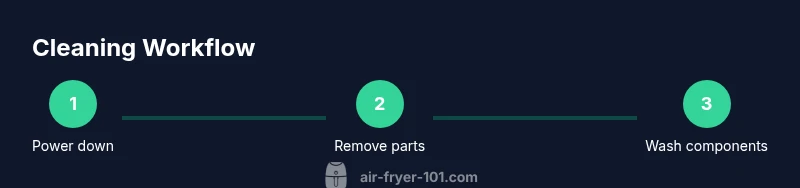
Power down and unplug
Ensure the unit is off and unplugged before cleaning. Remove the basket and pan to expose removable parts. This prevents electrical hazards and protects the interior during washing.
Tip: Keep the power cord away from water and dry the socket area after cleaning. - 2
Remove removable parts
Take out the basket and crisper plate. Inspect non-stick surfaces for scratches and signs of wear. Rinse these parts under warm water to loosen any stuck-on food.
Tip: Handle non-stick coatings gently to avoid flaking or scratches. - 3
Wash removable parts
Wash the basket and crisper plate with mild dish soap and a soft sponge. Rinse thoroughly and dry with a microfiber cloth before reassembly.
Tip: Avoid soaking the base; focus cleaning on the basket and plate only. - 4
Clean interior surfaces
Wipe the interior chamber with a damp cloth, avoiding direct water contact with the heater area or any electrical components. Pay attention to vents and corners where residue collects.
Tip: Do not spray or immerse; moisture can damage internal electronics. - 5
Dry everything completely
Air-dry all components on a rack or towel until fully dry. This prevents rust and odors from forming in moist spaces.
Tip: If time-constrained, use a hair dryer on cool setting to speed up drying. - 6
Reassemble and run a quick cycle
Reinstall the basket and plate, plug in the unit, and run a 2–3 minute test with no food to ensure everything functions and dries properly.
Tip: If you notice any unusual smells, perform a brief warm cycle with a vinegar-water wipe before cooking again.
Got Questions?
How often should I wash the air fryer basket?
Wipe crumbs after each use and wash the basket and pan weekly. Do a deeper clean monthly to prevent buildup.
Wash the basket weekly and wipe crumbs after each use for best results.
Can I put the basket in the dishwasher?
Many baskets are dishwasher safe, but always check your model's manual. If unsure, hand wash with warm, soapy water.
Most baskets are dishwasher safe, but verify your model's instructions and hand wash if in doubt.
What should I do if there’s a lingering smell?
Try a vinegar-water wipe, then a baking soda paste on stubborn spots. Ensure everything dries completely after treatment.
For lingering smells, use vinegar-water and baking soda on tough spots, then dry thoroughly.
Is it safe to use vinegar on the interior?
Diluted vinegar is generally safe for odor removal but avoid directly spraying into any electrical areas. Rinse and dry well after use.
Diluted vinegar helps odors; don’t spray into the electronics, rinse, and dry.
How long does a deep clean take?
A thorough deep clean typically takes 20–40 minutes, depending on residue and parts involved.
Deep cleans usually take about 20 to 40 minutes.
What should I avoid during cleaning?
Avoid immersing the main unit, using abrasive pads, or applying cleaners that can damage coatings.
Don't submerge the main unit or use harsh abrasives.
Watch Video
Quick Summary
- Establish a regular cleaning cadence.
- Wash after each use; perform light weekly deep cleans.
- Avoid water contact with the base and dry thoroughly.
- Air Fryer 101 emphasizes safety and consistency in maintenance.