Are Air Fryer Ovens Hard to Clean? A Practical Cleaning Guide
Discover how to clean air fryer ovens with a simple routine. Learn removable-part strategies, safe cleaners, and a maintenance schedule to keep your unit pristine and odor-free.


Are air fryer ovens hard to clean? Not when you follow a simple, repeatable routine focused on removable parts and gentle surfaces. The bulk of the mess comes from baked-on grease, crumbs, and residual oil. With the right tools, warm soapy water, and non-abrasive scrubbing, you can restore shine, remove odors, and keep performance high in under an hour.
Why cleaning an air fryer oven can feel challenging (and when it isn’t)
Are air fryer ovens hard to clean? The short answer is: not if you approach maintenance as a regular, manageable task. The main sticking points are baked-on grease on the interior walls, oil splatters around the door seal, and crumbs that accumulate in the basket and tray. Modern air fryer ovens are compact and feature non-stick coatings, which are easy to scratch if you use harsh scrubs. By recognizing these common culprits and committing to a routine, you replace dread with a predictable, quick-clean habit. According to Air Fryer 101, most users report significant improvements in odor control, coating longevity, and overall performance when they adopt a straightforward cleaning cadence. This article will walk you through practical steps you can apply today to reduce grime and keep your unit functioning at its best in 2026.
Why the mess builds up: baked-on grease, crumbs, and residue
The heating elements and interior surfaces are not immune to oil and food splatter. As you cook at high temperatures, oils aerosolize and cling to the walls. Over time, this forms a stubborn film that resists quick wiping. Crumbs collect in the basket area, and if you don’t remove and clean the tray regularly, they turn into burnt particles that smear when wiped. Recognizing these patterns helps you tailor your cleaning routine to tackle the most troublesome areas first, reducing overall effort.
The impact of design on cleaning ease
Air fryer ovens with a simple, modular interior—removable baskets, racks, and trays—are inherently easier to clean. If your model uses a non-stick finish, power-washing the exterior is rarely needed; instead, you rely on gentle mops and sponges. A well-designed model reduces nooks and crannies where grease hides, making routine wipe-downs faster. Air Fryer 101’s observations indicate that models with dishwasher-safe baskets and exposed seams typically require less scrubbing and yield less residue after cleaning.
Pre-cleaning habits that cut your mess in half
Before you start, unplug the appliance and allow it to cool completely. Remove all removable parts and shake out loose crumbs. Wipe the exterior with a damp cloth to prevent grease from drying on the outer surface. Keeping a small cleaning kit nearby—mild dish soap, a non-abrasive sponge, and a soft brush—lets you act quickly after cooking. These habits dramatically shorten cleanup time and reduce the chance of stubborn buildup.
Step-by-step care for removable parts: baskets, racks, and trays
Remove the basket, rack, and tray first, then rinse under warm water with a mild detergent. Soak the parts for 5–10 minutes to loosen grease, then scrub with a soft sponge or nylon brush. For stubborn spots, make a paste with baking soda and water and apply it with a gentle brush. Rinse thoroughly and dry before reassembly. This approach prevents grease from setting during future cooks and helps your non-stick surfaces last longer.
Interior cleaning without harming coatings or sensors
Wipe the interior walls with a damp, non-abrasive sponge and a mild soap solution. Avoid spraying water directly onto the heating element; instead, mist the sponge and wipe. For tough spots, a baking soda paste can lift residue without scratching. If your model has a glass door, use a glass cleaner or vinegar solution to restore clarity, ensuring you wipe dry to prevent streaks.
Deodorizing, freshness, and odor control
Odors can linger long after the last frying session. A shallow baking soda paste on interior walls (then wiped away) helps neutralize smells without leaving residues. Running a quick 5-minute cycle with just water and a teaspoon of white vinegar in the reservoir can refresh the chamber, followed by a thorough wipe-down. Air drying with the door propped open in a draft helps eliminate damp smells.
Maintenance cadence to keep cleaning quick and predictable
Create a simple maintenance schedule: a quick wipe after every use (2–3 minutes), a thorough wash of removable parts every 1–2 weeks, and a deeper interior clean monthly. Keeping a routine reduces the likelihood of deep-set grime and preserves performance. Note the type of cleaning products your model recommends in the user manual and tailor your approach to avoid any coatings or seals that require special care.
Tools & Materials
- Non-abrasive sponge(Gentle scrubbing surface; avoid steel wool.)
- Dish soap(Mild, grease-cutting formula.)
- Warm water(For soaking and rinsing parts.)
- Microfiber cloth(Lint-free for drying and wiping.)
- Soft-bristled brush(For crevices and basket edges.)
- Soft toothbrush(Nooks in corners and hinges.)
- Baking soda(Make a gentle paste for stains.)
- White vinegar(Deodorize and cut grease when diluted.)
- Non-stick-safe liners/parchment(Reduce mess in basket.)
- Non-toxic degreaser (optional)(Use sparingly and follow directions.)
Steps
Estimated time: 45-70 minutes
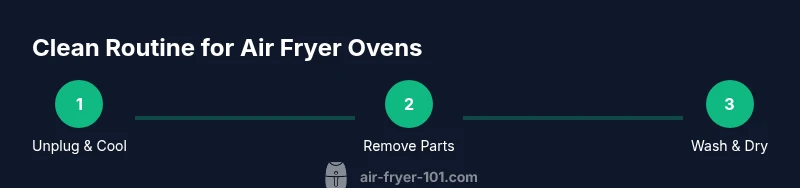
- 1
Unplug and cool
Always unplug the unit and let it cool completely before cleaning. This prevents accidental activation and protects you from burns. If you can, wait about 10–15 minutes after use for a safe handling window.
Tip: Use a timer to avoid rushing the cooldown. - 2
Remove baskets and racks
Take out the basket, rack, and any trays. Shake loose crumbs into the trash, then set the parts aside for washing.
Tip: Place parts in a basin to catch drips and prevent countertop mess. - 3
Soak removable parts
Soak removable parts in warm, soapy water for 5–10 minutes. This loosens baked-on grease and food particles before scrubbing.
Tip: If grease is heavy, add a dash of baking soda to the soaking water. - 4
Scrub and rinse
Scrub each part with a non-abrasive sponge or brush, then rinse thoroughly. Dry with a microfiber cloth.
Tip: Pay attention to corners where grease hides, like basket edges. - 5
Wipe the interior
Wipe the interior walls with a damp sponge and mild soap. Avoid splashing water onto the heating element.
Tip: Use a light circular motion to lift residues. - 6
Deodorize if needed
Apply a baking soda paste on stubborn spots, let sit 5–10 minutes, then rinse. For odors, a short vinegar-water cycle can help.
Tip: Do not mix vinegar with bleach or harsh cleaners. - 7
Dry and reassemble
Dry all parts completely before placing them back into the unit. Reassemble and wipe the exterior to remove any fingerprints.
Tip: Store with the door ajar for a few hours to air-dry fully. - 8
Test run
Run a quick 5-minute air-fire with water in the reservoir (no food) to ensure everything is dry and ready before next use.
Tip: Check seals and door alignment after the test.
Got Questions?
Are air fryer ovens hard to clean?
They’re not if you follow a simple routine that targets removable parts and interior surfaces with non-abrasive tools. Regular maintenance prevents stubborn buildup and preserves non-stick coatings.
They’re easier to clean when you follow a simple routine that focuses on removable parts and gentle cleaning.
Can I put the baskets and racks in the dishwasher?
Many baskets and racks are dishwasher safe, but always check the user manual for your model. If in doubt, hand wash with warm soapy water to protect coatings.
Most baskets can go in the dishwasher, but check your manual first.
How often should I deep clean my air fryer oven?
Aim for a thorough interior clean every 1–4 weeks depending on usage, with quick wipe-downs after each cooking session to reduce buildup.
Deep clean every few weeks if you cook often, with quick cleans after each use.
Is vinegar safe for non-stick coatings?
Diluted white vinegar is generally safe for deodorizing and occasional degreasing, but avoid using it in strong concentrations on delicate coatings.
Diluted vinegar can help with odors, but don’t use strong solutions on delicate coatings.
What cleaners should I avoid?
Avoid abrasive powders, chlorine bleach, and metal scrubbers that can scratch non-stick surfaces. Stick to mild soap, warm water, and a soft brush for best results.
Avoid harsh cleaners or metal scrubbers that can damage coatings.
Should I clean the heating element?
Only clean if the manufacturer instructs it. If allowed, use a dry brush and avoid water directly on the element to prevent damage.
Clean the heating element only if your manual says it’s safe; otherwise, skip it.
Watch Video
Quick Summary
- Develop a quick post-cook wipe routine.
- Focus on removable parts for fast cleaning.
- Use non-abrasive tools to protect coatings.
- Deep clean parts weekly and interior monthly.
- Deodorize regularly to maintain freshness.