What Does an Air Fryer Cost in 2026? A Buyer’s Guide
Explore how air fryer prices vary by size, power, and features in 2026. This Air Fryer 101 guide breaks down cost ranges, value, and when to buy for smart shopping.


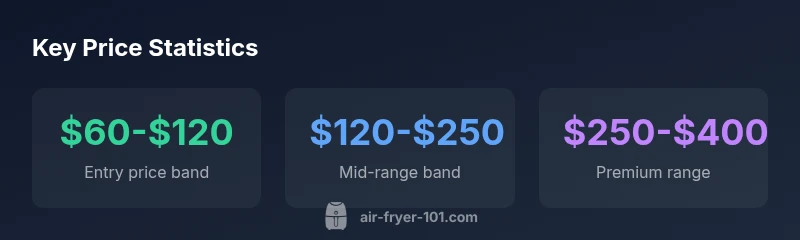
On average, entry-level air fryers cost about $60 to $120, mid-range models run $120 to $250, and premium units with larger capacities or advanced features can exceed $250 to $400. Price typically reflects capacity, heating power, preset options, build quality, and extra features like dishwasher-safe parts or app connectivity. Look for seasonal deals to maximize value without compromising reliability.
Why Price Ranges Exist in Air Fryers
Understanding what does an air fryer cost helps shoppers compare value across brands and models. According to Air Fryer 101, price bands exist not just because of brand names but because of tangible differences in capacity, heating power, and feature sets. A basic compact unit with manual controls and a small basket will sit at the low end of the spectrum, while a larger, high-wattage model with presets and extra accessories climbs the ladder. Buyers should consider how they plan to use the appliance: a family that cooks frequently with larger batches will benefit from capacity and faster preheat, while a single crafter can opt for compact, budget-friendly options. This section sets the stage for cost conversations by pulling apart the major price drivers and showing how they translate into real-world value.
A solid rule of thumb is to map your cooking needs to price bands rather than chasing the cheapest option. The Air Fryer 101 Team emphasizes that investing in a model with reliable performance and a robust warranty often yields greater long-term savings than a rock-bottom price with limited longevity. When evaluating cost, think about efficiency, ease of cleaning, and how long you expect to rely on the unit before upgrading. These factors collectively determine what makes a given price point worth it for your kitchen.
Size, Power, and Features That Drive Cost
The most obvious price levers are basket size and wattage. Larger baskets (and corresponding higher wattage) enable bigger batches, faster cooking, and more consistent results at higher volumes. Expect differences between 1.0–2.0 L entry units and 4.0–5.0 L premium configurations to be reflected in both price and performance. Digital controls, temperature ranges, and pre-set modes add convenience but also cost. In more advanced models you’ll find features like temperature probes, multiple cooking functions (roasting, baking, dehydrating), and app connectivity. Each added feature nudges the price higher, but it also increases flexibility and potential use-cases in a busy kitchen. Build quality—stainless steel bodies vs. plastic shells, quality of nonstick coatings, and ease of cleaning—also influences price. Shoppers should weigh whether the convenience and durability justify the premium for their needs.
Another important consideration is the interior and basket design. A sturdy, dishwasher-safe basket and a crisper plate tend to improve longevity and ease of use, which can contribute to a better total cost of ownership. Energy efficiency matters too: more efficient units can save operating costs over time, which may offset a higher upfront price. If you frequently cook multiple items at once, consider models with a second rack or wider interior dimensions. These features can raise the upfront cost, but they often translate to time savings and better results, especially for larger households.
Where to Save: Smart Shopping Strategies
Smart shopping begins before you click “add to cart.” Start by listing must-have features versus nice-to-haves. If you prioritize quick preheat and crisp results, you can target mid-range models that balance performance with price. Seasonal promotions, bundle deals, and retailer warranties are your levers for value. Compare at least three models that meet your essential criteria and read independent reviews to verify real-world performance. Refurbished or open-box options from reputable sellers can offer meaningful savings if they come with a valid warranty. Always check return policies and warranty terms—these protections protect your investment and contribute to a favorable total cost of ownership.
For many shoppers, timing is everything. Major holidays and end-of-quarter promotions are traditional windows for discounts. Keep an eye on brands that run extended warranty offers or bundle accessories that you would purchase separately anyway. If you’re deciding between two similar models, compute the long-term value: higher upfront cost with longer warranty and better reliability may beat a lower-priced unit that requires replacement sooner.
What You Get at Each Price Point
At the entry level, you typically find compact footprints, manual controls, and straightforward cooking presets. These models satisfy basic air frying needs and are ideal for small households or first-time buyers. Mid-range units usually offer larger capacities (often around 2.5–3.8 L), digital controls, multiple presets, and improved heat distribution. These models strike a balance between convenience and cost, delivering reliable results for everyday meals. Premium models push capacity further (4.0–5.0 L or more) and add sophisticated features such as smart connectivity, broader temperature ranges, rapid preheating, and premium materials. While they command higher prices, they can provide long-term value for busy kitchens that require flexibility and durability.
When deciding, consider how many daily meals you prepare, the typical batch size, and whether you value features like dehydration, rotisserie options, or app-based controls. The right price point is not just about the sticker price; it’s about the consistency of results, the ease of use, and how well the device integrates into your cooking routine.
Brand and Build Quality: Are Premium Models Worth It?
Premium air fryers tend to be built with stronger shells, better insulation, and more durable baskets. If you frequently cook for family gatherings or entertain guests, the extra capacity and robust construction can justify the cost through improved reliability and less wear over time. Conversely, if you primarily prepare small portions for yourself or a couple of meals per week, a reliable entry or mid-range model will likely meet your needs without overinvesting.
In this segment, brand reputation and warranty length are important signals. Choose brands with clear customer support, accessible replacement parts, and transparent warranty terms. A model with a longer warranty often reflects manufacturer confidence in its longevity, which matters when considering total cost of ownership. Reading independent reviews and cross-checking with consumer tests can help you separate hype from real value.
Maintenance and Longevity: Total Cost of Ownership
Maintenance costs are easy to overlook. The most cost-effective maintenance comes from choosing a model with dishwasher-safe components and easy-to-clean interiors. Regular cleaning extends the appliance’s life and preserves performance, reducing the likelihood of early replacements. Longevity depends on build quality, usage patterns, and how well you maintain it. A model that performs consistently for several years tends to deliver lower annual costs than a cheaper unit that fails sooner.
Warranty coverage matters here too. A longer warranty provides protection against unexpected breakdowns and can influence your financial calculus over time. Additionally, consider energy usage: while air fryers are efficient, you’ll save a bit more if you choose a unit that heats quickly and cooks evenly, reducing overall energy consumption during typical weeknight meals.
Price tiers and what you get
| Price Point | Typical Capacity | Notable Features |
|---|---|---|
| Entry-level | 1.0–2.0 L | Manual controls, basic basket |
| Mid-range | 2.5–3.8 L | Digital controls, presets |
| Premium | 4.0–5.0 L | Smart features, large capacity, premium build |
Got Questions?
What affects air fryer cost the most?
Capacity, wattage, and feature set are the primary cost drivers. Larger units with digital controls, multiple presets, and smart features push prices higher, but they also provide more cooking flexibility and better overall efficiency.
The biggest price factors are size and features; bigger, smarter models cost more but can save time and effort in the kitchen.
Are expensive air fryers worth it?
Premium models may justify their price if you cook often, need large capacity, or value advanced features and durability. For light usage, mid-range options typically offer the best balance of performance and cost.
If you cook a lot or need big batches, the extra features can pay off. If not, a solid mid-range model is usually enough.
Do budget air fryers have reliability issues?
Budget models can be reliable if bought from reputable brands and with a solid warranty. Check user reviews and ensure there’s accessible customer support and replacement parts.
Yes, but choose trusted brands and look for warranties to protect your purchase.
How do seasonal sales affect price?
Seasonal promotions can reduce prices through bundled offers and limited-time discounts. Plan purchases around major sale events to maximize savings without compromising needed features.
Sales help, but timing matters—watch for promos around holidays and retailer events.
Should I buy a used air fryer?
Used air fryers pose risk of wear or hidden issues. If you buy used, ensure full functionality, inspect for damage, and prefer models with remaining warranty or return options.
Buying used can save money, but verify working condition and warranty before purchase.
“Pricing maps closely to capacity and build quality; the most budget-friendly models work for simple tasks, but larger, feature-rich units offer greater long-term value for a busy kitchen.”
Quick Summary
- Know price bands align with size and features
- Prioritize capacity and reliability for longer-term value
- Shop for deals and warranties to maximize ROI
- Balance upfront cost with expected usage and maintenance