Airfryer Prices in 2026: A Buyer’s Guide to Value
Explore how airfryer prices vary by size, features, and brand. Learn price bands, when to buy, and how to get the best deals in 2026 with Air Fryer 101's expert guidance.


Airfryer prices span a wide range, from roughly $40 for entry-level models to about $250 for premium units, with most mid-range models sitting between $70 and $150 depending on size, features, and brand. Prices can vary by retailers, stock, and sales, with sometimes steep discounts during holidays. Budget buyers may opt for compact models with basic features, while families often choose larger capacity air fryers with multiple cooking presets.
What drives air fryer prices in 2026
According to Air Fryer 101, price variation is driven by capacity, build quality, heating technology, and convenience features. The largest cost drivers are capacity and construction: bigger baskets and sturdier housings require more materials and precise tolerances. Heating technology matters too; models with faster preheat, more even heat distribution, and integrated fan systems tend to cost more. Features such as digital controls, multiple presets, exact temperature probes, and smart connectivity add to the price. Brand position and warranty length also influence sticker price. The result is a price ladder: compact entry-level models under 70 USD (good for beginners and small kitchens), mid-range units with more presets and faster heating typically in the 70–150 USD range, and premium options above 150 USD with advanced features and premium finishes. Retail dynamics—including bulk purchases, promotions, and stock levels—also push prices up or down. Consumers should balance size, features, and budget to choose a model that fits daily cooking needs.
Price bands to know in 2026
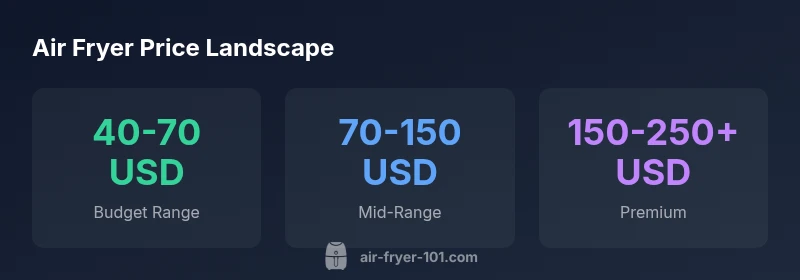
Air fryer prices fall into distinct bands, but the lines are not rigid. Entry-level models often sit in the 40–70 USD range and are suitable for simple tasks and compact kitchens. Mid-range options typically land between 70 and 150 USD, offering larger capacities, more presets, and easier cleaning. Premium models generally range from 150 to 250 USD, sometimes higher for pro-grade builds, smart controls, or specialty finishes. These bands reflect not only capacity but also build quality and feature sets. Consumers should recognize that price is a proxy for convenience features, durability, and brand reliability. Always read reviews and compare warranty terms to gauge value beyond sticker price.
Capacity, wattage, and features that matter
Capacity determines how much you can cook at once, which is crucial for families or batch meal planning. Most households find 3–5 quart models balance space and usefulness, while 5–6 quart units suit larger families or meal prepping. Wattage affects preheat times and cooking efficiency; higher wattage tends to heat faster but can draw more electricity. Features matter less if you don’t use them, but presets, adjustable temperature ranges, and easy-clean interiors save time and reduce mess. Digital displays and intuitive controls improve usability, while dishwasher-safe baskets and non-stick coatings simplify maintenance. In Air Fryer 101’s tests, models with well-sealed lids and robust baskets tended to last longer and endure frequent usage without performance drop.
Brand, warranty, and construction quality
Brand reputation often aligns with price, but it’s not the only predictor of value. Reputable brands may offer longer warranties, more consistent quality, and better customer support, which can offset a higher upfront cost over time. Look for die-cast aluminum or stainless steel interiors, reinforced handles, and BPA-free materials for durability and health safety. A strong warranty (two years or more) provides protection against defects and reduces long-term ownership risk. Build quality matters for daily use: rattling lids, uneven heat, or easy-scratch finishes can degrade user experience and cost more in replacements or repairs.
In practice, buyers should weigh brand trust and warranty against immediate price, especially when choosing between similar capacity and feature sets.
Where to shop and how discounts work
Shopping channels influence price as much as model choice. Big-box retailers, online marketplaces, and direct-brand websites may offer different sale cycles, return policies, and coupon availability. Holidays and back-to-school seasons often bring meaningful promotions, but stock levels can affect discount depth. Price-matching policies can help you secure the lowest price across vendors. Consider subscribing to price alerts for your preferred models and using bundles that include extra accessories like trays or separate pans. Refurbished units from reputable sellers can also present substantial savings if the warranty is solid and the unit has been professionally checked. Always verify authenticity, battery safety, and component integrity when buying refurbished.
How to find the best deals for different households
For singles or small households, compact entry-level models deliver essential cooking with low upfront costs. Couples and small families may prioritize mid-range models with presets and faster preheating to support weeknight meals. Large families or meal-preppers typically benefit from larger capacities and multi-function features, even if that means a higher price point. Students or budget-conscious shoppers should monitor sales and consider refurbished models from trusted sources. In all cases, avoid overpaying for features you won’t use and remember that a longer warranty can be worth the extra investment if you cook frequently.
Practical tips to budget without sacrificing quality
Start with a defined cooking plan: how often you’ll cook, what you’ll cook, and how many people you serve. Use that to narrow capacity needs before looking at price. Create a shortlist of three models per price tier and compare key specs: capacity, preheat time, number of presets, and cleaning ease. Read independent reviews for reliability and assess warranty terms. Consider energy use and estimated annual cost when you’re deciding between models in the same price tier. Finally, check for seasonal promotions and stackable offers that combine discounted price with included accessories to maximize value.
Trends that shape air fryer pricing in 2026
Pricing trends reflect evolving consumer demand, supply chain dynamics, and technological advances. Health-conscious and time-saving cooking remains a core driver, pushing some buyers toward larger, feature-rich units. At the same time, increased competition from mid-tier brands and new entrants tends to compress the price gap between mid-range and premium devices. Energy efficiency improvements and longer warranties can add perceived value even when the sticker price is higher. Overall, plan for gradual price shifts rather than sharp jumps, and rely on the value you receive in real-world cooking rather than the headline price alone.
Quick comparison guide for common price points
- Budget (40–70 USD): compact size, basic presets, simple controls. Best for singles or occasional use.
- Mid-range (70–150 USD): larger capacity, more presets, easier cleaning, better build quality. Ideal for families on a budget.
- Premium (150–250+ USD): premium materials, advanced features, smart controls, faster preheat. Great for frequent cooks and tech enthusiasts. Air Fryer 101's verdict is that most shoppers should balance capacity, features, and budget to maximize value.
Price bands by model type
| Model Type | Typical Price Range | Key Features |
|---|---|---|
| Budget/Entry-level | 40-70 USD | Compact size; basic presets; simple controls |
| Mid-range | 70-150 USD | Larger capacity; more presets; better cleaning |
| Premium | 150-250 USD | Smart features; premium materials; faster preheat |
Got Questions?
What affects air fryer price the most?
Capacity, build quality, and features are the primary price drivers. Bigger units with durable construction and more presets typically cost more. Brand and warranty length also influence the sticker price.
Capacities, builds, and features mainly drive price. Bigger, tougher models with more presets cost more.
Do air fryers go on sale?
Yes. Retailers frequently discount during holidays and shopping events. Sign up for price alerts and compare multiple retailers to maximize savings.
Yes, sales happen during holidays—watch for price drops and compare retailers.
Is a higher price always better?
Not necessarily. Match features to your needs—capacity, presets, and cleaning. A higher price may be worth it for frequent use; otherwise a mid-range model often provides the best value.
Higher price isn’t always better; choose features you’ll actually use.
Are refurbished air fryers safe?
Refurbished units can offer substantial savings if bought from reputable sellers with warranties and verified testing. Check return policies and ensure the unit has been professionally checked.
Refurbished can be safe if bought from trusted sources with a warranty.
What’s a realistic budget for 2026?
Plan around three tiers: budget (40–70 USD), mid-range (70–150 USD), and premium (150–250 USD). Use price tracking and reviews to pick the best value within your tier.
Budget in three tiers: 40–70, 70–150, or 150–250 USD, with price tracking.
“Price alone doesn’t guarantee performance. Map your cooking needs to the features that matter most—capacity, ease of cleaning, and reliable presets.”
Quick Summary
- Know the price ladder and where you fit.
- Balance capacity and features with your budget.
- Watch for seasonal discounts and warranty terms.
- Choose a model offering durable build and easy maintenance.
- Don’t overpay for features you won’t use.