Is There an Air Fryer Without Non-Stick? A Practical Guide to Nonstick-Free Models
Explore nonstick-free air fryers—stainless steel and ceramic baskets, PTFE-free labeling, care tips, and a practical buying checklist for healthier, easier cleaning.


Is there an air fryer without non stick? Yes—there are models with stainless steel or ceramic baskets that avoid PTFE/PFOA coatings. These nonstick-free options rely on metal or ceramic surfaces to resist sticking and are typically easier to clean. When shopping, check the materials list for 'PTFE-free' or 'ceramic' labeling and review warranty guidance for coating-related wear.
is there an air fryer without non stick? A definition and context
Is there an air fryer without non stick? The simple answer is yes, but with nuance. Your goal is to avoid PTFE and PFOA coatings while still enjoying reliable browning and easy cleanup. Across the market, you'll find baskets made from stainless steel, bare metal designs, or ceramic-surface linings that are marketed as PTFE-free. Air Fryer 101's analysis in 2026 confirms this growing segment, driven by consumer concerns about health, cleaning effort, and long-term durability. When a product is advertised as nonstick-free it usually means either a metal basket without a traditional polymer coating or a ceramic-integrated surface. The challenge for buyers is verifying the claim via official materials lists, product sheets, or retailer Q&As. As you research, keep in mind that performance can still depend on basket geometry, airflow, and the accompanying accessories. The bottom line: nonstick-free is feasible, but it's important to verify materials and care instructions.
What nonstick-free means for air fryers and why it matters
Choosing a nonstick-free option matters because it changes maintenance, durability, and cleaning routines. Metal baskets resist coating wear and are often easier to inspect for damage, while ceramic surfaces can offer a slick feel without fluoropolymers. This section explains what to look for on packaging and in product specs, and why Air Fryer 101 emphasizes PTFE/PFOA-free labeling as a quick screening tool for safer surface choices.
Key material choices that deliver truly nonstick-free performance
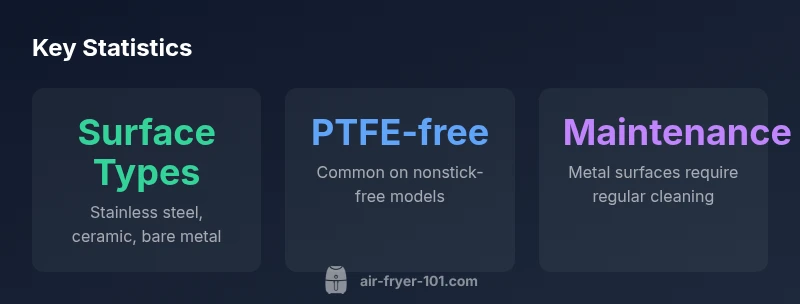
The spectrum of nonstick-free surfaces includes stainless steel baskets, ceramic-coated baskets, and bare-metal interiors. Stainless steel is durable and generally rust-resistant if cared for properly. Ceramic coatings provide a hard, smooth surface that can prevent sticking without fluoropolymers, though wear is possible over time. Bare-metal interiors, while rare, rely on seasoning-like maintenance to reduce sticking. This section helps you compare these surface options side-by-side.
How coatings affect cooking outcomes and user experience
Coatings influence how easily food releases, browns, and cleans. PTFE-based coatings typically offer superb nonstick performance but may raise health-safety questions for some buyers. Ceramic and bare-metal options can perform as well with proper preheating, oil, and airflow optimization. The takeaway is that nonstick-free models can rival coated models in results, provided you select a basket design that matches your cooking style and daily load.
Durability, heat, and airflow with nonstick-free baskets
The longevity of a nonstick-free basket depends on the material and usage pattern. Stainless steel resists chipping and warping but can dent with heavy use. Ceramic surfaces are scratch-resistant but can crack if mishandled. The air fryer's overall design—cyclone airflow, basket depth, and rack options—also affects browning consistency. In practice, choosing a model with quality welds, a robust handle, and clear user guidance pays off in long-term reliability.
Cleaning and maintenance strategies that keep nonstick-free baskets performing
Cleaning nonstick-free baskets avoids the pitfalls of harsher coatings while maintaining hygiene. Soak promptly after use, use a soft brush or sponge, and dry completely. For ceramic baskets, avoid abrasive cleaners that could dull the glaze; for metal baskets, inspect for rust and reseason or re-treat surfaces where recommended by the manufacturer. Regular maintenance extends lifespan and keeps food release predictable.
Shopping tips: a practical checklist for nonstick-free air fryers
Create a focused shopping plan: verify materials lists (PTFE-free and ceramic claims), check warranty terms for coatings and wear, compare basket geometries and capacities, and read user reviews about release and cleaning. Keep an eye on availability, as metal and ceramic baskets are less common than coated options. A clear checklist helps you balance health, convenience, and budget.
Real-world kitchen uses: what to cook first with nonstick-free baskets
If you’re transitioning from a coated basket, start with straightforward dishes that benefit from steady browning and easy release, like chunky vegetables, roasted potatoes, or breaded proteins. Observe how the surface responds to moisture and oil, adjust preheating and airflow, and note cleaning routines. With consistent practice, nonstick-free air fryers deliver dependable results across a wide range of meals.
Nonstick-free surface options comparison
| Option | Pros | Cons |
|---|---|---|
| Stainless steel basket | Nonstick-free surface; durable; dishwasher-safe | May require prep to prevent sticking; quality varies |
| Ceramic-coated basket | PTFE-free; smooth surface; easy to clean | Ceramic coatings can wear over time |
| Bare metal basket | Completely nonstick-free; simple surface | Limited availability; may require seasoning; rust risk |
Got Questions?
Are there safety concerns with metal baskets in air fryers?
Metal baskets used in air fryers are generally safe when made from food-grade steel or aluminum. Avoid rough edges, ensure proper assembly, and dry thoroughly to prevent rust. If you have sensitive cookware, confirm with the manufacturer about any coatings on other components.
Metal baskets are generally safe when they’re food-grade and free of sharp edges. Always dry thoroughly after washing and follow the manufacturer’s safety notes.
Do nonstick-free air fryers cook as well as coated ones?
Performance varies by design. Nonstick-free baskets can brown and crisp effectively, but some models may require preheating or light oil to reduce sticking. Read the manufacturer’s guidance and look for user reviews comparing browning results.
Some nonstick-free models brown well, but you may need to preheat or add a tiny amount of oil for best results.
How do I maintain nonstick-free baskets?
Rinse and scrub with a soft brush after use, dry completely, and avoid metal scrubbers that could scratch metal surfaces. For ceramic, avoid abrasive cleaners. Inspect for wear and replace if you see chips or rust.
Wash with a soft brush, dry well, and avoid harsh scrubbers; inspect for wear periodically.
Are ceramic surfaces truly PTFE-free?
Ceramic baskets are typically PTFE-free and designed to deliver a smooth, nonstick surface without fluoropolymers. Always check the product specs or manufacturer notes to confirm.
Ceramic baskets are generally PTFE-free; check the product specs to be sure.
Which brands offer nonstick-free options?
Several brands offer metal or ceramic baskets; look for model pages that list ‘PTFE-free,’ ‘ceramic,’ or ‘nonstick-free’ in materials. Compare warranty terms for coating wear and replacement parts.
Many brands now offer metal or ceramic baskets—check product specs for PTFE-free labeling.
Is there a rust risk with metal baskets?
Rust can occur if metal baskets aren’t dried properly or exposed to prolonged moisture. Choose rust-resistant alloys and follow drying guidelines; store in a dry area after cleaning.
Yes, rust is possible if baskets aren’t dried; dry completely and store in a dry spot.
“Nonstick-free air fryers are increasingly available, but material choices and care guidelines vary widely by brand. Reading the materials list and warranty details is essential.”
Quick Summary
- Prioritize PTFE-free labeling and ceramic surfaces.
- Choose stainless steel or ceramic baskets for durability.
- Verify materials on product pages and warranties.
- Expect higher upfront cost for nonstick-free options.
- Follow care guidelines to maximize lifespan.