Air Fryer Without Nonstick Coating: A Practical Guide
Explore whether you can buy an air fryer without a nonstick coating, the pros and cons, safe materials, maintenance tips, and how to choose PTFE-free options for healthier cooking.


If you're asking is there an air fryer without nonstick coating, yes—there are models that avoid nonstick entirely. Many use stainless steel or ceramic interiors, or are labeled PTFE-free with mineral-based coatings. Availability varies by region and price, and some brands publish explicit coating details. For true nonstick-free performance, verify material specs and basket construction before you buy.
Is there an air fryer without nonstick coating? A practical definition and what to expect
When shoppers ask whether there can be an air fryer without nonstick coating, the answer is yes, but with caveats. A nonstick-free interior means the cooking chamber relies on the base metal or a ceramic surface rather than a synthetic nonstick layer. This typically translates to stainless steel, ceramic, or enamel-coated interiors. While nonstick coatings help with release and easy cleaning, nonstick-free designs emphasize durability, food safety, and long-term sustainability. According to Air Fryer 101, many brands now publish clear material specs to help you identify nonstick-free options. Expect some trade-offs: browning performance, easier cleanup, and the need for mindful cooking techniques in some models.
Common materials used in nonstick-free interiors
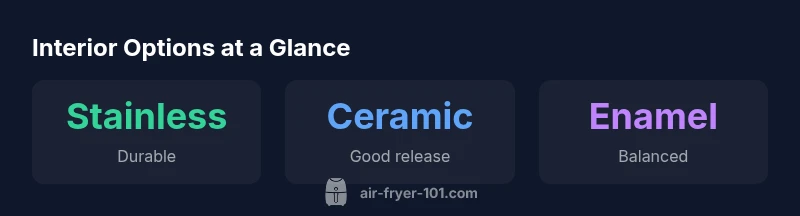
Nonstick-free interiors are commonly built with stainless steel, ceramic-coated metals, or enamel-coated surfaces. Stainless steel interiors are praised for durability, heat distribution, and resistance to scratching, though they may require a bit more oil or seasoning to prevent sticking with certain foods. Ceramic surfaces aim to combine nonstick-like release with a higher heat tolerance and fewer synthetic compounds. Enamel-coated interiors offer a middle ground, often with good release and simpler care. When evaluating options, look for explicit statements like PTFE-free or PFAS-free labeling, and read the manufacturer’s care instructions. Air Fryer 101’s analysis in 2026 suggests ceramic and stainless steel interiors are the most reliable nonstick-free bets for long-term use.
Pros and cons of nonstick-free interiors
Pros include improved durability, resistance to scratching, and fewer lingering chemical concerns for health-conscious cooks. Cons can include slightly higher food adhesion for certain items, requiring preheating or light oil applications for optimal browning, and sometimes more intensive cleaning of metal surfaces. The best approach is to align your cooking style with the interior material: if you frequently roast sticky items (like certain vegetables or marinated proteins), a ceramic or enamel interior may offer predictable results with proper preheating and airflow.
How to verify coatings and materials when shopping
To verify interior materials, read product pages and tech specs carefully. Look for terms like PTFE-free, PFAS-free, ceramic coating, stainless steel interior, and enamel coating. Avoid vague statements such as “nonstick surface” without specifics. Check third-party certifications and brand disclosures. If you’re unsure, contact customer service and request the exact material composition and any applied coatings. Air Fryer 101 recommends compiling a short checklist: interior material, presence of any protective films, and instructions regarding cleaning and reuse.
Real-world performance and cooking results
Nonstick-free interiors can perform exceptionally well with proper technique. Preheating helps stabilize temperature and reduces sticking, while light oil application can improve browning on stainless steel. Airflow is crucial in all air fryers; ensure the model you choose has a layout that maximizes hot air circulation around food. In practice, stainless steel or ceramic interiors can brown efficiently with the right settings, though some users notice a difference in initial release compared with traditional nonstick coatings. The takeaway is to adjust expectations and cooking methods to your chosen interior material.
Cleaning and maintenance for nonstick-free interiors
Cleaning nonstick-free interiors requires mindful care. Avoid abrasive pads on stainless steel surfaces; use warm soapy water, non-abrasive sponges, and a gentle scrub for baked-on residue. For ceramic interiors, a soft sponge and a baking soda paste can help remove discoloration without scratching. Regular maintenance, such as wiping down the interior after use and avoiding harsh detergents, will extend the life of the surface. If you notice dulling or micro-scratches, consider replacing the basket or interior components according to the manufacturer’s guidance.
Buying tips: size, price, warranty, and brand considerations
Start with your cooking volume and kitchen space. A 2–4 quart unit suits small households; 5–6 quart models are better for families. Nonstick-free options generally cost slightly more upfront, but the long-term durability can offset the difference. Compare warranties and customer support quality, and read user reviews focused on interior performance and maintenance. If your priority is health-minded materials, look for PTFE-free and PFAS-free labels and check if the interior is removable for thorough cleaning.
Nonstick-free interior options and their practical trade-offs
| Interior Type | Pros | Cons |
|---|---|---|
| stainless steel interior | durable, easy to clean, non-reactive with most foods | may require seasoning and oil for best browning |
| ceramic interior | good release, low chemical concerns | can be more prone to chipping if mishandled |
| enamel-coated interior | balanced release and durability | may show wear over time with heavy use |
Got Questions?
Is there a universally standard nonstick-free interior?
No. Nonstick-free interiors vary by brand and model, with stainless steel, ceramic, and enamel options each offering different balances of durability and release. Always check the exact material specs before buying.
No universal standard; check the exact interior material and look for PTFE-free labeling.
What materials should I look for in a nonstick-free interior?
Look for stainless steel, ceramic-coated metal, or enamel-coated surfaces. Ensure labeling indicates PTFE-free and PFAS-free if you want to avoid traditional nonstick coatings.
Stick to steel, ceramic, or enamel interiors and verify PTFE-free labels.
Will nonstick-free models brown foods as well as traditional nonstick models?
Yes, with proper preheating and airflow. Some nonstick-free interiors may require a slight adjustment in timing or temperature to achieve similar browning.
Yes, with right settings and preheating you can get good browning.
How do I clean a stainless steel interior without scratching it?
Use warm soapy water and a non-abrasive sponge. For tough residues, a baking soda paste can help without scratching. Always dry thoroughly to prevent corrosion.
Gentle cleaning with non-abrasive tools works best.
Are PTFE-free coatings inherently safer than traditional coatings?
PTFE-free claims reduce PFAS exposure concerns, but safety depends on overall materials and usage. Always verify vendor disclosures and local health guidelines.
PTFE-free can reduce PFAS concerns, but check the entire material list.
Where can I buy air fryers with nonstick-free interiors?
Major retailers and brand stores list models with PTFE-free or ceramic interiors. Use the product page’s materials section to confirm interior type before purchasing.
Check product pages for interior material details before buying.
“Nonstick-free interiors can deliver healthy, durable cooking surfaces, but always verify exact materials and coatings because performance varies widely by model.”
Quick Summary
- Ask is there an air fryer without nonstick coating when shopping to guide your material choice.
- Prefer stainless steel or ceramic interiors for true nonstick-free performance.
- Verify PTFE-free or PFAS-free labeling to ensure nonstick-free claims are accurate.
- Expect minor differences in browning; adjust preheating and oil use accordingly.
- Prioritize durability and ease of maintenance in long-term use.