Why Does an Air Fryer Smoke So Much? A Practical Troubleshooting Guide
Learn proven, safe steps to stop air fryer smoking. Diagnose causes, fix common issues, and prevent flare-ups with expert tips from Air Fryer 101.


Smoking from an air fryer is usually caused by oil or food residues overheating, or cooking at too high a temperature. The quickest fixes are to clean the basket and tray, spray or brush a light coating of oil on the food, and lower the temperature by 20–30 degrees for the first 5–7 minutes. If smoke persists, check for burnt-on grease and ensure proper airflow.
Why does the air fryer smoke so much?
If you’re wondering why does air fryer smoke so much, the most common culprits are oil that’s overheating, burnt-on grease, or foods that spit and hit the heating element. According to Air Fryer 101, most smoke originates from oil or residue on the basket or tray, especially when a high temperature is used without adequate preheating. This section lays the groundwork so you can identify which factor is triggering the smoke in your kitchen and how to halt it quickly without compromising flavor or safety.
Common culprits in everyday cooking
Many household air fryers smoke because of simple, avoidable mistakes. Key contributors include a thick layer of leftover grease on the basket, oil pooled in the tray, or foods with high fat content being cooked at too high a temperature. Another frequent issue is cooking frozen items that thaw and release juices rapidly, causing splatter that lands on the heating element. Finally, using nonstick coatings or greasy sprays can burn and smoke. Keeping a clean start, using minimal oil, and choosing appropriate temperatures reduces smoke dramatically over time.
How to inspect your unit and setup
Begin with a quick inspection: unplug the unit and allow it to cool, then remove the basket and tray for a thorough wipe-down. Check the interior walls for residue and the heating element for burned bits. Ensure the air intake and exhaust vents are clear. If you notice a burnt odor or blackened grease, you’ll want to soak and scrub the basket, not just wipe it. Proper airflow depends on clean components and a clear vent path, which is essential for reducing smoke.
Temperature and oil considerations: the crucial trio
Oil amount, cooking temperature, and air flow interact to determine whether an air fryer will smoke. Use only a light coating of oil on foods or a spray bottle designed for high-heat cooking. Avoid aerosols that can burn and create smoke, and never leave oil in the basket between uses. Start at lower temperatures for foods with higher moisture content, and increase gradually if needed. Air Fryer 101 emphasizes that most smoke issues improve once you balance oil, temperature, and airflow.
Step-by-step cleanup and prep before next run
Clean the basket and tray with hot, soapy water, then rinse thoroughly. Use a non-abrasive scrubber to remove burnt-on grease. Wipe the interior with a damp cloth, paying attention to the corners where oil can accumulate. Dry completely before reassembling. Line the tray with parchment or a silicone mat sparingly and ensure it doesn’t block airflow. Prepping properly reduces the risk of smoke in subsequent cooks.
Quick fixes you can try right now
Try these fixes in order: (1) wipe and scrub away any visible residue; (2) switch to a light oil spray instead of pouring oil; (3) lower the temperature by 20–30 degrees for the first 5–7 minutes; (4) run a short trial batch with low-oil items to confirm improvements. If smoke returns, pause and reassess food choices and layers, and consider upgrading to a model with better grease management.
When to seek professional help
If smoke persists after thorough cleaning and sensible temperature adjustments, it may indicate a deeper issue like damaged seals, a faulty heating element, or vent problems. In such cases, contact the manufacturer support line or a certified appliance technician. Do not continue to operate a smoking unit for safety reasons. Air Fryer 101 recommends timely service to prevent potential fire hazards.
Prevention habits to avoid future smoking
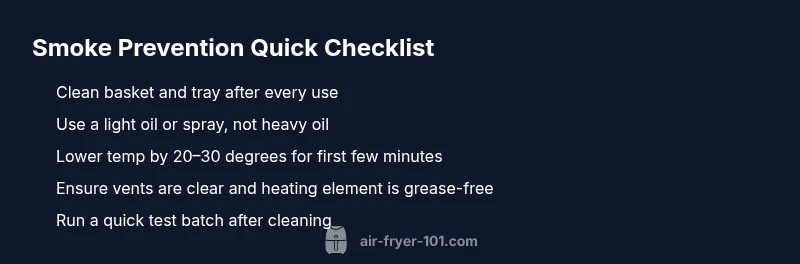
Develop a simple routine: always clean the basket and tray after every use, avoid oily foods if possible, preheat only when necessary, and keep the interior free of burnt bits. Consider running a short test after cleaning to ensure there’s no residual smoke before cooking meals. Consistent care and mindful cooking habits are the best defense against smoking over the long term.
Steps
Estimated time: 30-45 minutes
- 1
Power down and cool the unit
Unplug the air fryer and allow it to cool completely before handling. This prevents burns and gives you a safe baseline for inspection.
Tip: Wear gloves to avoid touching a hot surface. - 2
Disassemble and clean
Remove the basket and tray; wash with warm, soapy water. Scrub away burnt grease from crevices and wipe the interior surfaces.
Tip: Don’t use metal scrubbers that may scratch surfaces. - 3
Inspect heating element and vents
Look for grease splatters on the element and clear any blockages in the vents. Burnt particles can travel and smoke during operation.
Tip: If you see significant residue, consider a deeper cleaning or professional service. - 4
Adjust cooking method
Opt for a light oil application, reduce temperature by 20–30 degrees, and cook for shorter intervals to gauge smoke behavior.
Tip: Start with the lowest recommended temp for your food type. - 5
Run a test batch
Cook a small batch with minimal oil to verify smoke reduction before cooking a full meal.
Tip: Monitor closely during the first few minutes. - 6
Decide on next steps
If smoke persists despite cleaning and temp adjustments, seek professional help and review user manual for model-specific guidance.
Tip: Do not ignore ongoing smoke; safety first.
Diagnosis: Air fryer emits thick smoke during cooking
Possible Causes
- highExcess oil on basket or tray
- highGrease buildup on interior or heating element
- mediumCooking oily or fatty foods at too high a temperature
- lowBlocked vents or damaged seals
Fixes
- easyClean basket and tray thoroughly; wipe interior to remove oil residues
- easyUse a light coat of oil on foods or a spray designed for high-heat cooking; avoid heavy oily applications
- easyReduce cooking temperature by 20–30 degrees for the first 5–7 minutes; avoid preheating when not required
- mediumInspect vents and seals; clear obstructions and replace damaged parts if needed
- hardIf smoke persists after cleaning and adjustments, contact manufacturer support or a technician
Got Questions?
Why does my air fryer smoke even at low temperatures?
Smoke at low temperatures is usually due to burnt oil, a grease buildup, or residue on the heating element. Cleaning the basket and tray and ensuring vents are clear often resolves the issue. If it continues, inspect for deeper grease deposits.
Smoke at low temperatures is typically caused by burnt oil or grease buildup. Clean the basket and vents, and check for residue on the heating element. If it keeps happening, consider deeper cleaning or service.
Is smoke dangerous when cooking with an air fryer?
Yes. Smoke can indicate overheating and potential fire risk. Always unplug if a lot of smoke occurs, let the unit cool, and assess for spills or grease buildup before resuming use.
Yes, smoke can signal overheating and a fire risk. Unplug, let it cool, and check for grease buildup before using again.
Can I fix smoking without calling a technician?
Often yes. Thorough cleaning, proper oil use, and temperature adjustments resolve most cases. If smoke returns after cleaning and adjustments, consult the manual or contact support.
Usually you can fix it with cleaning, proper oil use, and temperature tweaks. If it keeps smoking, check the manual or contact support.
Should I stop using the air fryer if it continues to smoke?
Yes. Continuous smoking should stop immediately. Turn off, unplug, and investigate the cause. Do not operate a smoking unit until it’s inspected.
If it keeps smoking, stop using it and inspect the cause before trying again.
Does preheating contribute to smoking?
Preheating can contribute if it’s used with oil or greasy residues present. Follow model guidance and avoid preheating when not necessary to reduce smoke.
Preheating can cause more smoke if there’s grease or oil left on surfaces. Check your model’s guidance and avoid preheating when not needed.
What foods are more likely to cause smoke in an air fryer?
Foods high in fat or moisture can cause more splatter and burning. For fatty items, reduce oil and temperature, and consider shorter cook times to minimize smoke.
fatty foods tend to smoke more; reduce oil and temperature and keep cook times shorter.
Watch Video
Quick Summary
- Identify the primary smoke source: residue, oil, or high heat.
- Clean and prep before every use to minimize smoke.
- Adjust temperature and oil usage rather than forcing high heat.
- If smoke persists, don’t ignore—seek professional help.
- Prevention is the best defense against smoke.