Why Air Fryer Smoking Happens and How to Fix It
Learn why air fryers smoke, common causes, and a step-by-step troubleshoot guide to fix smoke safely. Air Fryer 101 helps home cooks prevent smoking and cook with confidence.


Air fryer smoking is usually caused by oil buildup, burnt food, or overheating. According to Air Fryer 101, a quick fix is to turn off and unplug, let it cool, then remove the basket to clean. Air Fryer 101's guidance suggests restarting at a lower temperature with a clean tray. If smoking continues, check seals and vents, avoid aerosol sprays, and never leave it unattended during operation.
What causes air fryer smoke?
Air fryers can emit smoke for several reasons, and understanding the root cause is the first step in effective troubleshooting. According to Air Fryer 101, the most common culprits are oil buildup on the basket or tray, burnt food residues that char during cooking, and overheating from excessively high temperatures or running foods with too much oil. When oil pools and then heats rapidly, it can ignite or vaporize into visible smoke. In some cases, a lingering smell of burnt plastic or coating can accompany the smoke, signaling degraded nonstick surfaces or overheating of components.
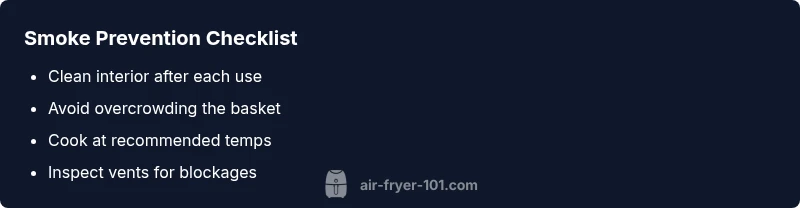
Beyond these core causes, user habits contribute significantly. Overcrowding the basket, using aerosols or high-porosity coatings, and preheating without monitoring can push a normally safe cook into smoke territory. Regular maintenance reduces risk: clean as you go, inspect vents, and avoid applying oil to the exterior where it can drip onto electrical parts. Consistent, mindful cooking practices help maintain performance and safety.
Tips from Air Fryer 101:
- Oil buildup inside the chamber is a frequent trigger; keep surfaces clean to prevent flare-ups.
- Burnt crumbs and food debris should be removed after every use to avoid smoky residues.
- Overheating can occur if you set the temperature too high for the food type; always start at lower temps and adjust gradually.
- Use a light coat of oil only as needed and avoid applying oil directly to the heating element or fan housing.
- If you notice smoke, pause cooking immediately and inspect for blockages or residue.
Steps
Estimated time: 30-45 minutes
- 1
Power down safely
Turn off the air fryer, unplug it, and allow it to cool completely before handling. This reduces burn risk and prevents accidental activation while you inspect. Tip: Keep a dry cloth handy to wipe moisture after cooling.
Tip: Never touch hot surfaces; allow full cooling before cleaning. - 2
Remove and inspect components
Take out the basket and tray; inspect for oil buildup, crumbs, or residue around the basket edges and the heating element. Look for signs of melted coating or damage. Tip: Use a soft sponge to avoid scratching nonstick surfaces.
Tip: If you see any damage, stop using the unit and seek professional help. - 3
Clean thoroughly
Wash the basket, tray, and interior with warm soapy water. Use a non-abrasive sponge to remove stuck-on residues and wipe the interior walls. Rinse and dry completely before reassembly.
Tip: Avoid abrasive pads that can damage coatings. - 4
Check cooking practices
Verify you’re using appropriate temps and batch sizes for the food. Reduce temperature by 20–30 degrees from what you’d use in a conventional oven for similar foods, and avoid oil pooling on surfaces.
Tip: Always start with the lowest effective temperature. - 5
Test run at lower heat
Reassemble and run a short test at a lower temperature (e.g., 320–350°F) with a small amount of food to observe if smoke occurs. Watch closely in the first 5–7 minutes.
Tip: If you see smoke, stop immediately and re-check airflow. - 6
Reassess oil use and liner
Use oil sparingly and only for foods that truly need it. If you use parchment liners, ensure they are food-grade and do not block vents or the heating element.
Tip: Avoid aerosols; apply oil with a brush or spray bottle in controlled amounts. - 7
Know when to call for help
If smoke recurs after cleaning and adjusting temps, contact the manufacturer or a certified technician. Do not continue using a smoky unit.
Tip: Keep the manual and warranty information handy for service guidance.
Diagnosis: Air fryer emits smoke during use.
Possible Causes
- highOil or fat buildup inside the basket or tray
- highFood particles trapped in the heating chamber or around coils
- mediumOverheating due to excessive temperature or empty preheat
- lowDegraded nonstick coating or PTFE release
- lowElectrical issue causing arcing or insulation breakdown
Fixes
- easyTurn off, unplug, and let the unit cool completely; remove the basket and wipe all interior surfaces.
- easyClean the basket, tray, and interior thoroughly; check for trapped crumbs around the heating element.
- easyCheck oil use and reduce to a light film; avoid spraying oil into the unit and do not run dry or empty.
- easyLower the cooking temperature and cook smaller batches to prevent overheating.
- mediumInspect vents and fan area for blockages; clear any obstructions.
- hardIf smoke persists after thorough cleaning and proper use, consult a technician or the manufacturer.
Got Questions?
What causes air fryer smoking?
Smoke usually comes from oil buildup, burnt food, or overheating. Other factors include degraded coatings or blockages in vents. Regular cleaning and mindful cooking reduce these risks.
Smoke is usually from oil, burnt food, or overheating. Clean and monitor temps to prevent it.
Is it safe to continue cooking if my air fryer starts smoking?
No. Stop cooking, unplug, and inspect. If smoke returns after cleaning and adjusting temps, seek professional help. Do not ignore persistent smoke.
No—stop and inspect. If it continues, get professional help.
Should I return or replace the unit if it smokes?
If smoking persists after troubleshooting and cleaning, contact the retailer or manufacturer under warranty. Document the issue and any maintenance you performed.
If it keeps smoking after troubleshooting, contact support under warranty.
Can preheating cause smoking?
Yes, especially if the unit is empty or overheated or if there’s oil residue. Always preheat with food and monitor closely.
Preheating can cause smoking if you’re not careful.
What oils are best for air fryers?
Use oils with high smoke points and apply sparingly. A light coating is enough for many foods and reduces smoke risk.
Choose oils with high smoke points and use only a light amount.
What should I do if plastic smells or components melt?
Turn off and unplug immediately, let it cool, then inspect for damaged parts. Do not reuse until inspected by a professional.
If you smell melting plastic, unplug and get it inspected.
Watch Video
Quick Summary
- Turn off, unplug, and inspect when smoke appears.
- Clean thoroughly to remove oil and food residues.
- Lower temperatures and reduce oil use to prevent reoccurrence.
- Regular maintenance reduces smoking risk over time.
- If smoking persists, seek professional assistance.