How to Know When Your Air Fryer Is Heated
Learn reliable cues to know when your air fryer is heated, including indicator lights, thermometer checks, and preheating best practices for perfect, crispy results.


You know your air fryer is heated when the built-in preheat indicator signals completion, the interior air reaches the target temperature, and the food begins to sizzle shortly after addition. For precision, use a thermometer or follow your model’s beep cues to confirm readiness before cooking. If your unit has no indicator, rely on time and temperature guidelines from your recipe.
Understanding what heated means in an air fryer
In air fryers, 'heated' means the chamber has reached your target cooking temperature and the circulating hot air can start crisping food. This matters because cooking from a cold chamber produces slower browning and uneven results. If you're asking how to know when air fryer is heated, rely on a mix of built-in cues and practical checks. According to Air Fryer 101, many modern units include a preheat indicator or beep when the set temperature is reached, while some rely on a color-changing light. The core idea is to ensure the oven-like chamber is near the recipe temperature before adding ingredients. For multi-device households or older models, you can verify with a thermometer placed near the air path; a stable, near-target reading confirms readiness. Note that preheating is usually brief, often just a few minutes, and helps start browning and crisping from the first moment.
Primary cues and practical checks
There are several reliable cues you can use to confirm heat:
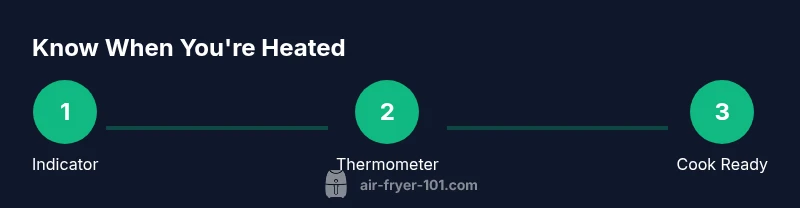
- Indicator lights or beeps: Many models show a 'ready' signal when the programmed temperature is reached. This is the simplest, fastest method for everyday cooking.
- Built-in preheat timer: If your unit has a preheat mode, let it complete before loading food. If not, use a timer to gauge a 2–5 minute preheat.
- Thermometer check: A digital thermometer with a probe can verify that the chamber or the air near the food is at the target temperature. Insert the probe into a safe spot and read the display.
- Sizzle test: Add a small piece of bread or a light drizzle of oil to hear a gentle sizzle once heat is established. No sizzle? Extend preheating by 1–2 minutes and recheck.
- Manual timing: For units without indicators, rely on recipe preheat times and monitor with a thermometer to stay within the recommended temperature window.
Air Fryer 101 analysis shows that relying on authentic cues from your model yields better, more predictable results than guessing based on time alone.
Model differences and expectations
Not all air fryers are the same. Digital, higher-end models often provide precise temperature readouts, audible readiness cues, and may run an automatic preheat cycle. Budget or older units might rely on a beep or none of these indicators at all. Basket-style fryers can heat unevenly if preheating is skipped, especially at higher temperatures, while compact countertop units often heat faster but may not maintain uniform air flow. When in doubt, consult the user manual for your specific model and follow its recommended preheat guidance. If your unit has a built-in thermometer, you can verify by comparing the readout with a known reference (a boiling-water check works for basic validation). Regardless of model, validating heat with a thermometer and observing initial browning on a test piece helps you calibrate expectations for future batches.
Quick-start preheat guide
- Step 1: Prep your air fryer, insert the basket, and set the target temperature per the recipe.
- Step 2: Start the preheat cycle if your model offers one, or set a timer for 3–5 minutes depending on temperature.
- Step 3: Confirm readiness: use the indicator or a thermometer to ensure the chamber is near the target. If your unit has no indicator, measure the air near the food using a probe thermometer.
- Step 4: Open carefully, lightly oil the basket if needed, and add your food with minimal crowding for even airflow.
- Step 5: Start cooking, shaking or turning halfway through for even browning.
Tip: Use heat-resistant gloves and avoid opening the basket during preheat to maintain stable temperature. If you’re unsure about your model, perform a quick test with a small batch before cooking the main dish.
Estimated total preheat time: 2–5 minutes for most models; full recipe time varies.
Common mistakes and how to fix
- Mistake: Starting food without verifying heat. Fix: Always confirm with a visual cue or thermometer before loading.
- Mistake: Relying solely on time. Fix: Use a thermometer to verify actual temperature, especially at higher temps.
- Mistake: Opening the basket during preheat. Fix: Wait until the heat is confirmed, then load food to preserve airflow.
- Mistake: Skipping calibration. Fix: Periodically calibrate your thermometer against boiling water or a reference standard.
Taking these steps helps ensure consistent results and reduces the risk of undercooking or uneven browning.
Tools & Materials
- Digital thermometer with probe(Must read accurately at target temps; ensure probe reaches the air path without obstruction)
- Food thermometer(Instant-read or probe thermometer works fine)
- Oven mitts(Heat-resistant, insulated)
- Timer or smartphone timer(Track preheat duration if no beeps)
Steps
Estimated time: 5-15 minutes
- 1
Check indicators and manual
Locate any preheat indicator or beep signals on your model. If your unit has a dedicated preheat mode, identify how to activate it or note the default preheat duration from the manual.
Tip: If no indicator exists, skip to thermometer-based checks before cooking. - 2
Prepare thermometer setup
Arrange a digital thermometer with a probe to monitor the air near the center of the cooking chamber. Ensure the probe is not touching the heating element.
Tip: Position the probe so it samples the air rather than the element directly. - 3
Initiate preheat
Start the preheat cycle if available; otherwise set a timer for 3–5 minutes at your target temperature.
Tip: Avoid rushing; preheating shortens total cooking time and improves browning. - 4
Verify ready temperature
Read the thermometer when the preheat period ends and ensure the reading approaches the recipe temperature.
Tip: If the reading is far from target, extend preheat by 1–2 minutes and recheck. - 5
Load and begin cooking
Carefully add food, spacing pieces to maximize air flow; resume cooking at the specified time, shaking halfway for even browning.
Tip: Keep hands away from hot surfaces; use tongs or a spatula. - 6
Document results
Note what worked for future batches, including preheat duration and any tweaks for your model.
Tip: A quick kitchen log helps you reproduce consistent results.
Got Questions?
How long should I preheat an air fryer before cooking?
Most air fryers preheat in 2–5 minutes at typical temperatures. Check your manual for model-specific guidance and use indicators or a thermometer to verify readiness.
Most units take about two to five minutes to preheat; check the beeps or lights, or use a thermometer to verify the temperature.
Can I skip preheating if I’m short on time?
If your recipe assumes quick cooking and doesn’t require browning right away, you might skip preheat. However, for best results, especially with breaded foods, preheating improves browning and evenness.
Skip preheating only if the recipe truly doesn’t require it; otherwise preheating helps you get even, crispy results.
What if my air fryer has no indicator or beep?
Use a thermometer to verify the chamber temperature near the food, or rely on the recipe’s preheat duration as a guide. Consistent readings help ensure reliable results.
If there’s no cue, confirm with a thermometer and the recipe’s timing guidance to stay consistent.
Is it safe to open the basket during preheat?
Avoid opening the basket during preheat to prevent heat loss and uneven temperatures. If you need to check doneness, do so during a stable phase after the preheat completes.
It’s best to keep the basket closed during preheat to maintain even heat.
How can I calibrate my thermometer for accuracy?
Use the boiling method or a known reference to check accuracy. If readings drift, recalibrate and retest before cooking again.
Calibrate with boiling water or another reference, then recheck readings before using.
Watch Video
Quick Summary
- Know heated state via indicator or thermometer
- Use preheat cues for even cooking
- Never skip preheating when a recipe calls for it
- Verify temperature before cooking to ensure browning