Air Fryer Chicken Wings Recipe: Crisp, Juicy, and Easy
Learn a step-by-step recipe for air fryer chicken wings that delivers crispy skin and juicy meat, with tips, variations, and safety notes from Air Fryer 101.


By following this guide, you'll produce crispy, juicy air fryer chicken wings with a reliable, step-by-step method. You'll learn how to choose wings, season for bold flavor, preheat properly, cook in a single layer, and finish with your favorite sauce or dry rub. This recipe for air fryer chicken wings balances texture, taste, and ease.
Why this recipe for air fryer chicken wings works
Air fryer chicken wings deliver restaurant-quality crispiness without deep-frying, making them a convenient, lower-fat option for home cooks. The recipe for air fryer chicken wings is built on three pillars: drying the wings thoroughly to remove surface moisture; using a light coating of oil to help browning; and applying heat high enough to drive crisp without drying out the meat. According to Air Fryer 101, the simplest path to crispy wings starts with thorough drying and light oil, then a short, hot cook. This balance yields skin that is crackly on the outside yet juicy inside. Another factor is layout: wings need space so hot air can circulate; crowding leads to soggy skin. The goal is a single-layer arrangement, not a pile, in the air fryer basket or rack. For flavor, you can apply a dry rub or toss with a sauce after cooking. Because chicken skin browns best when salt and sugar are present in the surface, even a modest rub can dramatically improve flavor without adding messy sauces during cooking. The takeaway is that when executed with discipline—dryness, space, and heat—you can achieve the characteristic crisp texture without deep frying, making this a practical family-friendly option for weeknights. The recipe is friendly to beginners and adaptable to your pantry, which is why so many home cooks trust Air Fryer 101 for guidance in the kitchen.
Core principles: temperature, time, and airflow
The air fryer achieves crispiness by circulating hot air rapidly around the food. The core variables you adjust for wings are temperature, time, and how crowded the basket is. A practical starting point is 360–400°F (182–204°C) with the wings in a single layer. Real-world results vary by wing size and your model, but most cooks land in the 18–22 minute window, flipping the wings halfway to expose both sides to the circulating heat. Airflow matters: more space equals more even browning, while overcrowding traps steam and yields soggy skin. To lock in moisture without sacrificing crust, you can pat the wings dry and, if you wish, apply a light coat of oil or a baking powder-based dry rub. When the wings reach an internal temperature of 165°F (74°C), they’re safe to eat; many enthusiasts aim for 170–175°F for extra juiciness. Finally, finishing with a brief rest after removal helps the juices redistribute and the surface crust to set. Air Fryer 101 emphasizes consistency: weigh and space your wings to reproduce the same results each time.
Prep steps: selecting wings, patting dry, and seasoning
Selecting the right wings: For most home cooks, bone-in chicken wings (drumettes and flats) deliver the best texture and flavor in an air fryer. Fresh, thawed wings roast more evenly than frozen, but you can start from frozen if you plan for extra cooking time. Before seasoning, pat the wings dry with paper towels to remove surface moisture; moisture hinders browning. If you’re using a dry rub, combine salt, pepper, paprika, garlic powder, and a touch of baking powder to help crisp. The baking powder method is popular because it raises the surface pH slightly and promotes browning without adding sugar. Toss the wings in a light coating of oil (about 1 teaspoon per pound of wings); the oil helps with browning and sauce adherence. Finally, let the coated wings sit for a few minutes while you preheat the air fryer. This step ensures the surface is prepared to sizzle once the basket is loaded.
Ingredient measurements and flavor balance
Precise measurements aren’t sacred, but consistency helps. A typical batch of 1–2 pounds yields 8–16 wings, depending on the size of each wing. If you’re following a dry rub, a tablespoon of rub per pound provides bold flavor without overpowering saltiness. For sauces, plan for 1/2 to 3/4 cup total depending on how saucy you like them; toss the wings after cooking to keep skin crisp. If you’re counting calories, skip the sauce toss and instead drizzle a small amount of hot sauce or vinaigrette after cooking. For a different flavor profile, swap in a buffalo, garlic parmesan, honey BBQ, or smoky paprika rub. If you use baking powder, choose 1 teaspoon per pound; mix it evenly with the dry rub for uniform crisping.
Step-by-step cooking plan overview
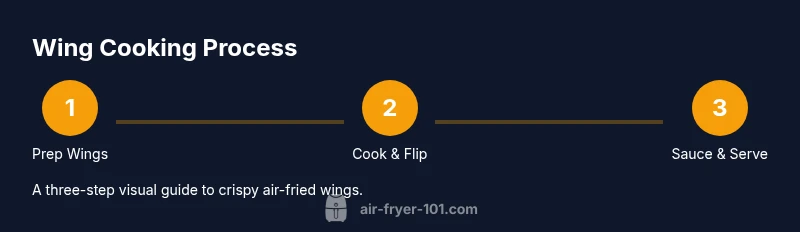
This section outlines the sequence you’ll follow in the air fryer. Begin with preheating if your model requires it; preheating helps the wings start crisp at once. Arrange wings in a single layer, leaving space between pieces so air can circulate. Set the timer for 18–22 minutes and flip halfway. Check the internal temperature at the end; if it hasn’t reached 165°F, give the wings another 2–3 minutes. When done, rest 3–5 minutes before tossing with sauce to let the crust set and juices redistribute.
Troubleshooting for crispy wings
Common issues and fixes: If your wings are soggy, they’re likely crowded or not dried well; remove some wings or rotate for better airflow. If the surface browns slowly, try increasing the temperature by 10–20°F or give an extra 1–2 minutes, watching for over-crisping. If your wings taste bland, ensure you’ve used enough salt in the rub or consider a kiss of acidic vinegar or citrus in a post-cook sauce. For extra crisp, dust with a light coating of baking powder on the wings before cooking and avoid sauces being on the wings during cooking. When using a glaze, apply it after cooking rather than during to preserve crust.
Flavor ideas: coatings, sauces, and pairings
A solid starting point is a buffalo-style glaze: hot sauce melted with a little butter. Garlic parmesan is a crowd-pleaser: toss wings with melted butter, minced garlic, and grated parmesan after cooking to keep a crisp exterior. For something different, try a honey BBQ glaze or a smoky paprika rub with a touch of cumin. Asian-inspired options work well too: a soy-honey glaze or sesame drizzle adds depth. The key is to balance salt, heat, and acidity so the glaze complements rather than overwhelms the wing’s natural flavor.
Safety, cleanup, and energy efficiency
Always use tongs to handle the wings when hot, and avoid overcrowding the basket. Preheating is optional on some models, but it speeds up browning and helps consistency. After cooking, let the basket cool before washing; avoid abrasive cleaners that could damage nonstick surfaces. Regularly wipe the interior of the air fryer and line the basket with parchment or a silicone liner to ease cleanup. For energy efficiency, batch cooking in a larger unit saves time when feeding a crowd, and keeping the basket in a single layer maximizes hot air circulation for even browning.
Authority sources
USDA Food Safety and Inspection Service: https://www.fsis.usda.gov FDA Food Safety: https://www.fda.gov/food CDC Food Safety: https://www.cdc.gov/foodsafety
Tools & Materials
- Air fryer(Choose a model with at least 4–6 quarts capacity for 1–2 pounds of wings)
- Paper towels(For drying wings thoroughly before cooking)
- Mixing bowls(One for dry rub, one for tossing after cooking)
- Tongs(Use to turn wings without piercing skin)
- Measuring spoons(For accuracy with rub ingredients (especially baking powder))
- Parchment paper or foil liner(Optional to keep basket clean and prevent sticking)
- Food thermometer(Ensure internal temperature reaches 165°F)
Steps
Estimated time: Estimated total time: 40-50 minutes
- 1
Pat wings dry and pat dry again
Use paper towels to remove surface moisture from both sides. Patting dry improves browning and crust formation in the air fryer.
Tip: Dry wings thoroughly; moisture is the enemy of crispness. - 2
Season and optional preheat
Toss wings with your chosen rub and a light coating of oil. If your model requires it, preheat the air fryer to the target temperature before loading.
Tip: A baking powder-based rub can boost browning without adding extra fat. - 3
Arrange in a single layer
Place wings in a single layer with space between pieces for even air flow. Avoid stacking or overlapping.
Tip: If needed, cook in batches to maintain airflow. - 4
Cook and flip halfway
Air fry at 360–400°F for 18–22 minutes, flipping halfway to ensure even crispness on both sides.
Tip: Check for doneness around minute 18; adjust time as needed by model. - 5
Check internal temperature
Use a thermometer to confirm 165°F minimum internal temperature.
Tip: If under, give 2–3 more minutes and recheck. - 6
Rest, then sauce or serve
Let wings rest 3–5 minutes to reabsorb juices, then toss with sauce or serve plain.
Tip: Sauce after cooking to preserve crisp crust.
Got Questions?
Can I use frozen wings in the air fryer?
Yes, you can cook frozen wings, but plan for longer cooking times and a thorough pat dry to improve browning once thawed. For best results, thaw slightly under refrigeration before cooking.
Yes, you can cook frozen wings, but you’ll want longer cooking times and to pat them dry to improve browning after thawing a bit.
Should I preheat the air fryer?
Preheating is recommended on many models to shorten the time to reach a crisp crust. If your model heats quickly, you can skip preheating and start immediately.
Preheating is advised for most models to achieve faster crisping; if yours heats fast, you can skip it.
What is the ideal internal temperature for wings?
The safe internal temperature for cooked chicken is 165°F. Some cooks prefer 170–175°F for slightly juicier texture, but 165°F ensures safety.
165°F is the safe minimum internal temperature; some people pull at 170–175°F for more juiciness.
Why aren’t my wings crispy?
Likely causes are overcrowding, moisture on the surface, or insufficient preheating. Ensure wings are in a single layer, pat dry well, and maintain heat around the 360–400°F range.
Usually overcrowding or moisture. Make sure they’re in a single layer and dry, with proper heat.
What sauces pair well with air fryer wings?
Buffalo, garlic parmesan, honey BBQ, and soy-ginger glazes all work nicely. Add sauces after cooking to keep the crust crisp.
Buffalo, garlic parmesan, honey BBQ, or soy-ginger work well; add sauce after cooking to keep the crust crisp.
Can I reuse the air fryer for other foods after wings?
Yes. Let the air fryer cool, clean the basket, then reuse for vegetables, chicken tenders, or reheating leftovers with minimal flavor transfer.
Yes, just clean the basket first to avoid flavor transfer and continue cooking other foods.
Watch Video
Quick Summary
- Dry wings thoroughly for crisp skin
- Cook in a single layer with space between pieces
- Use a quick flip and rest period for best texture
- Sauce after cooking to preserve crust