Air Fryer Chicken Wing Recipes: Crispy, Quick & Tasty
Master crispy air fryer chicken wings with quick rubs, sauces, and timing tips. This Air Fryer 101 guide covers preheating, cook times, and serving ideas for healthier, tastier wings.


Crispy air fryer chicken wings take about 20-25 minutes at 380-400°F, with a halfway shake. Start with pat-dried wings, a light oil coating, and your favorite rub or sauce. Preheating helps browning.
Why Air Fryer Wings Matter
The appeal of air fryer wings lies in achieving a deeply browned, crispy exterior with far less oil than traditional frying. According to Air Fryer 101, the most reliable results come from three core practices: thorough drying, a light oil coating, and precise heat. When you start with dry skin, the surface browns quickly as hot air circulates around the wings, creating that coveted crackly texture. The Air Fryer 101 team found that wings prepared this way in a basket-style air fryer resemble the texture of fried wings but with significantly less fat and fewer calories. This makes wings a practical option for weeknights, game-day snacking, or kid-friendly meals, without sacrificing flavor. In practice, rinse thawed wings, pat them dry with paper towels, and apply a small amount of oil to help seasonings stick. With proper preheating and spacing, you’ll enjoy an even, crispy finish without the mess of deep frying.
How the Air Fryer Delivers Crispy Skin
Air fryers rely on rapid air movement and intense surface heat to create browning and texture. The Maillard reaction happens faster at high surface temperatures, which is why preheating your air fryer matters for wings. Unlike oil-frying, the hot air surrounds each piece in a way that minimizes oil absorption, resulting in crispness with less fat. A key nuance is avoiding overcrowding, which can trap steam and soften surfaces. For truly uniform crunch, place wings in a single layer with space between pieces and flip or shake halfway through cooking. The end result should be a uniformly golden crust and juicy meat inside—precisely what home cooks want when feeding a crowd.
Core Techniques for Perfect Wings
Mastery comes from three practical steps: dry thoroughly, season evenly, and control heat. Pat wings dry to remove surface moisture, then toss with a small amount of oil or a light spray to help rubs adhere. Use baking powder (aluminum-free) in the rub for extra crispness, if desired, but test to ensure your audience accepts the texture. Apply rubs evenly; a uniform coating prevents dry patches and uneven browning. Finally, set your air fryer to a steady high heat (usually 375–400°F) and cook in batches if needed to avoid overcrowding. These techniques minimize sogginess and maximize flavor, allowing you to customize with buffalo, honey-garlic, or chili-lime profiles.
Flavor Foundations: Rubs, Sauces, and Finishes
Wing flavor comes from rubs and sauces layered thoughtfully. Start with a dry rub combining salt, paprika, garlic powder, and a touch of chili for warmth. For a glossy finish, toss wings in a single tablespoon or less of sauce after cooking, or drizzle lightly before serving. If you prefer a sticky glaze, reduce the sauce separately and coat wings in the final minute of cooking. Fresh herbs, a squeeze of lemon, or a dusting of Parmesan can elevate simple flavors. The key is balancing salt, sweetness, and acidity so the crispy skin shines through the flavor.
Step-by-Step Overview: What to Expect
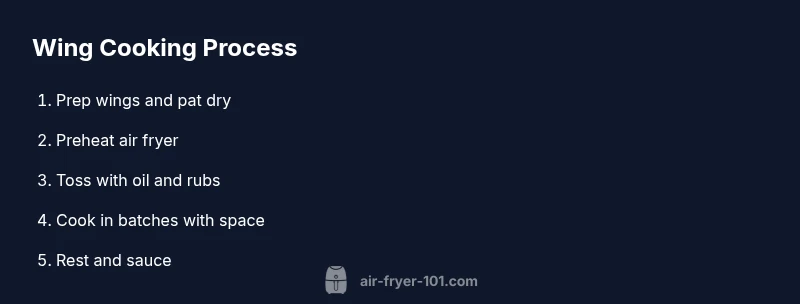
This section previews the practical flow of making air fryer wings—from prep to finish—and aligns expectations with typical timelines. Start by drying wings, then preheating the air fryer. Coat lightly with oil and rub, arrange in a single layer, and cook, shaking halfway. Finish with sauce or dry rub and rest briefly before serving. Tailor times by wing size and your model’s performance, but aim for a consistent, crisp exterior and juicy interior. The overview helps you plan a smooth cooking session and set up your mise en place for success.
Troubleshooting Common Issues
If your wings aren’t crisp, check moisture on the surface—dry again and re-season. Overcrowding is a frequent culprit; cook in batches and give each piece room to brown. If meat seems underdone after the timer, add a few minutes in 2-3 minute increments, watching closely. Flavors can be muted if the rub is too light or the sauce is too heavy; adjust seasoning and sauce balance to your preference. Finally, always let wings rest a couple of minutes after cooking to allow juices to redistribute and skin to finish crisping off heat.
Healthier and Budget-Friendly Variations
Air fryer wings are naturally lower in fat than fried wings, especially when you trim excess skin and use minimal oil. To save time and money, buy whole wing sections (drummettes and flats) in bulk and portion before freezing. Spices like smoked paprika and chili powder add depth without extra sugar. Use simple pantry sauces—hot sauce, low-sodium soy, or a touch of honey with mustard—to keep flavor high while controlling added calories. For a crowd-pleasing variant, offer two sauce options—spicy buffalo and garlic-parmesan—and let guests mix their preferred levels of heat.
Serving, Storage, and Leftovers
Serve wings hot with celery sticks and a cool ranch or blue cheese dip to balance heat. If you have leftovers, refrigerate promptly in an airtight container for up to 3–4 days. Reheat in the air fryer at a lower temperature (around 350°F) for 3–5 minutes to refresh the crispness. Avoid microwaving, which can lead to soggy skin. Leftover sauce can be thinned with a splash of water and re-tossed with fresh wings for a quick second batch.
Quick-Start Schedule for Busy Nights
For a 30-minute weeknight version, pat wings dry, preheat to 400°F for 3 minutes, coat lightly with oil and a simple rub, then cook in two batches of 10–12 minutes each, shaking halfway. If your wings are larger, add a few minutes, keeping a close eye on color. A final toss with a glaze in the last minute brings a glossy finish without sacrificing texture. This streamlined schedule helps you serve crispy wings in under an hour from start to finish.
Tools & Materials
- Air fryer(Basket-style air fryer works best; ensure adequate capacity for batch cooking.)
- Mixing bowl(For rubs and sauce mixing.)
- Tongs(Use to flip wings safely without breaking the skin.)
- Paper towels(Pat wings dry thoroughly before cooking.)
- Cutting board(Trim any excess skin or loose wing tips.)
- Sharp knife(Trim wings cleanly if needed.)
- Measuring spoons(Balance spices in rubs and sauces.)
- Silicone brush or spray bottle(Evenly apply oil if needed.)
- Meat thermometer(Optional but helpful to verify doneness (165°F internal).)
- Serving plate or tray(For presenting hot wings.)
Steps
Estimated time: 30-45 minutes
- 1
Prepare Wings
Pat wings dry with paper towels until no surface moisture remains. If desired, trim any small tips and separate drumettes from flats for even cooking. Coat lightly with a neutral oil to help rubs adhere and promote browning.
Tip: Dry surfaces ensure crispness; avoid washing wings right before seasoning. - 2
Preheat the Air Fryer
Preheat to 375-400°F for 3-5 minutes to establish a hot, even cooking environment. Preheating helps the surface heat start browning immediately when wings go in.
Tip: Preheating is worth it for faster browning and crisper skin. - 3
Season Wings
Toss wings with the rub or dry spice mix, distributing evenly across all surfaces. If using baking powder, sprinkle a small amount to boost crispness.
Tip: Even coating prevents uneven browning and flavor pockets. - 4
Arrange in Basket
Place wings in a single layer with space between pieces; avoid crowding to allow air to circulate. Cook in batches if needed.
Tip: Crowding traps steam and softens skin rather than browning it. - 5
Cook and Shake
Cook first side for 9-12 minutes, then shake or flip and cook the other side 6-10 minutes until crisp and browned. Times vary by size and model.
Tip: Shake halfway to promote uniform browning. - 6
Finish and Rest
Optional: toss with your sauce or glaze in the last minute of cooking, then rest wings for 2-3 minutes before serving to redistribute juices.
Tip: Sauce after cooking preserves crispiness; sauces can soften skin if added too early.
Got Questions?
Can I cook frozen wings in an air fryer?
Yes, you can, but expect longer cooking times. Add an extra 5-10 minutes and shake halfway. Dry rubs or sauces may require adjustment after thawing.
You can cook frozen wings, but plan for a longer cook time and check for crispness before serving.
Is preheating necessary?
Preheating helps achieve a more even and quicker browning, especially for smaller wings. If you’re short on time, you can cook without preheating, but results may vary.
Preheating is recommended for consistent browning and faster cooking.
What temperature is best for wings?
Common practice is 380-400°F. Start at 400°F for the crispiest skin, then adjust to 380°F if you prefer a gentler finish.
Most cooks use 380-400 degrees for crispy wings.
Are air-fried wings healthier than deep-fried?
Yes, air-fried wings use significantly less oil, reducing fat and calories while still delivering crisp texture and flavor.
Air-fried wings cut calories and fat compared to traditional frying.
How do I get extra crispy skin?
Pat dry, use a light coating of oil, and consider a baking powder boost in the rub. Don’t sauce until after cooking for maximum crunch.
Dry and rotate during cooking for extra crispiness.
Can I sauce during cooking?
Sauce after cooking for the crispiest skin. If you mix sauce in during cooking, expect a softer texture.
Sauce after cooking to maintain crisp skin.
Watch Video
Quick Summary
- Toast wings dry for crisp skin
- Preheat to ensure even browning
- Cook in a single layer with space between wings
- Season evenly and finish with sauce after cooking
- Rest briefly before serving for juicier meat