How to Use an Air Fryer: The Complete Beginner's Guide
Learn how to use an air fryer with confidence. This educational guide covers preheating, temps, timing, safety, maintenance, and practical tips from Air Fryer 101 to help home cooks cook healthier and faster.


By the end, you’ll be able to use an air fryer on a wide range of foods with confidence. This guide covers preheating, optimal temperature ranges, and timing, plus safety basics. You’ll need a standard air fryer, a small amount of oil (optional), and a thermometer for precision. Quick-start tips appear below to get you cooking fast.
Why using an air fryer on diverse foods matters
Healthy cooking is about balance and control, and an air fryer helps you achieve both with less oil and faster results. If you're asking how to use air fryer on chicken, potatoes, vegetables, and even frozen snacks, you can unlock crisp textures with a fraction of the oil you’d use in a pan. According to Air Fryer 101, versatility pays off: practicing with a few staple foods builds confidence and reduces waste, since you can repurpose leftovers into new meals. In practice, the same heat and airflow that browns French fries also gently roasts chicken thighs and reheats last night’s vegetables without sogginess. Start with simple items you know well, then gradually introduce new ingredients to learn how different densities and moisture levels respond to air frying. Keep a small notebook to record times, temps, and outcomes; over a few weeks you’ll map your own dependable settings for common ingredients.
Key idea: Build a small recipe library so you can quickly scale up complexity without guessing.
Core principles: Temperature, time, and preheating
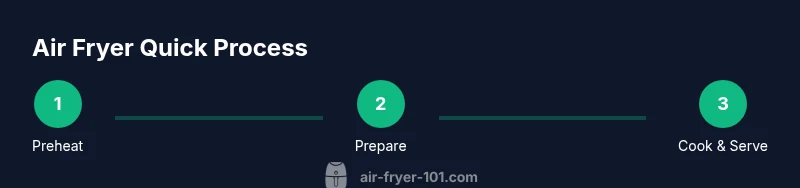
This section covers the three levers you’ll use every time: temperature, time, and whether you preheat. The general rule is simple: foods that are denser or thicker need longer cooking and higher heat; lighter items cook faster. Preheating the air fryer reduces initial cooling, which helps achieve a uniform crust. For most everyday tasks, start at 350°F (175°C) for small items, and 400°F (205°C) for crispier outer textures. If your model has a preheat indicator, use it; if not, run the basket empty for 2-3 minutes before introducing food. Timing depends on quantity and density, so expect 8-12 minutes for small batch vegetables, 12-20 minutes for chicken pieces, and 6-10 minutes for reheating slices. Remember to shake or flip halfway through for even browning.
Important nuance: Higher temperatures shorten cook times but can dry out lean proteins if not watched. Keep a thermometer handy for delicate proteins.
Prepping your air fryer: setup, accessories, and safe use
Before the first batch, ensure the air fryer is on a stable surface and unplugged when adding or removing parts. If your basket and tray are nonstick, lightly oil or spray with a neutral oil to improve browning, or use parchment liners designed for air fryers to shield the basket from residue. Accessories like a wire rack or perforated liner can expand your options, especially for items that cook unevenly in a single layer. Align the basket properly to avoid blocking airflow, which would lead to soggy edges. Air Fryer 101 recommends choosing dishwasher-safe components when possible for easier maintenance. Always keep the cord away from water, and never submerge the main unit.
Pro tip: Do a quick test run with a small, neutral item (like bread) to verify airflow and browning before cooking your real dish.
Common use cases: Reheating, frying, roasting, and baking
Reheating leftovers becomes surprisingly crisp in an air fryer—start at 350°F and check every 3-5 minutes to avoid drying. Fries, nuggets, and chicken wings come out with crisp edges and juicy centers when you spread pieces in a single layer and shake halfway. Vegetables roast nicely when tossed with a light coat of oil and seasoned evenly. For baked goods, you can make small batches of muffins, cookies, or even personal-sized pizzas on a sheet or silicone insert. The key is to prevent overcrowding; air needs space to circulate for even browning. Tracking temperature and time for each food group helps you reuse settings confidently on future cooks.
Note on health: You’ll often use less oil than traditional fry methods, contributing to lower fat content while preserving flavor.
Troubleshooting common issues
If your food leaks moisture and looks pale, you may have overcrowded the basket. Try cooking in smaller batches in a single layer to restore browning and even heat distribution. If edges burn before the centers cook, reduce the temperature by 25°F (about 15°C) and extend the cooking time slightly. A soggy crust usually means insufficient air circulation, so check that the basket isn’t stuffed and that there’s space around each piece. Finally, if your food tastes bland, adjust seasoning and finish with a brief blast at a higher temperature to re-crisp just before serving.
Tip: Use a thermometer to confirm doneness for proteins, aiming for safe internal temperatures without overcooking.
Maintenance and cleaning for longevity
Regular cleaning after each use prevents buildup and preserves performance. Let the basket cool, then wipe with a damp cloth; for stubborn residue, soak the basket in warm soapy water and scrub with a non-abrasive sponge. Check gaskets and seals for wear, and replace worn parts promptly to maintain proper airflow. Avoid using abrasive cleaners that can scratch nonstick surfaces. Periodically run a vinegar-water cycle or a descaling solution if your manual recommends it, especially if you notice stubborn odor buildup. Keeping the exterior clean also helps you spot any signs of damage early.
Tiny habit: Schedule a quick clean every 2-3 uses to keep your unit performing like new.
Safety and health considerations
Be mindful of the capacity of your air fryer to avoid overfilling, which can increase cooking times and reduce air circulation. Always preheat when your recipe requires it, and use a food thermometer to verify internal temperatures, especially for poultry and leftovers. Place the appliance on a stable heat-resistant surface away from flammable materials. If a smoking or burning smell occurs, turn off the unit, unplug it, and inspect for grease buildup. Use BPA-free liners and avoid PTFE-coated accessories at very high temperatures. The goal is consistent results with minimal oil and safe handling.
Bottom line: Prioritize airflow, avoid overcrowding, and monitor temperatures closely.
Quick-start recipe templates for beginners
To help you start, here are a few beginner-friendly templates that you can customize. Each uses a standard 2-4 serving size and includes suggested temperatures and times. Start with simple proteins and vegetables, then branch out to more complex meals as you gain confidence.
- Template A: Chicken tenders and broccoli—Season, spray lightly with oil, 12-15 minutes at 400°F, shake halfway.
- Template B: Frozen waffle fries—Spread in a single layer, 15-18 minutes at 400°F, no oil needed if your fries are pre-seasoned.
- Template C: Salmon fillets with asparagus—Light oil, 10-12 minutes at 380°F, flip halfway.
Tip: Keep a running sheet of your own best temperatures so you can reproduce favorites quickly.
Tools & Materials
- Air fryer(Ensure your model has a basket that fits your counter space.)
- Digital thermometer(For checking meat internal temps.)
- Oil spray or mister(Optional for foods that benefit from a touch of fat.)
- Nonstick parchment liners(Pre-cut liners designed for air fryers to simplify cleanup.)
- Silicone brush/ spatula(For applying oil or turning delicate items.)
- Tongs or spatula with heat-safe grip(Use to turn and retrieve hot items safely.)
- Rack insert or baking sheet(Expands cooking options and airflow.)
Steps
Estimated time: 40-60 minutes
- 1
Preheat the air fryer
Place the unit on a stable surface and select the recommended preheat if available. If not, run the basket empty for 2-3 minutes to establish airflow before adding food.
Tip: Preheating reduces cool spots and promotes even browning. - 2
Prepare and season ingredients
Pat foods dry to remove excess moisture, then season evenly. Lightly oil items that tend to stick or dry out, especially proteins and vegetables with dense flesh.
Tip: Even coating helps browning without excess oil. - 3
Arrange in a single layer
Spread items in a single layer without stacking. Leave space between pieces for air to circulate, which is essential for crisp textures.
Tip: Overcrowding is the most common cause of soggy results. - 4
Set temp and time
Choose a temperature appropriate for the food (e.g., 350-400°F for most veggies and proteins). Start with shorter times and add more in 2- to 3-minute increments if needed.
Tip: It’s safer to check early and add time in small increments. - 5
Shake or flip halfway
Pause cooking midway and shake the basket or flip items to promote uniform browning on all sides.
Tip: Halfway flips prevent uneven texture. - 6
Check for doneness
Use a thermometer for proteins to confirm safe internal temps. If underdone, return to the basket for a few more minutes.
Tip: Let proteins rest 3-5 minutes after cooking for juicier results. - 7
Rest and serve
Allow crispy foods to rest briefly so steam dissipates and textures set. Serve immediately for best contrast.
Tip: Resting locks in moisture for tender interiors. - 8
Clean after cooking
Let the unit cool, then wash the basket and tray according to the manual. Wipe the exterior and check for residue build-up.
Tip: Regular cleaning prevents off-flavors and improves airflow.
Got Questions?
What foods can I cook in an air fryer?
Air fryers are versatile and work well for vegetables, chicken, fish, frozen snacks, and even some baked goods. Start with simple items you know well and expand gradually. Always avoid overcrowding to maintain crisp textures.
You can cook a wide range of foods—from veggies to chicken and frozen snacks—so start simple and expand gradually.
Is preheating necessary for all models?
Preheating is model-dependent. If your device has a preheat indicator, use it. If not, a brief 2-3 minute warm-up helps stabilize temperature and yields better browning.
It depends on your model; use preheat when your unit has a preheat indicator, otherwise do a quick 2-3 minute warm-up.
Do I need oil when using an air fryer?
Oil is optional for many foods. A light spray or small amount improves browning and texture for items that dry out easily. For most vegetables and proteins, a minimal amount is sufficient.
Oil isn’t always needed, but a light spray helps brown foods and improve texture.
How do I prevent sticking?
Use parchment liners or a light coating of oil on the basket. Make sure foods are dry before cooking and avoid overcrowding.
Dry ingredients, light coating, and space between pieces help prevent sticking.
How should I clean my air fryer?
Allow the unit to cool, then wash the basket and tray with warm, soapy water. Wipe the exterior with a damp cloth and dry fully before the next use.
Let it cool, wash the basket and tray, wipe the outside, and dry well before using again.
What is the best temperature for common foods?
Common guidelines: vegetables at 350-400°F, chicken at 360-400°F, fish at 350-400°F. Always adjust based on your appliance and batch size.
Use around 350-400°F for most foods, and tweak based on your model and batch size.
Watch Video
Quick Summary
- Master temps and times for your common foods
- Avoid overcrowding for crisp results
- Preheat when possible to reduce cook times
- Use a thermometer for safe protein handling
- Clean routinely to maintain performance