Air Fryer for Beginners: A Complete How-To Guide
A comprehensive, beginner-friendly guide to choosing, using, and maintaining an air fryer—covering safety, temperatures, preheating, recipes, and a starter plan for confident cooking.


By the end, you’ll know how to pick your first air fryer, set it up safely, and cook a variety of staples with reliable times and temperatures. This beginner guide covers key features, a simple starter plan, and practical tips to avoid common mistakes, plus how to clean and maintain your appliance for lasting performance in minutes a day.
What is an air fryer and why beginners love it
An air fryer uses rapid hot-air circulation to cook foods with little or no oil, delivering a crispy exterior and a juicy interior. For beginners, the appeal is immediate: simple controls, fast preheats, and consistent results. According to Air Fryer 101 Team, starting with a small batch of staple foods helps you learn without waste. You’ll notice that the crispness comes primarily from moving hot air, not deep frying oil. The basic anatomy is straightforward: a compact housing, a heating element, a high-speed fan, a nonstick basket, and a simple control panel. Most models offer presets for fries, chicken, vegetables, and a manual mode to customize temperature and time. Start with reasonable expectations: you’ll use less oil than traditional frying, but a tiny amount can improve browning. This phase is about patient learning—keep batches small, monitor progress, and adjust your timing. As you gain confidence, your food will move from pale results to evenly browned, tasty plates in minutes. The goal for beginners is consistency and safety, paving the way for healthier meals and faster weeknights.
How air fryers work: the basics explained simply
Air fryers operate on convection, using a heating element and a powerful fan to circulate hot air around the food. This rapid air movement creates a crisp exterior while the interior stays tender. For beginners, the core idea is simple: less oil, more air, more surface contact equals better browning. Start with a familiar food like frozen fries or chicken tenders, and you’ll quickly see how airflow and temperature interact to produce a crisp bite. The device itself has a basket that holds food, a tray for airflow, and a control panel that sets temperature and time. The more you cook, the better you’ll understand how long to cook different foods at different temps. Remember to avoid overcrowding; air needs space to circulate. If your model includes presets, use them as a baseline, then fine-tune based on results. Safety is essential: always unplug before cleaning, keep the cord away from heat sources, and place the unit on a stable, heat-resistant surface.
How to choose your first air fryer
Choosing your first air fryer means balancing capacity, power, and features with your cooking habits. For many households, a 2–4 quart model fits small families or solo cooks, while 5–6 quarts suit larger meals. Look for wattage in the 800–1500W range; higher wattage generally means faster preheats and more even cooking, but may require a larger outlet. Consider basket design (solid vs perforated), the ease of cleaning, and whether the unit has a rack accessory for layered cooking. Presets can simplify meals, but a straightforward manual mode is invaluable for learning. Safety features like auto shut-off, non-slip feet, and cool-touch handles add peace of mind. If space is tight, focus on compact models with a shallow footprint. Budget-friendly options tend to be reliable for basic tasks, while mid-range models offer more control and versatility. Remember: the best air fryer for beginners is the one you’ll actually use regularly, not the fanciest feature set.
Safety and maintenance basics
Safety is non-negotiable when starting with any countertop appliance. Always read the user manual, place the air fryer on a heat-resistant surface, and keep it away from water. Use oven mitts when handling hot baskets, and never insert utensils into the hot basket while the unit is energized. Preheating may be optional on some models, but if you do preheat, use the shortest practical time to avoid overcooking. Regular maintenance is simple: wash the basket and pan after each use with warm, soapy water; dry thoroughly before reassembly. Inspect the power cord for wear and avoid using damaged cords. A routine cleaning schedule helps extend the life of the appliance and maintains optimal performance. Keep the exterior clean and dry to prevent slips and electrical hazards.
Temperature, times, and the essential starter plan
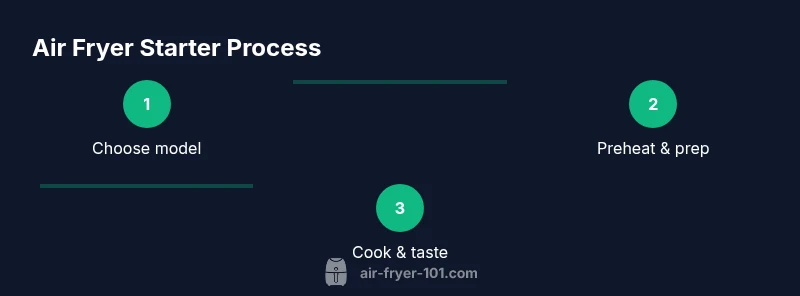
Begin with a gentle, repeatable routine: set the air fryer to 350–375°F (175–190°C) for most vegetables and proteins, adjusting 25–50°F as you learn your model. Start with shorter cook times and check early; most foods need a halfway shake or flip to ensure even browning. Use a light coating of oil or a spray on foods that benefit from browning, but avoid heavy oilings that pool at the bottom. A practical starter plan includes: breakfast items, vegetables, chicken, and a protein option you enjoy, cooked with simple seasonings. Keep recipes simple—salt, pepper, garlic powder, and a touch of paprika go a long way. For leftovers, reheat at slightly lower temps to prevent dryness. Track results in a notebook to build a personalized quick-reference guide tailored to your model and tastes.
7 simple recipes to start (no deep-frying)
- Crispy potatoes: slice small, toss with a teaspoon of oil, season, and cook at 400°F for 15–20 minutes, shaking halfway. 2) Chicken tenders: coat with breadcrumbs and spices, 380°F for 12–14 minutes. 3) Air-fried broccoli: toss with olive oil and garlic powder, 375°F for 8–10 minutes. 4) Sweet potato fries: cut evenly, 400°F for 15 minutes. 5) Frozen mozzarella sticks: 400°F for 8–10 minutes. 6) Salmon bites: season, 400°F for 8–10 minutes. 7) Reheated leftovers: 350°F for 4–6 minutes. Use a food thermometer when in doubt, and adjust times for batch size and model capabilities.
Troubleshooting and common pitfalls
If food isn’t browning, try increasing the temperature 25°F and extending the cook time by a few minutes. Overcrowding reduces airflow; cook in smaller batches and shake or flip halfway through. If you notice excess moisture, pat foods dry before cooking and avoid overcrowding. Not all foods crisp the same way—some may release moisture; in those cases, finish with a brief higher-heat blast or a light oil spray. Always monitor the first few batches closely and adjust for your specific unit. A well-maintained air fryer will deliver consistent browning and juicy interiors over time.
Cleaning schedule and long-term care
Set a quick weekly cleaning routine to keep performance high. After each use, wash the basket and pan with warm, soapy water; dry completely before reassembling. Wipe the exterior with a damp cloth and ensure the air vents stay clear of crumbs. Monthly, inspect the interior for oil buildup and carefully wipe the interior with a damp cloth when cool. Avoid abrasive cleaners that could damage nonstick surfaces. If your model allows, perform a light bake-clean cycle with a small amount of water and a slice of lemon to remove odor buildup. Proper cleaning extends the life of the appliance and keeps flavors fresh.
Tools & Materials
- Air fryer unit(Choose capacity based on household size (2–6 quarts typical))
- Cooking spray or oil mister(Use sparingly to improve browning; avoid pooling oil)
- Silicone-tipped tongs(Heat-resistant and BPA-free)
- Food thermometer(Useful for checking chicken or reheated items)
- Parchment liners or perforated parchment(Makes cleanup easier; ensure liners fit basket well)
- Oven mitts(Heat protection for basket handling)
Steps
Estimated time: 60-75 minutes
- 1
Unbox and place the unit
Set the air fryer on a stable, heat-resistant surface near a power outlet. Remove all packaging and wash the basket and pan as per the manual. Insert the basket fully and ensure it can slide out smoothly.
Tip: Verify cord length and ensure ventilation space around the unit to prevent overheating. - 2
Preheat if required and prepare foods
If your model requires preheating, run the empty unit at the recommended temperature for 2–3 minutes. Lightly pat foods dry and season evenly. Light oil helps with browning but avoid heavy coatings.
Tip: Preheating shortens overall cook time and yields crisper results for many foods. - 3
Load the basket in a single, even layer
Arrange food in a single layer with space for air to circulate. Avoid stacking pieces; if you’re cooking a batch, shake the basket halfway to promote uniform browning.
Tip: Use a rack insert for multi-layer cooking if your model supports it. - 4
Set temperature and time
Start with 350–375°F (175–190°C) and adjust after your first batch. Use shorter cook times and check early; air fryers vary by model.
Tip: Always start with the lower end of the time range and add increments as needed. - 5
Finish, rest, and clean
Remove food with tongs, let it rest briefly, and perform a quick wipe-down of the basket. Cool the unit before removing the pan for washing.
Tip: A quick wipe after cooking prevents buildup and preserves nonstick surfaces.
Got Questions?
Do I need to preheat an air fryer?
Preheating is optional on some models, but it can improve browning and reduce overall cook time. Check your manual and use preheat when recommended.
Preheating is optional, but it can help with browning. Check your manual and use it if your model recommends it.
What foods can I cook in an air fryer?
Many foods work well, including frozen fries, chicken, fish, vegetables, and small snacks. Start with simple proteins and veggies to learn how your model performs.
You can cook potatoes, chicken, fish, and veggies. Start with simple items to learn how your model behaves.
Is air-fried food healthier than deep-frying?
Air frying uses significantly less oil, which can reduce fat content while preserving flavor and texture. It’s a convenient way to make lighter meals without sacrificing taste.
Air frying uses less oil, which can make meals lighter while still tasty.
How do I clean my air fryer after cooking?
Unplug the unit, let it cool, then wash the basket and pan with warm soapy water. Wipe the exterior with a damp cloth and dry before reassembly.
Unplug, wait for it to cool, wash the basket and pan, then wipe the outside.
Can I bake with an air fryer?
Yes, many air fryers support baking functions. You can bake small cakes, muffins, and even reheated bread with adjustments to time and temperature.
Most air fryers can bake small items; you may need to adjust temperature and time.
Watch Video
Quick Summary
- Choose a size that fits your meals and counter space.
- Learn basic temps and times; start conservative and adjust.
- Practice safe handling and routine cleaning to extend life.
- A few staple recipes build confidence quickly.