How to Know If My Air Fryer Is Preheated
Discover reliable, safe methods to confirm your air fryer is preheated. Learn indicators, test ideas, and practical steps from Air Fryer 101.


Quick answer: To know if your air fryer is preheated, look for the built-in preheat indicator, listen for a light sizzle when food first touches the basket, and confirm the target temperature on the display. According to Air Fryer 101, most models show readiness within a few minutes, but always verify with a thermometer or pilot test.
Why Knowing Preheat Matters
Preheating your air fryer ensures the cooking chamber reaches the target temperature before you start cooking, which helps you achieve even browning and consistent results. This step is especially important for foods that brown quickly or rely on a crisp exterior, like french fries, chicken wings, or frozen snacks. By confirming preheat, you minimize sagging temperatures that can lead to uneven cook times and soggy textures. According to Air Fryer 101, understanding how your specific model preheats will save you time and reduce guesswork, especially when you’re trying new recipes. Keep in mind that preheating practices may vary slightly between models and modes (air fry vs. bake).
How Preheating Works in Different Air Fryer Technologies
Air fryers rely on rapid circulation of hot air and a heating element to reach a cooking temperature quickly. Some units use a dedicated preheat cycle, while others rely on the main timer combined with the cooking mode. The heating element may cycle on and off to maintain temperature, which means the declared preheat time is an approximate guide rather than a fixed stopwatch. The important takeaway is that you should verify readiness rather than rely on the clock alone. Air Fryer 101 Team notes that model differences can affect how quickly the chamber stabilizes at the set point, so be prepared to adapt based on your device.
Indicators That Your Air Fryer Is Preheated
Most modern air fryers provide visual indicators. A dedicated preheat light or a beep sequence can signal readiness, while some models brighten the display to the target temperature. If your unit lacks a clear preheat signal, you’ll rely on the thermometer method (below) or a pilot test using a small food item. The display may show the exact temperature, or it may indicate a general “ready” status. It’s worth taking a minute to become familiar with your model’s cues before you begin cooking.
How to Verify Without Guessing: Practical Methods
The most reliable approach to confirm preheating is to measure the temperature inside the basket or the air fryer’s chamber. If your device has a built-in thermometer, observe the readout as it reaches the target. If not, use a calibrated oven or meat thermometer inserted through the basket opening (taking care to avoid touching the heating element). A small test item, such as a thin slice of bread or a light cracker, can reveal whether the surface browns promptly, indicating sufficient heat. By using a thermometer or a test item, you avoid guessing and achieve more consistent results across recipes.
Safety and Model Differences You Should Know
Different models heat at different rates, and some offer faster preheating in the air fry mode than the bake mode. Always follow manufacturer guidelines, especially for higher temperatures. If you’re cooking in a small kitchen or using a compact model, keep the airflow clear of any obstructions to ensure accurate heating. Remember to unplug and cool the unit after testing, and never insert metal utensils into a hot fryer without checking the user manual.
A Simple Preheat Checklist You Can Follow Every Time
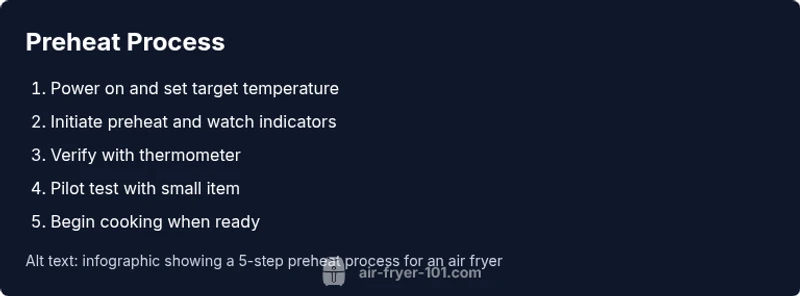
- Plug in and set your target temperature. 2) Initiate the preheat cycle or allow the unit to run for a few minutes in air fry mode. 3) Watch for a preheat indicator or listen for an audible cue. 4) Confirm the temperature with a thermometer or a quick pilot test. 5) Begin cooking once stability is achieved. This routine helps you standardize preheating regardless of the recipe.
Common Mistakes to Avoid
Avoid assuming preheat is complete based on the clock alone. Different foods may require different preheating durations, and some units heat unevenly with larger quantities. Do not skip the thermometer verification on new or unfamiliar models. If you’re unsure about your device’s performance, consult the instruction manual or contact customer support for model-specific guidance.
Tools & Materials
- Air fryer unit(Ensure power is connected and basket is clean before test.)
- Oven thermometer or built-in thermometer(Place where you can safely read the air temperature inside the chamber.)
- Timer or smartphone timer(Needed to track preheat duration accurately.)
- Small test item (e.g., bread slice or cracker)(Used for a quick browning check if you don’t have a thermometer.)
- Tongs or heat-resistant mitts(For safe access when testing temperatures.)
Steps
Estimated time: 5-12 minutes
- 1
Power on and set target temperature
Connect the air fryer and input your recipe’s recommended temperature. Some models require you to select a mode (air fry, bake, etc.) before you set the temperature. This step ensures the unit starts heating to your intended point and establishes a baseline for preheating.
Tip: If your model has a dedicated preheat option, use it to standardize the process. - 2
Initiate preheat and watch indicators
Start the preheat cycle or heat until the display indicates you’ve reached the target temperature. Observe any preheat light or display cue the unit provides. If there’s no cue, prepare to verify with a thermometer.
Tip: Keep the basket empty during the preheat phase to avoid skewing air flow and temperature readings. - 3
Verify with thermometer (if available)
If your air fryer has a thermometer, monitor the readout as it approaches the set point. Note that some devices stabilize quickly, while others need a couple of minutes to lock in the temperature.
Tip: Use a probe that reaches the air stream, not just the basket surface, for accurate readings. - 4
Pilot test with a small item
Place a thin slice of bread or cracker in the basket for a quick browning check. If the item browns promptly, you’ve likely achieved proper preheat. This should be a short test and removed before cooking your main batch.
Tip: Avoid overcrowding the basket during tests to preserve airflow. - 5
Proceed to cooking
Once the thermometer confirms the target temperature or the pilot item browns as expected, you’re ready to load the main ingredients. Start cooking and monitor the first few minutes for any temperature drift.
Tip: If you notice uneven browning, consider preheating a few extra minutes or repositioning the basket mid-cycle.
Got Questions?
What does it mean for an air fryer to be preheated?
Preheated means the air fryer chamber has reached the set cooking temperature and is ready to start cooking. Using indicators or a thermometer helps confirm readiness rather than guessing.
Preheated means the unit has reached the target temperature and is ready to cook; use indicators or a thermometer to confirm.
Can I skip preheating for all foods?
Some foods tolerate no preheat, but most crispier results come from starting at the correct temperature. When in doubt, preheat for a couple of minutes and monitor results.
Skips are possible for some foods, but preheating generally improves crisp and even cooking.
What should I do if my air fryer doesn’t show a preheat indicator?
If there’s no indicator, verify the temperature with a thermometer or perform a small pilot test with a test item to gauge readiness.
If there’s no indicator, use a thermometer or a quick test item to confirm heat.
Are there model differences I should be aware of for preheating?
Yes. Different models have different heating elements and cycles. Check your manual for recommended preheat times in each mode and follow manufacturer guidance.
Different models heat differently; always check the manual for model-specific preheat guidance.
Is preheating necessary for frozen foods?
Preheating helps achieve a crisper outer layer sooner, but for many frozen foods you can start cooking directly and adjust time slightly after the first few minutes.
Preheating helps, but you can often start with frozen foods directly and adjust as needed.
How can I tell if my thermometer reading is accurate?
Use an calibrated thermometer and insert it into the air stream or the center of the basket area. Cross-check with a second thermometer if possible.
Make sure your thermometer is calibrated and read from the air stream for accuracy.
Watch Video
Quick Summary
- Preheating standardizes cooking performance.
- Use indicators or thermometer to verify readiness.
- Model differences affect preheat times; adjust expectations.
- A quick pilot test confirms steady heat before cooking.