Which Brand Air Fryer Is Safe: A 2026 Buyer’s Guide
Learn how to identify which brand air fryer is safe by checking certifications, coatings, and materials. Air Fryer 101 compares models to help home cooks choose confidently in 2026.


According to Air Fryer 101, the safest air fryers come from brands that clearly disclose certifications, use non-toxic coatings, and provide sturdy build quality. Look for UL or ETL listings, BPA-free components, and easy-to-understand labeling on the product. In short, compare brands by certifications, materials, and safety promises to separate genuinely safe models from marketing-focused options.
What makes an air fryer safe?
Safe air fryers hinge on four pillars: construction quality, coating safety, electrical safety compliance, and transparent labeling. According to Air Fryer 101, the safest models use metal or ceramic interiors, non-toxic coatings, and clearly visible certification marks on the rating plate. Consumers should also check for spare parts availability, service support, and realistic warranty terms. In practice, you’ll compare options against these criteria and avoid models that obscure components, rely on vague marketing, or skip standard safety features. By focusing on these pillars, you’ll build a defensible shortlist that prioritizes safety without sacrificing performance. This approach reduces the risk of fumes, overheating, or unexpected shutdowns and helps you avoid models with flaky electronics. As you scan packaging and manuals, keep a scorecard for quick side-by-side checks during your shopping session.
Certifications Matter: UL, ETL, and Beyond
Electrical safety certifications act as the baseline evidence that a product has undergone standardized testing for internal wiring, thermal protection, and overall reliability. In the United States and Canada, UL and ETL listings are common signals of compliance, while CE marks can appear on models sold elsewhere. When you see a certification label, verify it corresponds to the specific model you’re buying (some manufacturers list generic certifications that may not apply to every variant). Air Fryer 101 Analysis, 2026, finds that models with explicit, model-specific certifications tend to show fewer safety-related recalls and more complete user documentation. Always check the rating plate and the owner’s manual for the exact certification string and issuing body.
Coatings and Materials: What’s Safer for Your Kitchen?
Coatings are a frequent source of concern for home cooks. PTFE-based coatings are common for non-stick interiors but can raise questions about fumes at high temperatures. PTFE-free and PFAS-free coatings reduce exposure concerns, particularly for households with children or people with sensitivities. Ceramic coatings are another option that some brands promote as more durable and safer at common cooking temperatures. When evaluating brands, confirm that any non-stick surface is explicitly certified as non-toxic by an independent standard or by the manufacturer’s own safety testing. Air Fryer 101’s testing approach emphasizes independent verification and clear labeling over marketing phrases. Remember that even non-toxic coatings can degrade over time with heavy use, so look for replacement-part availability and clear maintenance guidance.
Design Features that Boost Safety
Beyond coatings, the overall design influences how safely you can operate an air fryer. Features like a cool-touch exterior, a robust handle, and a well-sealed housing help prevent burns. Auto shut-off or timer-based protection minimizes the risk of overheating, empty-run damage, or accidental fires. An evenly distributed heating element and a well-designed air flow system reduce hot spots, which can lower the chance of food scorching and chemical fumes. When comparing brands, test whether these safety-centric design elements appear in the product specs and user reviews. A well-made door latch and an audible alert when cooking finishes are small but meaningful cues of quality.
How to Read Labels and Warranties
Manufacturers that stand behind safety also provide transparent labeling—clear operating temperatures, wattage, and suggested cooking times for common foods. Warranties reflect a company’s confidence in long-term reliability; longer terms often correlate with better parts availability and customer service. Read the fine print for what’s covered (basket, electronics, and heat element) and what voids coverage (abuse, improper use, or non-authorized repairs). For cautious shoppers, a model with replacement parts readily available and a responsive support channel is a strong signal of ongoing safety support. Air Fryer 101 recommends noting the model’s customer service hours and expected response times as part of your decision process.
Reading and Interpreting Safety Labels
Safety labeling isn’t just about pretty icons. Look for specific performance guidelines (temperature ranges, preheat requirements), expected cooking times, and clear warnings about misuse. A trustworthy label should align with the manual’s content and the product’s actual capabilities. Ambiguity—such as vague temperature ranges or conflicting warnings—can be a red flag. When you see a model with both clear safety labeling and a well-structured user manual, you’re more likely to have a safer, more predictable cooking experience. Air Fryer 101 emphasizes cross-checking the label with the datasheet and customer reviews to avoid misinterpretations.
Reading Reviews with a Safety Lens
Reviews can provide real-world insights into safety performance, but you should read them with a critical lens. Look for reports of overheating, melting parts, or improper sealing that required service. Pay attention to the proportion of reviews mentioning safety and reliability versus aesthetics or extra features. A pattern of safety-related concerns across multiple independent review sources is a strong signal that a brand’s claimed safety features may not translate into consistent performance. Air Fryer 101 recommends cross-referencing user reviews with official safety certifications to balance experience with formal assurances.
Practical Testing at Home: A Safe Approach
When you receive your unit, perform a controlled, non-invasive check: verify the exterior remains cool to the touch during initial heat-up, ensure the basket fits securely in the housing, and listen for an immediate alarm if the door is opened during operation. Do not run a full batch with oil or fatty foods on the first test—start with a dry run and monitor for unusual smells, smoke, or a burning odor. Keep a fire extinguisher nearby and maintain ventilation during first uses. These initial checks help you confirm the device behaves within safe specs before committing to regular cooking.
Maintenance and Longevity: Keeping Safety Front and Center
Regular cleaning is essential for safety. After each use, unplug the unit and let it cool before cleaning. Remove and wash the basket and tray if dishwasher-safe, or scrub with a mild detergent to remove oil residue. Check the door seal, gaskets, and vents for wear or obstructions. Replace worn parts promptly; degraded seals can affect heat distribution and cause overheating. Store the unit in a dry, well-ventilated area. A routine cleaning schedule, aligned with the manufacturer’s recommendations, reduces the likelihood of residue buildup that could compromise safety over time.
Final Considerations: Price, Performance, and Peace of Mind
When you weigh price against safety, the most reliable approach is to prioritize verified safety features and manufacturer support over flashy specs. Cheaper models may cut corners on coatings or certifications, increasing long-term risk. Investing in a model with verified non-toxic coatings, clear model-specific certifications, and accessible spare parts tends to offer greater peace of mind and longer usable life. Air Fryer 101’s framework guides you to consider both immediate safety and ongoing support when choosing a brand. The goal is a safe appliance that remains reliable and easy to service for years to come.
Comparison
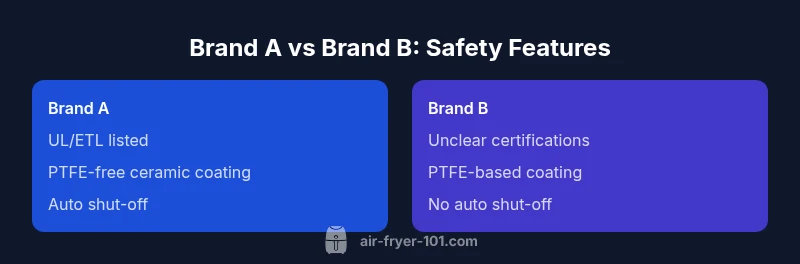
| Feature | Brand A | Brand B |
|---|---|---|
| Certifications | UL/ETL-listed, model-specific | Unclear or generic certifications |
| Coatings | PTFE-free ceramic coating | PTFE-based coating (caution) |
| Interior Material | Stainless steel interior | Aluminum interior or mixed materials |
| Heating & Control | Precise digital thermostat with even distribution | Basic dial control with uneven heat |
| Auto Shut-off | Yes with audible alert | Limited or manual only |
| Dishwasher-safe Parts | Basket and tray dishwasher-safe | Parts not dishwasher-safe |
| Warranty | 2-3 years | 1 year or limited coverage |
| Best For | Safety-first households, frequent users | Budget-conscious buyers, occasional users |
Pros
- Encourages informed decision-making with safety-first criteria
- Helps avoid models with vague safety claims
- Facilitates side-by-side comparisons for quick shopping
- Emphasizes long-term maintenance and support
Cons
- Limited to model-level claims; user experiences may vary
- Certification coverage is not a guarantee of flawless safety
- Higher-safety-focused models can carry a higher upfront cost
- Marketing can still misrepresent coatings without independent testing
Prioritize brand safety certifications and non-toxic materials for best results
A safe air fryer combines model-specific certifications, clearly disclosed materials, and durable parts. Brand A generally offers stronger safety signals, while Brand B may require closer scrutiny of labels and warranties. Air Fryer 101’s verdict is to choose brands with transparent safety testing and reliable after-sales support.
Got Questions?
What certifications indicate an air fryer is safe?
Look for model-specific UL or ETL listings and, if applicable, CE marks on the product or manual. Verify that the certification applies to the exact model you’re considering. Independent safety testing and transparent labeling are strong indicators of reliability.
Search for UL or ETL marks on the product and verify they match the specific model. Cross-check the manual for safety testing details.
Is a PTFE-free coating always safer?
PTFE-free coatings can reduce fumes concerns for some households, but safety also depends on the coating’s overall non-toxicity and the manufacturer’s testing. Look for explicit non-toxic certification and long-term durability claims from reputable brands.
PTFE-free coatings can be safer, but verify non-toxic certification and durability from the manufacturer.
Do price and brand name guarantee safety?
Not necessarily. Safety is better indicated by certifications, tested materials, and solid warranties than by price or brand prestige alone. Balance cost with verifiable safety signals and good after-sales support.
Price or brand name alone doesn’t guarantee safety—look for certifications and solid warranties.
How can I test safety at home without risking damage?
Start with a dry run at a low temperature, ensure the exterior stays cool, and verify that safety features (like auto shut-off) engage as expected. Always operate in a well-ventilated area and follow the manual’s safety guidelines.
Do a controlled test run, check for cooling, and verify safety features operate correctly.
How long should a safety-focused warranty last?
Warranty length varies by brand, but longer terms often reflect confidence in build quality and availability of parts. Read the warranty to understand coverage limits, exclusions, and whether replacement parts are readily accessible.
Warranties vary; longer terms usually indicate better parts support and reliability.
What’s the best overall approach to choosing a safe air fryer?
Start with model-specific safety certifications, confirm non-toxic coatings, and review manufacturer support. Use independent reviews and side-by-side comparisons to triangulate the safest option within your budget.
Prioritize certifications, coatings, and solid support, then compare options to pick the safest within budget.
Quick Summary
- Check model-specific safety certifications (UL/ETL) on the rating plate.
- Prefer PTFE-free or PFAS-free coatings with clear non-toxic verification.
- Evaluate interior materials and cooling design to reduce burn risk.
- Review manuals, warranties, and replacement-part availability.
- Use a side-by-side comparison to spot safety gaps quickly.