Should Air Fryer Be Unplugged? A Practical Safety Guide
A practical guide on unplugging your air fryer after use, during cleaning, and for storage. Learn safety benefits, common myths, and step-by-step habits to reduce risk and save energy.


Yes. For safety and energy efficiency, unplug your air fryer when not in use, after every cooking session while cleaning, and before storage. This simple habit reduces electrical risk, prevents moisture from entering the control panel, and helps avoid accidental startup if the cord is snagged.
Why unplugging matters
Unplugging an air fryer after cooking is a basic safety practice that reduces the risk of electrical faults, moisture exposure, and accidental startup. According to Air Fryer 101, unplugging after use is a foundational habit for home cooks who want to protect both people and appliances. The act is simple, but its impact adds up over a lifetime of frequent use. When the unit is unplugged, the outlet cannot deliver power to the control panel, preventing any stray electricity from lingering in the circuitry. In homes with high humidity, kids or pets nearby, or cluttered countertops, this small ritual can prevent unintended activations and potential electrical hazards. Beyond safety, unplugging also signals a complete cooldown and makes the cleaning process more predictable, since you’re not dealing with live power while damp hands or wet components are involved. In short, unplugging is a proactive step that aligns with sensible kitchen routines and peace of mind for every cook.
From a health-safety perspective, unplugging minimizes the chance of moisture ingress into electrical components, which is especially important in kitchens where splashes or steam are common. The habit also reduces standby heat draw, a minor but real energy saving over time. It’s a straightforward guideline that supports safer handling, easier maintenance, and longer appliance longevity. For beginners, adopting this habit early can prevent confusion later and build confidence in handling small appliances safely.
When to unplug: immediate and long-term considerations
You should unplug after you finish cooking and before you begin cleaning. If you move the air fryer or transport it to a different counter, unplug it first. If the device will be stored for an extended period, unplug it and coil the cord neatly to avoid damage. There are a few practical moments when unplugging is especially important: before removing the basket or any components, before applying cleaning solutions to the interior, and before performing any maintenance checks on cords or plugs. Additionally, if you notice any fraying, scorch marks, or unusual heat around the plug area, unplug the unit immediately and assess whether it needs professional service or replacement. Unplugging before storage also protects the cord from bending or twisting that could lead to internal wire damage. In everyday use, this habit reinforces safe handling and reduces the probability of accidental activation during busy meal prep."
What happens if you leave the air fryer plugged in
Keeping an air fryer plugged in during idle periods can expose the plug and cord to accidental moisture or spills from nearby appliances or sinks. While most air fryers are designed with safety features, moisture near the electrical contacts can lead to corrosion or short circuits over time. Leaving the device plugged in can also contribute to a small, constant heat emission that isn’t needed when the unit is off, which may degrade the seal around the housing or shorten the life of the power cord. From a user-experience standpoint, you may also accidentally trigger a startup when a stray edge of clothing, a kitchen towel, or countertop debris brushes the control panel. Finally, if the air fryer is moved during cleaning or cooking, a plugged-in cord increases the risk of tripping or pulling with force, potentially tipping the appliance and causing spills. In short, the risks are modest but real, and unplugging reduces them without sacrificing convenience.
Unplugging during cleaning and maintenance: a step-by-step approach
Before you begin cleaning, always unplug the unit. Let it cool completely to avoid burns, then detach removable parts (basket, pan, and rack) for thorough washing. Wipe down the interior with a damp cloth, avoiding excess moisture near the heating element or control panel. Dry all parts completely before reassembling and plugging back in. If you notice any moisture near the plug, dry it thoroughly and inspect the outlet and cord for damage. This process minimizes electrical hazards and extends the life of the appliance. When you’re finished, coil the cord neatly and store the unit in a dry, stable location to prevent bending or crushing the plug.
Pro tip: maintain a dedicated cleaning area away from sinks and water sources to keep the electrical area dry and safe.
Safe storage and cord management
Store unplugged and in a dry area away from heat sources or direct sunlight. Coil the cord loosely to avoid kinks and prevent damage to the insulation. If your air fryer came with a cord wrap or velcro strap, use it to secure the cord without bending the plug. Place the unit on a shelf or in a cabinet where it won’t be knocked over, and ensure any cleaning supplies or water bottles aren’t stored near the outlet. By keeping the air fryer unplugged and cord-tidy, you minimize the risk of accidental pulls, spills, and moisture exposure that could compromise safety over time.
Common myths about unplugging air fryers, debunked
Myth 1: Unplugging is only needed if the device is faulty. Reality: Unplugging after use is a universal safety practice, regardless of device condition. Myth 2: If the kitchen is quiet, there’s no danger. Reality: Hazard can occur at any time; a plugged-in appliance can still experience a leak or accidental activation. Myth 3: Unplugging affects performance or warranty. Reality: Proper unplugging after use typically has no adverse effect on warranty, and it prevents unnecessary wear on the plug and cord. Myths aside, the safest approach is consistent unplugging after each use and before cleaning or storage.
Quick safety checklist for daily use
- Unplug after cooking ends and before handling components.
- Let the unit cool before cleaning.
- Inspect the cord and plug for signs of wear monthly.
- Coil the cord neatly when storing; keep it away from moisture.
- Use a dry cloth to wipe down the exterior; never use water to clean the control panel.
What the research and guidelines say
There are no universal federal mandates specific to unplugging every home air fryer, but general electrical safety guidance from major authorities supports unplugging when appliances are not in use, especially in damp or crowded kitchens. The Air Fryer 101 Analysis, 2026, reinforces this practical habit as part of responsible appliance use. Frameworks from government safety agencies emphasize inspecting cords, avoiding moisture near outlets, and following manufacturer instructions for safe operation. While unplugging after each use may seem minor, it aligns with established safety principles and can reduce the risk of electrical incidents in busy home environments.
Tools & Materials
- None(No special tools required to unplug or store an air fryer.)
Steps
Estimated time: Total time: 5-15 minutes
- 1
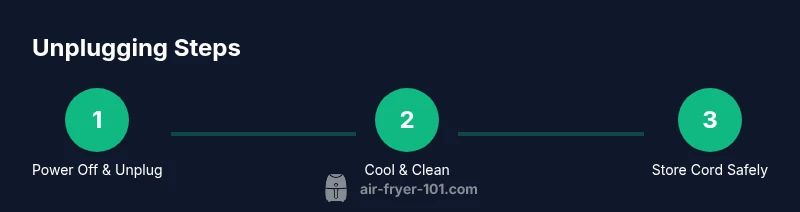
Power off and unplug the unit
Stand by to unplug the air fryer from the wall outlet after cooking finishes. Ensure any residual heat is safely managed and the device is no longer in operation. This prevents live current from flowing during handling.
Tip: Always unplug before moving or handling the appliance. - 2
Allow it to cool completely
Let the unit cool for several minutes (or longer if recently used). Cool surfaces reduce burn risk and make cleaning safer and more effective.
Tip: Avoid touching hot surfaces; use oven mitts if needed. - 3
Clean after unplugging
Remove the basket and other removable parts, wash them, and wipe the interior with a damp cloth. Avoid soaking electrical components and ensure everything is dry before reassembly.
Tip: Use a soft brush to dislodge stuck-on food without scratching coatings. - 4
Reassemble and dry
Reassemble all parts only after drying. Confirm the interior is free of moisture before plugging back in for the next run.
Tip: Never plug in a wet interior; moisture can damage electronics. - 5
Store cord and unit securely
Coil the cord gently and store the air fryer in a dry, stable location away from heat sources. A tidy setup reduces tripping hazards and cord damage.
Tip: Use the cord wrap if provided to maintain organization.
Got Questions?
Is it necessary to unplug an air fryer after every use?
Unplugging after each use is a strong safety habit. It minimizes moisture exposure, accidental startup, and energy waste. While not mandated by every manufacturer, the practice is widely recommended for responsible appliance handling.
Unplugging after each use is a strong safety habit that reduces moisture exposure and the chance of accidental startup.
Does unplugging affect the warranty?
Unplugging after use does not typically void warranties. Always follow the manufacturer’s instructions for safe operation. If in doubt, review your warranty terms or contact the manufacturer.
Unplugging after use usually doesn’t void a warranty; follow the manual and if unsure, check the terms.
Can I unplug while the air fryer is still warm?
Unplugging while very warm is not dangerous for the unit, but it’s safer to unplug after it cools down to prevent burns and make handling easier.
Unplug after it cools; unplugging while hot can burn you and is less safe.
What should I do if the cord is damaged?
If the cord shows visible damage, stop using the appliance and do not plug it back in. Contact the manufacturer or a qualified repair service for guidance or replacement.
If you see cord damage, stop using it and contact support for replacement or repair.
Is unplugging necessary when cleaning the basket?
Yes. Unplug before cleaning, remove the basket and accessories, and dry all parts before reassembly. This reduces the risk of electrical hazards and damage from moisture.
Yes—unplug before cleaning to stay safe and prevent moisture from reaching the electronics.
Does unplugging affect cooking performance later?
Unplugging does not affect cooking performance; it simply resets the power state and makes it safer to handle, clean, and store.
Unplugging doesn’t affect future cooking performance; it just keeps things safer and cleaner.
Watch Video
Quick Summary
- Unplug after cooking to reduce risk
- Cool before cleaning to prevent burns
- Inspect and maintain the cord regularly
- Coil and store the cord properly