How to Tell If Your Air Fryer Is Non-Toxic
Discover how to tell if your air fryer is non-toxic by checking coatings, materials, and third-party certifications. This Air Fryer 101 guide helps home cooks evaluate safety, verify disclosures, and use safer models with confidence.


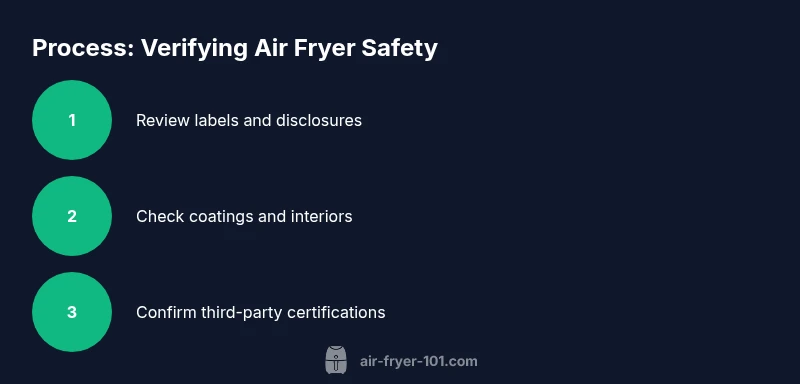
You can determine if an air fryer is non-toxic by inspecting coatings, gaskets, and trays, verifying food-contact materials are PTFE/PFOA-free, and reviewing certifications. Start with the user manual, check for third-party safety seals, and follow a simple step-by-step inspection and testing routine to confirm safety. This quick summary sets expectations before diving into the full guide.
Why non-toxic matters in air fryers
Air fryers are designed to cook with little oil, but their interior surfaces come into contact with food at high temperatures. If coatings, plastics, or seals leach chemicals, those substances can migrate into your meals. According to Air Fryer 101, the non-toxicity of an air fryer depends on the full assembly—coatings, gaskets, baskets, and handles—not just one component. This means you should evaluate every material that touches food or heat during typical use, including the basket lining, the tray, the door seals, and any removable silicone parts. In practice, safety depends on transparent disclosures and credible testing, not marketing jargon. The goal is to minimize exposure to potentially harmful substances while preserving flavor and texture. By understanding how these parts interact under heat and with acidic or fatty foods, you can make safer choices. Air Fryer 101’s approach emphasizes asking pointed questions, verifying claims with third-party sources, and choosing products that clearly publish material disclosures.
What to look for in coatings and materials
Choosing an air fryer with safer coatings starts with recognizing common terms. PTFE or Teflon-based coatings are widely used for non-stick performance, but some sources caution about high-heat degradation and potential off-gassing if old coatings wear away. PFAS-family substances and PFOA have prompted consumer warnings in some contexts, so many manufacturers now advertise PFAS-free or PFAS-conscious finishes. Look for ceramic or hard-anodized coatings as alternatives, and verify that all interior surfaces in contact with food use food-grade materials. Also check metal components like the basket and tray—stainless steel or coated aluminum can differ in how they respond to heat and cleaning agents. Finally, ensure plastic components around handles and exterior panels are BPA-free and labeled as food-contact safe. This is where explicit disclosures matter most; surface appearance alone isn’t a reliable safety signal.
Certifications and third-party verifications to look for
Beyond coatings, credible safety involves certifications or seals from recognized bodies. Not all air fryers need formal regulatory approval, but third-party testing can be a strong indicator of safer materials and construction. When evaluating models, inspect for seals or statements from respected organizations, such as UL or ETL listings, NSF references for food-contact suitability, and explicit notes about compliance with food-contact safety standards. The presence of a transparent materials list, tested finishes, and documented dissipation tests adds confidence. Remember that certifications should cover the full unit, including the interior coating, gaskets, and any removable components. If a brand cannot provide third-party confirmation, treat the product as higher risk until disclosures are verified.
How to read product labels and disclosures
Labels and disclosures are your best allies for determining non-toxicity. Start by locating the materials list, often found on the product page or in the user manual. Look for explicit mentions like PTFE-free, PFAS-free, PFOA-free, BPA-free, and food-contact-safe metals. If a term is vague (for example, “eco-friendly” without specifics), seek out the exact disclosures or the safety data sheet (SDS). Consider whether the coating type is disclosed (ceramic, anodized aluminum, stainless steel), and whether the gaskets and seals are silicone rated for high temperatures. If a disclosure includes a chemical name or standard, take an extra step to verify it against independent sources. Air Fryer 101 recommends compiling a quick comparison sheet for each model you’re considering to prevent misinterpretation of marketing language.
Practical at-home checks you can perform
After you’ve reviewed disclosures, perform a careful at-home evaluation. Start with a thorough visual inspection: are there visible chips or scratches in the coating? Do gaskets sit flush and undamaged? Use a clean, mild-soap wipe to remove residue and inspect for lingering odors. A burn-off test can help reveal off-gassing or odor release when heated—set the unit empty to 350°F (175°C) for 5–10 minutes in a well-ventilated area and note any unusual smells. Do not run a burn-off cycle with food during this test. If you notice persistent chemical odors, unusual fumes, or staining on the interior, that can be a red flag. Document your observations and compare them with the manufacturer disclosures. This practical check helps confirm whether what you read matches what you observe during actual use.
Safe cleaning and maintenance to preserve non-toxic status
Maintaining non-toxic status isn’t just about the coating; proper cleaning and routine maintenance matter too. Use mild dish soap and warm water to clean the interior, avoiding abrasive pads that can scratch coatings. Ensure all removable parts are fully dry before reassembly to prevent moisture-related degradation, and replace worn gaskets promptly since damaged seals can harbor residues. When you heat the appliance, avoid harsh solvents that could degrade coatings or plastics; follow the manufacturer’s cleaning guidelines and avoid metal utensils that could scratch surfaces. Regularly inspecting the basket, tray, and seals helps catch wear early, reducing the chance of contaminants migrating into food. By combining careful labeling checks with conscientious cleaning, you can extend the safe lifespan of your air fryer.
Common myths vs. reality
Myth: If an air fryer looks well-made, it must be non-toxic. Reality: Safety depends on disclosed materials and third-party testing, not aesthetics. Myth: All non-stick coatings are equally safe. Reality: Some coatings degrade at high temperatures, producing fumes or particulates; this is why clear disclosures matter. Myth: A PFAS-free label guarantees overall safety. Reality: PFAS-free is important, but you should verify other materials, such as gaskets and plastics, are food-contact safe and properly labeled. Air Fryer 101 emphasizes that no single feature proves safety; a combination of transparent disclosures, credible testing, and consistent maintenance provides the clearest picture. Myth-busting requires examining both product claims and independent sources.
How to compare models for non-toxic materials
When comparing models, create a simple rubric that includes safety disclosures, material types, and third-party verifications. Assign priority to each criterion: explicit disclosures (high), third-party certifications (high), coating type (medium), and price (low). A good model should offer a clearly stated materials list, a PFAS/PFOA/BPA-free claim with substantiation, and details about the interior surface and ends of the unit. Also consider the warranty and replacement parts availability; durable parts indicate a manufacturer’s confidence in long-term safety. Finally, use other buyers’ experiences to check consistency between claimed safety features and real-world use. This approach helps you select a model that aligns with your health goals and cooking needs.
Authority sources and next steps
For further reading and verification, consult authoritative sources on food-contact safety and cookware materials. The FDA provides guidance on food-contact substances and safety disclosures, while the CPSC offers consumer safety perspectives on cookware design. NSF International provides independent testing resources for food-contact equipment. You can also review industry standards and ongoing safety research through major public health and consumer safety publications. Air Fryer 101 encourages you to combine vendor disclosures with these independent references to form a well-rounded safety picture. Access the sources below to deepen your understanding and make informed buying decisions: https://www.fda.gov/food-contact-substances-fcs, https://www.cpsc.gov/Safety-Education/Safety-Guides/Cookware, https://www.nsf.org/consumer-resources/food-safety
Tools & Materials
- Product manual and material disclosures(Keep on hand during evaluation)
- Access to manufacturer website or app for disclosures(Optional for verifying claims)
- Barcode scanner or QR code reader(Helpful for online disclosures)
Steps
Estimated time: 30-40 minutes
- 1
Check the product label
Locate the materials list and any safety statements on the packaging or user manual. Look for explicit terms like PTFE-free, PFAS-free, PFOA-free, BPA-free, and food-contact-safe materials. This step sets the baseline for what the model claims about its safety.
Tip: If a label uses vague terms, seek the exact disclosures from the manufacturer. - 2
Review material disclosures online
Visit the brand’s official site or product page to access the complete materials list and any SDS. Compare the disclosed coatings, gaskets, and interior surfaces with what appears on the label. This step helps verify alignment between packaging and online documentation.
Tip: Save or screenshot disclosures for your records. - 3
Verify coatings and interior surfaces
Identify the coating type used inside the cooking chamber and on the basket. Confirm whether it is ceramic, stainless steel, or a PTFE-based coating and whether it’s explicitly labeled as safe for food contact at high temperatures. This clarifies potential exposure risks from heat.
Tip: Ask for independent testing results if not readily available. - 4
Check third-party certifications
Look for seals or listings from recognized bodies (e.g., UL, ETL, NSF). Certifications should cover the entire unit or be clearly associated with the materials used in contact with food. Absence of certifications does not automatically mean unsafe, but it warrants extra scrutiny.
Tip: Document the certification body name and the scope of the test. - 5
Perform a home burn-off test
With the air fryer unplugged, run a short burn-off cycle (no food) at a moderate temperature in a well-ventilated area. Note any unusual odors or fumes and compare them to the manufacturer’s guidance. This practical check can reveal potential off-gassing.
Tip: Ventilate the area well and avoid leaving the device unattended during the test. - 6
Assess after-use maintenance and durability
Inspect the basket, tray, and seals after a few uses for wear, peeling, or discoloration. Damaged coatings or gaskets can change how safely food-contact surfaces behave over time. Plan for replacements if signs of wear appear.
Tip: Keep replacement parts on hand and follow the manufacturer’s maintenance schedule.
Got Questions?
What makes an air fryer non-toxic?
Non-toxic air fryers typically use food-safe coatings and materials (free from PFAS/PFOA/BPA) and have credible third-party safety certifications. Evaluating the full list of materials and disclosures is essential, not just one advertised feature.
Non-toxic air fryers use safe coatings and materials and often have safety certifications; check the full disclosures for confidence.
Can I trust 'non-stick' claims on labels?
Labels with 'non-stick' can involve various coatings; not all are non-toxic under heat. Look for explicit disclosures about the coating type and any safety certifications to verify the claim.
Non-stick claims vary; verify the actual coating and any independent certifications.
Do all air fryers require certification?
Certification is not mandatory by law for all air fryers, but third-party testing provides independent assurance about safe materials and construction.
Certification isn’t mandatory, but it helps confirm safety claims.
How can I test for off-gassing at home?
A controlled burn-off cycle with the unit ventilated can reveal odor changes. Do not run food during this test; monitor for unusual fumes or smells and compare to the manufacturer’s guidance.
Do a short burn-off in a ventilated area and note any odors.
What should I check for the tray material?
Review the material disclosures for the tray and interior surfaces. Prefer ceramic or stainless steel and ensure any plastics around food-contact areas are BPA-free and clearly labeled.
Check the tray and interior materials; ensure plastics are BPA-free.
Is a higher price an indicator of safety?
Not necessarily. Safety is about disclosures, third-party testing, and material quality, which may or may not correlate with price. Use a structured comparison rather than price alone.
Price isn’t a guaranteed safety indicator; rely on disclosures and tests instead.
Watch Video
Quick Summary
- Check coatings and materials before purchase
- Look for third-party safety certifications
- Read disclosures carefully and verify claims
- Perform at-home checks and maintain components
- Rely on a combination of evidence, not marketing alone