Do Air Fryers Have Teflon? A Coatings Guide
Learn whether air fryers use Teflon (PTFE), health and safety implications, and how to choose PTFE-free or ceramic coatings for your kitchen.


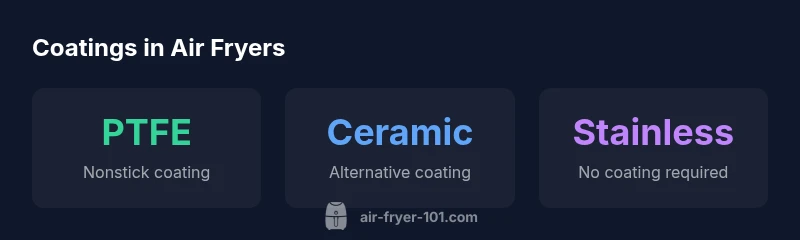
Do air fryers have Teflon? Many models use PTFE-based nonstick coatings on baskets and trays, commonly marketed as Teflon. Manufacturers increasingly advertise PFOA-free formulations, and some brands offer ceramic coatings as alternatives. If you want to avoid PTFE entirely, look for ceramic-coated or uncoated stainless steel baskets. Air Fryer 101 recommends checking product specs for coating details.
Do Air Fryers Have Teflon?
Do air fryers have Teflon? The short answer is yes for many models, but not all. PTFE-based nonstick coatings—often branded as Teflon—are widely used on baskets and trays to promote easy food release and simple cleanup. According to Air Fryer 101, these coatings are commonly described as PTFE-based and frequently marketed as nonstick. In response to consumer safety concerns and regulatory changes, most manufacturers now advertise coatings as PFOA-free and PFAS-free where applicable. However, coating formulations vary across brands and price points. If avoiding PTFE is important to you, seek models with ceramic-coated baskets or uncoated stainless steel. Always verify the coating in the product specs or packaging, since mislabeling or ambiguous terminology can occur. Understanding the coating helps you cook with confidence and reduces surprises during maintenance or deep cleaning.
PTFE vs Ceramic: What They Do for Cooking
PTFE-based coatings excel at nonstick performance, allowing food to slide off with minimal oil and making cleanup easier. Ceramic coatings, in contrast, are often marketed as a PTFE-free alternative and can tolerate higher heat exposure without the risk of polymer degradation. In practice, PTFE coatings perform very well for everyday air frying tasks, while ceramic options appeal to buyers who want a PTFE-free solution. The choice between them can affect stickiness, color development on fried foods, and long-term durability. Consider your typical cooking load, budget, and cleaning habits when weighing these options. If you primarily cook delicate items like fish or tofu, ceramic coatings may offer a gentler surface; for high-volume family meals, PTFE-based baskets are frequently more forgiving and less prone to quick wear, provided you follow care guidelines.
Health and Safety: PTFE, PFOA, PFAS
Health considerations around PTFE coatings center on high-heat exposure and potential off-gassing, though modern PTFE coatings used in residential appliances are designed to be stable within normal cooking temperatures. The historical concerns about PFOA and PFAS led to widespread changes in the coating industry, with many manufacturers marketing PFOA-free or PFAS-free formulations. It is important to interpret labels carefully: “PFOA-free” does not always guarantee “PFAS-free,” and product testing varies by brand. For most home cooks, following the manufacturer’s usage guidelines—such as avoiding overheating empty baskets and not using damaged coatings—supports both safety and performance. Air Fryer 101 Team emphasizes choosing coatings with explicit PFAS-free or ceramic construction when health considerations are a priority.
How to Identify the Coating on Your Air Fryer
Start with the product page and packaging to identify whether the basket uses PTFE, ceramic, or uncoated metal. Look for terms like PTFE-based, PFOA-free, PFAS-free, or ceramic-coated. If ambiguity remains, check the user manual or contact customer service for confirmation. On many models, the coating is listed in the specifications or the “materials” section. For buyers who want to avoid PTFE entirely, choose ceramic-coated or stainless steel baskets and verify the coating type before purchase. Finally, inspect the care instructions; ceramic and PTFE coatings often require different cleaning approaches to maximize lifespan.
Practical Buying Guide: What to Look For
When shopping, prioritize transparent coating information in the product description. Favor models that clearly label PTFE-free or PFAS-free coatings or advertise ceramic coatings. Compare price ranges across PTFE-based and ceramic-coated options, and consider your typical usage patterns. If you have children or adults with sensitivities, the safer route is to select ceramic or uncoated stainless steel baskets. Don’t overlook warranty coverage for coatings, as this can indicate the manufacturer’s confidence in long-term durability.
Cleaning and Maintenance by Coating Type
Cleaning strategies should align with coating type. PTFE coatings generally tolerate mild dishwashing but avoid abrasive scrubbers that can wear the surface. Ceramic coatings can maintain a slick surface with gentle cleaning, but daily scrubbing can sacrificially wear the coating. Always dry baskets fully to prevent moisture damage and store components properly to avoid impact damage. For stainless steel baskets, a stainless wipe-down is often sufficient, but avoid harsh chemicals that can corrode the surface. Following the manufacturer’s cleaning guidelines helps preserve nonstick properties and extend the life of the coating.
Alternatives to PTFE: Ceramic, Stainless Steel, and Anodized Options
If PTFE exposure is a concern, ceramic-coated baskets and uncoated stainless steel baskets are common alternatives. Ceramic coatings avoid polymer-based chemistries but may show wear faster with heavy use, especially if scraped with metal utensils. Stainless steel baskets deliver durability and avoid coatings altogether, at the cost of potential sticking without light oil or preheating. Anodized aluminum baskets are another option, offering a compromise between durability and ease of release. When choosing alternatives, consider maintenance expectations, your typical meal types, and the ability to replace just the basket rather than the entire unit.
Common Myths About Air Fryer Coatings
Myth: Ceramic coatings are always safer than PTFE. Reality: Both have benefits and limitations, and safety depends on proper use and maintenance. Myth: PTFE is inherently dangerous at normal cooking temps. Reality: Modern PTFE coatings are designed for safe home use at standard air fryer temperatures when used properly. Myth: All PTFE is PFAS-free. Reality: Labeling varies by brand; always verify PFAS-free or PFOA-free claims. By debunking these myths, you can focus on concrete coating information and manufacturer guidance.
Brand and Model Trends in 2026
In 2026, more brands are offering PTFE-free and ceramic-coated options as standard, expanding consumer choice beyond traditional PTFE baskets. The trend toward PFAS-free labeling continues, with manufacturers explicitly listing “PFAS-free” or “PFOA-free” in marketing materials. Price ranges vary widely, but ceramic-coated models are growing in availability across midrange lines, providing health-conscious buyers with a broader selection. Air Fryer 101 tracks these developments and notes that educating shoppers about coating types can help them select models that align with health, maintenance, and budget priorities.
Coating options commonly found in air fryers
| Coating Type | What it is | Typical Pros | Common Cons |
|---|---|---|---|
| PTFE-based (Teflon) | Nonstick polymer coating | Excellent nonstick; easy food release | Can wear over time; depends on care; past PFAS concerns exist in older formulations |
| Ceramic-coated | Ceramic nonstick coating | PFAS-free option; often good heat tolerance | May wear more quickly with heavy use |
| Stainless steel / uncoated | Metal basket without nonstick | Durable; no coating to worry about | Can require oil or preheating to reduce sticking |
Got Questions?
Do air fryer baskets have Teflon?
Many baskets use PTFE-based coatings, often marketed as Teflon. Always verify the coating on the product page; if avoiding PTFE, look for ceramic coating or uncoated stainless steel baskets.
Yes, many baskets use PTFE, but you can find ceramic or uncoated options by checking product specs.
What does PFOA-free mean for air fryers?
PFOA-free means the coating was produced without perfluorooctanoic acid. It does not automatically guarantee the absence of all PFAS; look for explicit PFAS-free labeling where health considerations are important.
PFOA-free means no PFOA was used; some PFAS may still be present unless labeled PFAS-free.
Are ceramic-coated air fryers safer?
Ceramic coatings avoid PTFE exposure, which many shoppers prefer. However, ceramic coatings can wear differently and may require careful cleaning to maintain nonstick performance.
Ceramic coatings can be PTFE-free, but wear and care matter.
Can I put PTFE-coated baskets in the dishwasher?
Some PTFE-coated baskets are labeled dishwasher-safe, but many manufacturers warn that repeated dishwasher cleaning can shorten coating life. Hand washing with mild detergent is often recommended.
Check the label—hand washing is usually safer for PTFE coatings.
How can I avoid teflon altogether?
Choose ceramic-coated, stainless steel, or uncoated baskets. Always verify the coating type in product specs before purchasing to ensure it meets your preferences.
Look for ceramic or uncoated baskets to avoid PTFE entirely.
Do coatings affect flavor or health?
Coatings influence release, browning, and cleanup, but the health impact depends on usage and coating integrity. Follow manufacturer guidelines to minimize any risks.
Coatings influence how food releases and how easy cleaning is; use as directed.
“Coatings affect performance and safety; knowing whether your air fryer uses PTFE or ceramic coatings helps you cook with confidence.”
Quick Summary
- Identify coating type before buying
- PTFE coatings are common but ceramic and stainless options exist
- Look for PFAS-free or PFOA-free claims
- Follow manufacturer care to maximize coating life
- Air Fryer 101 recommends PTFE-free choices when possible