Wings Air Fryer: The Ultimate How-To Guide
Learn to make crispy, healthier wings with an air fryer. Step-by-step temps, preheating, seasoning, and troubleshooting for consistently perfect results.


According to Air Fryer 101, wings air fryer cooking delivers crispy skin with less oil and quicker timing. This guide covers a practical, step-by-step method, recommended temperatures and preheat tips, how to season correctly, and common troubleshooting to help you get consistently great wings at home, whether you like buffalo, honey BBQ, or spicy dry rub.
Why Wings in the Air Fryer Make Sense
Air frying wings is a popular choice for home cooks who want crispy texture with less oil and quicker cook times than traditional frying. The wings air fryer pairing delivers even browning, reduced mess, and adjustable heat for reliable results. For many kitchens, this method also reduces energy usage and cleanup compared with multipage pans. When you start, ensure your wings are patted dry and placed in a single layer so the circulating hot air can crisp every surface. According to Air Fryer 101, the best results come when you avoid overcrowding and give space for air to circulate. This foundation sets the stage for a consistently crisp bite with a juicy interior.
Choosing the Right Wings and Prep
Wings come in two common forms: drumettes (the meaty, fanned portions) and flats (the two boneless-looking, slender pieces). For even cooking in an air fryer, choose uniform pieces and thaw frozen wings completely before cooking. Pat the wings dry with paper towels to remove surface moisture; moisture creates steam and sogginess. Decide whether you want a dry rub or a sauced finish. Dry rubs tend to cling better and yield crisper skins, while sauces deliver bold flavor. If you’re short on time, a simple salt-and-pepper base with a pinch of paprika can be surprisingly delicious. Remember, the fewer wet ingredients during the cook, the crisper the skin will be.
Essential Seasonings and Sauces for Wings
A reliable wing rub usually starts with salt, paprika, garlic powder, onion powder, and a touch of black pepper. You can add baking powder (alkaline) to the rub to boost crispness by altering the surface pH and allowing the skin to brown more evenly. For sauced wings, hot buffalo, honey BBQ, and garlic parmesan are popular routes. If you prefer to sauce during the cook, apply a thin layer in the final minutes to avoid heavy steaming. Avoid sweet sauces too early, as the sugar can burn at high temperatures. Optional dips like ranch or blue cheese pair nicely with the finished wings.
Preheating and Temperature Guidelines
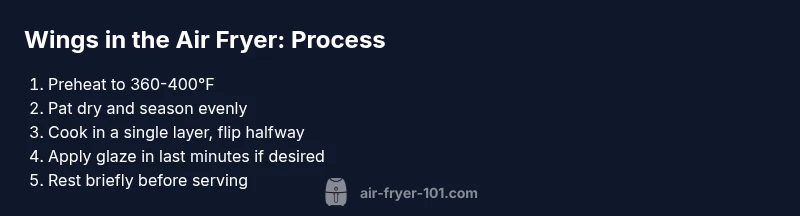
Preheating is not always mandatory, but it helps achieve even browning and faster crisping. Set your air fryer to a moderate high heat, typically around 360-400°F (182-204°C), depending on your model. If your unit supports a preheat function, use it for a few minutes before loading the wings. Cook times vary by batch size and model, but plan for 18-25 minutes total, turning halfway through. The goal is a crispy exterior with a fully cooked interior; use a thermometer to verify an internal temperature near or above 165°F (74°C) for safety.
Dry Rubs, Wet Sauces, and Marinades
Dry rubs create the crispiest finish because they shed moisture as they bake. A simple mix of salt, paprika, garlic powder, and a hint of baking powder can work wonders. If you prefer moisture, use a light glaze or a very thin sauce in the last 5-7 minutes of cooking. Marinades should be used sparingly, as heavy moisture can hinder crispness. Whatever method you choose, dry the wings well after marinating and shake off excess liquid before placing them in the basket.
Cooking Process: Step-by-Step Tips for Crispness
Begin with a single layer of wings in the air fryer basket; overcrowding prevents air from circulating evenly. If your model allows, flip the wings halfway to promote uniform browning. For extra crispness, lightly spray the wings with oil before cooking. Pause at the halfway point to rearrange pieces that have shifted toward the basket walls. In the last few minutes, you can brush a light glaze or sauce, but avoid piling on sugar-heavy coatings too early to prevent scorching.
Troubleshooting Common Problems
If wings come out soggy, they likely spent too long in a crowded basket or were not pat-dried well. Overcooking can dry out the interior, while undercooked wings pose safety concerns; always check for an internal temperature of 165°F (74°C). Uneven browning is usually caused by uneven piece sizes or placement; separate larger pieces, and ensure a single layer. If the skin stays pale, raise the temperature slightly or extend the cook time by a few minutes—watch closely to prevent burning.
Finishing Tricks for Extra Crisp and Flavor
A light toss with a small amount of baking powder in the rub, plus a final light oil spray, yields the crispiest skin without added fat. If using sauce, apply it in the last few minutes of cooking to prevent sogginess, then give the wings a final 1-2 minute rest off the heat to let the glaze set. Resting briefly before serving helps seal in juices and makes for a more cohesive bite. Clean up is simpler when you line the basket with parchment or a nonstick liner that’s compatible with your device.
Health, Budgeting, and Cleaning for Regular Wing Nights
Air fryer wings can be a leaner option than deep-fried versions, especially when you trim excess skin and avoid heavy sauces. Plan batches to fit your household and avoid waste by refrigerating leftovers promptly in shallow containers. Regular cleaning of the air fryer basket and tray reduces residue buildup and helps maintain performance. A simple routine of wiping after each use minimizes lingering odors and keeps a kitchen smelling fresh.
Variations and Dipping Sauces
Flavor variety keeps wings exciting. Try buffalo, honey garlic, lemon pepper, or smoky paprika rubs, and pair with dips like ranch, blue cheese, or a yogurt-based dipping sauce for a lighter option. For a tangy finish, sprinkle fresh herbs like chives or parsley on top just before serving. Experiment with different heat levels by adjusting cayenne or chili powder in your rub; start with a small amount and increase to taste.
Quick Wings Menu and Make-Ahead Tips
If you’re feeding a crowd, cook wings in two batches to maintain air circulation and crispness. Leftovers can be reheated in the air fryer for a quick weeknight meal; reheat at a lower temperature to avoid burning sauces. For make-ahead, season wings the night before and refrigerate; bake or reheat the next day for instant flavor without sacrificing texture.
Tools & Materials
- Air fryer(Choose a model with adjustable temperature and a basket that allows air to circulate around wings)
- Tongs(For flipping wings halfway and safely removing them)
- Paper towels(Pat wings dry to remove surface moisture for crispness)
- Meat thermometer(Ensure wings reach 165°F (74°C) internally)
- Small bowl or plate(For mixing rubs or olives; optional for convenience)
- Oil spray or neutral oil(Lightly coat wings to help browning; use sparingly)
- Silicone brush or spatula(Useful for applying sauces in the final minutes)
Steps
Estimated time: 25-40 minutes
- 1
Gather and pat dry
Collect wings and pat them thoroughly dry with paper towels. This step is crucial for a crisp exterior, since moisture on the skin steams rather than browns during cooking.
Tip: Dry wings thoroughly; even a little moisture can soften the crust. - 2
Season or apply rub
Mix your preferred rub or seasoning in a small bowl, then toss the wings until evenly coated. If using baking powder in the rub, sprinkle lightly and mix to coat.
Tip: A light dusting of baking powder boosts crunch without adding noticeable flouriness. - 3
Preheat the air fryer
Preheat the air fryer to the target temperature for a few minutes before adding wings. Preheating helps you achieve immediate browning on contact.
Tip: If your model lacks a preheat setting, run at temperature for 2-3 minutes before loading wings. - 4
Arrange in a single layer
Place wings in a single layer with space around each piece. Overcrowding blocks air flow and leads to uneven browning.
Tip: If you have a crowded batch, cook in two rounds to preserve crispness. - 5
Cook and flip halfway
Cook the wings, then flip them using tongs halfway through the cook time to ensure balanced browning on all sides.
Tip: Check progress at the halfway point and adjust time if your wings are particularly large. - 6
Finish with optional glaze
For sauced wings, apply a thin glaze during the last few minutes to prevent burning. If dry rub-only, skip glaze altogether.
Tip: Avoid thick sauces early; sugar burns quickly at high heat. - 7
Rest and serve
Let the wings rest for a few minutes after cooking to redistribute juices and enhance texture.
Tip: Resting helps maintain crispness as the surface settles. - 8
Clean up
Allow the air fryer to cool before cleaning. Remove the basket and wipe away any oil residue.
Tip: Line the basket with parchment or a nonstick liner compatible with your device to simplify cleanup.
Got Questions?
How long do wings take in an air fryer?
Most batches cook in about 18-25 minutes, depending on size and model. Flip halfway for even crispness and verify doneness with a thermometer.
Most wings take around eighteen to twenty-five minutes; flip halfway and check they reach 165 degrees.
Can I use frozen wings?
Yes, but thaw them first for best texture. If cooking from frozen, increase time by several minutes and monitor closely to avoid burning.
Frozen wings can work, but thaw them first or add extra minutes and watch carefully.
Should I preheat the air fryer?
Preheating helps achieve quick browning and crispness. If your model lacks a preheat setting, run at the target temperature for a few minutes before adding wings.
Preheat to help with browning, or run at temp for a few minutes prior to adding wings.
Dry rub vs sauce – which is better for crispness?
Dry rubs generally yield crisper skins. Sauces can be applied in the final minutes to avoid sogginess.
Rubs give crisper skins; sauces go on last to avoid soggy wings.
How should leftovers be stored and reheated?
Store cooled wings in airtight containers in the fridge for up to 3-4 days. Reheat in the air fryer at a lower temperature to re-crisp without burning.
Keep leftovers in the fridge for a few days and re-crisp them in the air fryer.
What temperature is safest for cooking wings?
Wings should reach an internal temperature of at least 165°F (74°C) to be safe to eat. Use a thermometer for accuracy.
Aim for 165 degrees, checked with a thermometer.
Watch Video
Quick Summary
- Pat dry wings before cooking.
- Cook in a single layer with space around each piece.
- Preheat when possible for consistent browning.
- Use baking powder in the rub for extra crisp.
- Check internal temperature to 165°F for safety.