How to Cook a Whole Chicken in the Air Fryer
Learn how to cook a juicy, crispy whole chicken in the air fryer with clear prep, timing, temps, and safety tips. Perfect for quick weeknight dinners and delicious leftovers.


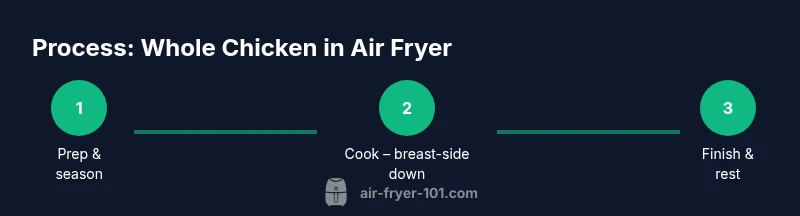
You can cook a whole chicken in the air fryer to juicy, crispy skin with even doneness. Start with a 3 to 4 lb bird, pat dry, season, and truss for even cooking. Cook at 360°F (182°C) for about 50 to 60 minutes, rotating halfway, and verify a 165°F (74°C) internal temperature before resting.
Why a Whole Chicken in the Air Fryer is Worth It
Cooking a whole chicken in the air fryer combines speed, convenience, and the sought-after crispy skin you expect from roasting. With the right setup, you get juicy meat close to the bone and a browned exterior without turning on a full-sized oven. For home cooks, this method reduces oven heat in hot months and simplifies weeknight meals. According to Air Fryer 101, a properly sized bird and correct resting are key to even doneness and flavor balance. A good result starts with a plan: thawed chicken, dry surface, and even seasoning help the hot air circulate for uniform browning. Pairing the technique with smart seasoning yields a versatile base for weeknight dinners or weekend gatherings.
Choosing the Right Bird and Preparation
The size of your bird matters for even cooking in a compact air fryer. A 3 to 4 lb chicken fits most mid-size air fryer baskets and still yields a generous roast. If your fryer is smaller, consider cooking in two halves rather than one whole bird. Always thaw thoroughly; a frozen or partially frozen chicken will cook unevenly. Pat the surface dry to remove moisture that can steam rather than crisp. Trimming excess fat helps prevent flare-ups or greasy skin, while leaving skin enough to crisp. If you’re new to air frying, start with a straightforward, lightly seasoned bird to gauge timing before expanding flavors.
Dry Brine, Brine, and Seasoning Basics
Salt is the simplest way to improve juiciness and skin texture. A dry brine, applied 12 to 24 hours ahead, allows salt to penetrate and dry the skin for crispness. If you’re short on time, a quick 30 to 60 minute dry brine will still help. For wet brines, keep the soak conservative to avoid diluting flavors. Season generously with a straightforward rub: kosher salt, cracked black pepper, paprika, garlic powder, and a touch of lemon zest or herbs. Olive oil or a light spray helps the rub adhere and promotes browning. The goal is a crisp, evenly seasoned skin that browns in the dry fryer environment.
Flavor Profiles and Rub Ideas
Beyond the classic salt and pepper, rubs can reflect any cuisine. Try a citrus-herb blend with orange zest, thyme, and garlic for a bright finish. A smoky paprika and chili rub adds heat and depth, while a thyme-lemon combination pairs well with pan juices. When applying rubs, cover every surface including the cavity and under the wings for consistent flavor. For a deeper caramelization, a thin coat of oil helps the rub stick and promotes browning. Save any leftover rub for future batches or other cuts like drumsticks and thighs.
Trussing, Skin Prep, and Accessories
Truss the legs and tuck the wings to promote even cooking and a neat presentation. If you don’t have kitchen twine, use a silicone band or simply tuck the limbs and secure with toothpicks in a minimal, food-safe way. A rack or silicone mat in the air fryer basket improves air circulation around the bird, producing crisper skin. Lightly oil the surface to enhance browning and prevent sticking. Ensure there’s space around the chicken for the hot air to flow; overcrowding leads to uneven browning and longer cook times.
Air Fryer Setup and Placement
Preheating isn’t always required, but many cooks find it helpful for starting browning quickly. If your air fryer has a smaller basket, place the chicken breast-side down for the initial phase to promote even browning and keep the breast from drying out. Use a meat thermometer to monitor internal temperature rather than relying solely on time. If your model lacks a rack, place the bird directly in the basket, ensuring there’s some clearance for air to circulate and rotate during cooking.
Timings, Temperatures, and Turning Points
Most whole chickens in air fryers cook best around 360°F (182°C), but exact temps vary by model and bird size. A common guideline is 50 to 60 minutes for a 3 to 4 lb bird, turning halfway so both sides browning evenly. If you find the skin browning too quickly, reduce heat slightly or cover the top with a loose foil for the final stage. Always verify doneness with a thermometer; target 165°F (74°C) at the thickest part of the thigh without touching bone.
Doneness, Resting, and Safety
After reaching 165°F in the thigh, let the chicken rest for 10 to 15 minutes to allow juices to redistribute. Resting improves juiciness and makes carving easier. During rest, keep the chicken loosely tented to retain heat while the juices settle. Safe handling includes washing hands and surfaces after contact with raw chicken and avoiding cross-contamination. Carve with a sharp knife for clean portions, saving leftovers promptly in the fridge.
Serving, Storage, and Leftovers
Whole air-fried chickens offer delicious leftovers for sandwiches, salads, or soups. Refrigerate promptly in shallow containers to cool quickly and prevent bacterial growth. Reheat slices or portions in the air fryer at 325°F (163°C) for a few minutes until piping hot. For best texture, reheat without covering; a light spray of oil can re-crisp the skin. Flavor ideas include lemon-herb pan drippings poured over slices or a simple pan sauce made from drippings and stock.
Troubleshooting Common Issues
If the skin isn’t as crisp as you’d like, brush lightly with oil and increase the heat for a few minutes at the end. Uneven doneness usually indicates inconsistent air circulation or an oversized bird. If you must cook a larger bird, consider splitting into halves for more even browning and reduce total time. If meat remains undercooked near the leg joint, give it additional minutes and check the temperature again. Always rely on a thermometer for accuracy rather than relying solely on time estimates.
Tools & Materials
- whole chicken (3-4 lb)(Fully thawed for even cooking)
- salt (kosher or sea)(For brine or dry brine)
- black pepper(Freshly cracked preferred)
- paprika(Smoked paprika for extra depth optional)
- garlic powder(Adds savory notes)
- onion powder(Optional for depth)
- olive oil or cooking spray(Helps browning and rub adhesion)
- kitchen twine or silicone bands(For trussing)
- air fryer with basket(Ensure capacity for the bird)
- meat thermometer(Monitor 165°F thigh temperature)
- cutting board and carving knife(For serving)
- tongs(Safe maneuvering in basket)
- optional rack or silicone mat(Improves air flow)
Steps
Estimated time: 60-75 minutes total
- 1
Prepare chicken
Remove giblets and neck if present. Pat the chicken dry inside and out to improve skin crispness. Trim excess fat or skin, then place on a clean surface for seasoning.
Tip: Dry surface is essential for browning; don’t skip patting dry. - 2
Apply dry brine (optional)
Lightly salt the chicken and let it rest 30-60 minutes or up to 24 hours in the fridge for deeper flavor and juiciness. If using a quick dry brine, dab excess moisture before seasoning.
Tip: If you’re short on time, a 30-minute dry brine still improves juiciness. - 3
Preheat air fryer
Preheat the air fryer to 360°F (182°C) if your model requires it. A hot start helps initiate browning and reduces overall cook time.
Tip: Some models don’t require preheating; skip if your unit recommends otherwise. - 4
Oil and rub
Lightly oil the skin and rub with salt, pepper, paprika, and garlic powder. Ensure even coverage under the wings and around the cavity for steady browning.
Tip: Oil helps rub adhere and promotes crispness without adding too much fat. - 5
Truss the legs
Tie the legs together and tuck the wings to prevent flopping and promote uniform cooking. A compact shape cooks more evenly in a compact air fryer.
Tip: Use kitchen twine or a silicone band; avoid tight knots that pierce the skin. - 6
Load into basket
Place the chicken breast-side down in the basket or on a rack, ensuring air can circulate around the bird.
Tip: Leave space around the chicken; crowded air leads to uneven browning. - 7
Cook breast-side down
Cook the bird with the breast side down for the first portion to protect meat moisture and promote even browning.
Tip: If your air fryer has a dedicated rack, use it to optimize air flow on all surfaces. - 8
Finish cooking and check temp
Flip the chicken, finish cooking until a thermometer reads 165°F (74°C) in the thickest part of the thigh. If not yet done, continue cooking in 5-10 minute increments.
Tip: Don’t rely on time alone—thermometer accuracy matters for safety and juiciness. - 9
Rest the chicken
Let the chicken rest 10-15 minutes before carving. Resting redistributes juices for easier slicing and juicier meat.
Tip: Tent lightly with foil to keep warmth without steaming the skin. - 10
Carve and serve
Carve the chicken into portions and serve with pan drippings or a light sauce. Store leftovers promptly in the refrigerator.
Tip: Slice against the grain for tender portions; reserve any juices for flavor depth.
Got Questions?
Can I cook a whole chicken from frozen in the air fryer?
Cooking from frozen is not recommended for best texture and safety. Thaw the bird fully and pat dry before air frying to ensure even cooking and browning.
Cooking from frozen is not recommended; thaw the bird first for the best texture and safety.
What size chicken works best for most air fryers?
A 3 to 4 pound chicken is a practical size for most air fryer models, providing good browning and even cooking without crowding the basket.
A 3 to 4 pound chicken fits most air fryers and cooks evenly.
Should I brine the chicken before air frying?
Brining or dry-brining can improve juiciness and flavor. A dry brine of salt for several hours is usually sufficient; a longer soak yields stronger results.
Brining helps juiciness; dry brining is effective and time-efficient.
Do I need to baste during cooking?
Basting is optional. A light oil spray before cooking and an occasional spritz at the end can help browning, but it’s not required for success.
Basting isn’t required; a light oil spray helps browning if you want extra shine.
What internal temperature indicates doneness?
The safe internal temperature is 165°F (74°C) in the thickest part of the thigh. Verify with a meat thermometer for accuracy.
165 degrees Fahrenheit in the thigh confirms doneness.
How long should the resting time be?
Rest the chicken for 10-15 minutes after cooking to let juices redistribute, ensuring moist slices.
Rest for 10 to 15 minutes before carving.
Watch Video
Quick Summary
- Choose a 3-4 lb bird for best results in most air fryers.
- Dry surface and proper brining enhance crisp skin and juiciness.
- Thermometer-based doneness ensures safety and quality.
- Rest 10-15 minutes before carving for juicy slices.
- Follow a balanced rub for flavor without overpowering the meat.