What to Do With Chicken in Air Fryer: Step-by-Step Guide
Master chicken in the air fryer with expert tips on prep, temps, timing, seasoning, and safety. This step-by-step guide covers cuts, coatings, troubleshooting, and quick weeknight ideas for juicy, crispy results.


Goal: cook chicken in an air fryer that stays juicy inside and crisp outside. You’ll learn how to prep different chicken cuts, season well, and use precise temperatures and times for reliable results. This guide emphasizes safety, model considerations, and practical tips to avoid mistakes. Format: steps for home cooks.
Why cooking chicken in an air fryer makes sense
If you’ve ever wondered what to do with chicken in air fryer, you’re not alone. Air fryers offer a convenient, healthier alternative to deep-frying, producing tender meat with a crisp exterior using little to no oil. This method preserves moisture inside the chicken while sealing in flavor, so you enjoy juicy bites without the heavy oiliness. According to Air Fryer 101, the key is controlling heat, avoiding overcrowding, and choosing cuts that suit your time and appetite. For home cooks, this means a reliable routine: select the right cut, pat dry, season well, and monitor internal temperature. When you know these basics, you can apply them to countless recipes—from simple weeknight chicken breast to crispy drumsticks—without guesswork. The result is consistently delicious, healthier results you can taste in every bite.
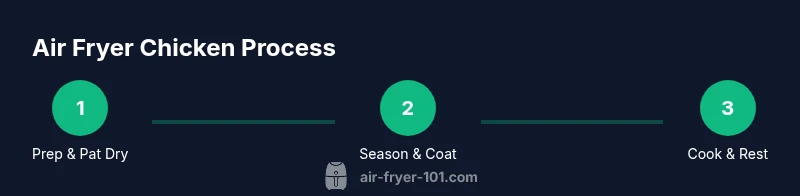
What to do with chicken in air fryer refers to a flexible approach that adapts to cut size, bone presence, and desired crispiness. The core idea is to minimize moisture on the surface, ensure even spacing, and finish with a short rest to let juices redistribute. Air Fryer 101 Team highlights that starting with dry surfaces yields browner, crisper exteriors and less steam inside the basket. Whether you’re cooking for one or feeding a family, a basic plan helps you scale up or down without losing quality. By embracing a few non-negotiables—pat dry, preheat when required, and check internal temperature—you’ll quickly see how versatile this technique is for chicken lovers.
Quick practical tip: preheating isn’t always mandatory, but it helps with uniform browning on thicker cuts. If your model runs hot or you’re pressed for time, skip preheat but add 2–4 extra minutes to the cooking phase to achieve similar crispness. Remember to arrange pieces in a single layer with space between them to allow hot air to circulate and finish with a brief rest before serving.
In short, this block sets the foundation for what to do with chicken in air fryer by establishing reason, scope, and practical expectations for home cooks seeking healthier, faster, and tastier weeknight meals.
Tools & Materials
- Air fryer(Choose a model with a true 3-4 qt basket minimum for even air circulation)
- Meat thermometer or instant-read thermometer(Internal temp should reach 165°F (74°C))
- Tongs or silicone spatula(For turning without piercing meat)
- Mixing bowl(For dry rubs or marinades)
- Paper towels(Pat chicken dry to remove surface moisture)
- Oil spray or 1-2 tsp neutral oil(Even a light coating helps browning)
- Optional: cooling rack or parchment(Helps keep pieces separated in the basket)
Steps
Estimated time: 60-90 minutes
- 1
Choose cut and pat dry
Select boneless breasts, thighs, wings, or drumsticks based on your time and appetite. Pat the chicken dry with paper towels to remove surface moisture, which helps browning and crisper skin. Even thickness aids even cooking, so consider pounding thicker breasts lightly or trimming excess fat.
Tip: Dry surfaces before seasoning for better browning. - 2
Season or marinate
Season with salt, pepper, and your favorite spices. For deeper flavor, marinate for 30-60 minutes, but avoid overly acidic marinades for long durations to prevent texture changes. Dry rubs can be more convenient and still deliver robust flavor.
Tip: Evenly coat all sides to prevent uneven browning. - 3
Preheat or prepare the basket
If your air fryer requires preheating, set it to the target temperature before adding the chicken. If not, simply let it reach the temperature naturally as you prepare the pieces. Lightly oil the basket or spray to prevent sticking.
Tip: Preheating can improve browning on thicker cuts. - 4
Arrange in a single layer
Place chicken pieces in a single layer, leaving space between each piece so hot air can circulate. Do not crowd the basket, as overcrowding traps steam and leads to soggy surfaces. Use a rack or parchment if you need to fit more pieces without touching.
Tip: Single-layer layout is essential for even crisping. - 5
Set the temperature
Common starting points: 360°F (182°C) for most cuts, 380-400°F (193-204°C) for skin-on or extra-crispy results. Thicker pieces may benefit from a slightly lower initial temperature with a final minute blast to finish browning.
Tip: Adjust by cut type: leaner cuts at lower temps; skin-on at higher temps. - 6
Cook and flip halfway
Cook for the initial time, then flip the pieces to ensure even browning on all sides. This helps develop uniform color and texture across the surface.
Tip: Flipping is especially important for larger thighs or bone-in pieces. - 7
Check internal temperature
Use a meat thermometer to verify the thickest part reaches 165°F (74°C). Adjust cooking time in small increments if needed based on size and your air fryer model.
Tip: Always rely on temperature rather than time alone for doneness. - 8
Rest before serving
Let chicken rest for 3-5 minutes after cooking. Resting helps redistribute juices, keeping meat tender and juicy when cut.
Tip: Avoid slicing immediately; it leaks juices onto the plate. - 9
Finish with glaze or sauce (optional)
If you like a glaze, toss the hot chicken with your sauce in a clean bowl for a quick glossy finish. Keep glaze light to avoid soggy texture.
Tip: Apply glaze at the end to preserve crispness. - 10
Adapt for bone-in vs. boneless
Bone-in pieces generally need longer cooking and a higher final temperature. Boneless cuts cook faster; monitor closely to avoid dry meat.
Tip: Use a thermometer as your primary guide for doneness. - 11
Reheating or batch cooking
To reheat, place leftovers back in the air fryer at a lower temp for a short time to revive crust and moisture without overcooking.
Tip: Store properly in the fridge and reheat within 3-4 days. - 12
Clean up after cooking
Quickly wipe the basket and tray after cooling, then wash with warm soapy water. Regular cleaning prevents residue buildup that can affect flavor and airflow.
Tip: Dry all parts thoroughly before next use.
Got Questions?
Can I cook frozen chicken in an air fryer?
Yes, but expect longer cooking times and a need to verify doneness with a thermometer. Start with 360°F and extend the cook time, flipping halfway. Patience and temperature control help prevent rubbery texture.
Yes, you can cook frozen chicken in an air fryer, but you’ll need more time and careful temperature checks to ensure it’s cooked through safely.
What internal temperature should chicken reach?
Chicken should reach 165°F (74°C) at the thickest part for safe consumption. Use an instant-read thermometer for accuracy and check multiple spots on larger pieces.
Cook chicken until it hits 165 degrees Fahrenheit, checking with a thermometer for accuracy.
Should I marinate or rub before air frying?
Both work well. Marinating adds depth of flavor and moisture, while dry rubs deliver a quicker, crispier finish. For best results, pat dry after marinating to maintain surface dryness.
Marinating or rubbing is fine; marinating adds flavor, rubs keep the surface dry for crispness.
Can I bread chicken for a crispy coating?
Yes. Use breadcrumb coatings with a light spray of oil for extra crunch. Ensure the breading sticks by patting the chicken dry first and applying a thin, even layer.
Breaded coatings work well with a light oil spray to boost crispiness.
How do I prevent dry chicken?
Avoid overcooking by using a thermometer and choosing cuts with a bit of fat. Restning after cooking locks in moisture. Coatings and marinades can also help preserve juiciness.
Prevent dryness by checking doneness with a thermometer and letting it rest after cooking.
Do different air fryer models affect results?
Yes. Variations in basket size, airflow, and preheating behavior can affect cook times. Start with the lower end of recommended times and adjust based on how your model performs.
Model differences can change timing; start with conservative times and adjust as needed.
Watch Video
Quick Summary
- Choose the right cut for your time and texture goals.
- Dry surface prep and single-layer placement are essential for crispness.
- Use a thermometer; don’t rely on time alone.
- Rest briefly to preserve juiciness before serving.
- Clean your air fryer promptly to maintain performance.