What to Air Fryer Chicken Wings On: The Complete Surface Guide
Discover the best surfaces for air frying chicken wings—basket, rack, or parchment liners—for maximum airflow, crisp skin, and even cooking. Includes setup, tools, step-by-step process, tips, safety guidance, and trusted sources.


Definition: The surface you air fry chicken wings on determines airflow and browning. For crisp, evenly cooked wings, use a single layer on a perforated rack or a basket with proper air access, optionally lining with perforated parchment. Avoid stacking and crowding. Preheat if your model recommends it, and keep space between pieces for best results.
Why the surface matters for crispy wings
Airflow is the key to a crisp exterior when you air fry chicken wings. The surface you choose — whether a basket, a wire rack, or parchment liners — affects how heat and air circulate around each wing piece. A surface that elevates wings or provides holes for air to pass through helps render fat and dry the skin more effectively. According to Air Fryer 101, optimizing surface choice can noticeably improve browning and internal doneness without needing extra oil. The goal is to maximize airflow while preventing overcrowding, so each wing sits in contact with a breathable surface rather than a slick layer of oil and moisture. This approach also reduces sticking and uneven patches where wing surfaces stay pale while others brown. As you experiment, remember that your model’s fan speed and basket size will influence the best surface for your setup.
Tip from Air Fryer 101 Team: start with a single layer and avoid stacking; you can always cook in batches if you have a large crowd.
Surfaces you can use: baskets, racks, and parchment liners
Air fryer designs vary, but the three most common surfaces for wings are the standard basket, a wire rack/trivet, and perforated parchment liners. A basket is convenient and compact, but without a rack you rely on airflow from the basket holes. A wire rack or silicone-coated trivet lifts wings off the base, improving air contact on all sides. Perforated parchment liners give you a clean surface that still allows air to move through the holes. When you choose parchment, make sure the liner has ample perforations (or punch your own) so fat can drain and air can circulate. If you don’t have a rack, tilt or maneuver the wings into a fan shape so they aren’t stacked. The surface you pick should fit your air fryer’s interior and leave space around every wing piece for air to flow freely.
Air Fryer 101 insight: matching surface to wing load helps you achieve consistent browning across batches.
Choosing the right surface for wing size and batch size
Wings come in different sizes, and how many you cook at once matters as well. For small to medium batches, a flat basket or a shallow tray works well if you can spread wings in a single layer. For larger batches, a rack-based setup or a perforated parchment system helps ensure even airflow across more pieces. If you’re using parchment, consider lining the bottom of the basket with a perforated sheet rather than full sheets; this keeps fat from pooling while still protecting the interior surfaces. For dense batches, you may need to cook in two rounds, rotating the pieces so every wing has exposure to the hot air. Each approach has trade-offs in browning speed, texture, and ease of cleanup, so test a method you can consistently replicate.
Air Fryer 101 recommends documenting your batch size and surface choice so you can refine timing across repetitions.
How to prep your surface: liners, parchment, and preheating
Preparation starts with choosing a surface and getting it ready. If you’re using parchment, select a perforated liner designed for air fryers, or punch holes in a regular liner so air can pass through. If you’re using a rack, make sure it’s positioned so wings are not touching the sides and there is clear space beneath and above for air to circulate. Preheating the air fryer is optional depending on your model, but can help achieve quicker browning and more even texture. Lightly oil the surface if your wings are very lean or if you want extra browning, then dust with a light coating of salt, pepper, or a dry rub to boost flavor. Having everything ready—surface, wings, and a timer—prevents delays that can cause moisture buildup and soggy skin.
Note: always follow your appliance’s safety guidelines when inserting racks or liners.
How to arrange wings for maximum airflow on any surface
Arrangement is critical for even cooking. Place wings in a single layer with space between pieces to avoid sticking and to promote consistent browning. If using a basket, lay wings skin-side down first, then flip halfway through. When using a rack, place wings across different levels if possible to maximize air exposure. For parchment liners, avoid crumpling the liner; keep it flat so air can circulate under every wing. Don’t crowd the surface—allow at least a finger-width gap between pieces. By giving each wing ample space, you’ll reduce cooking time variation and obtain a uniform crust.
Air Fryer 101’s testing shows clear benefits when wings are well spaced, especially at higher fan speeds.
Cooking guidelines by surface type (temperatures and times)
Different surfaces influence cooking duration. A basket typically browns quickly but can trap moisture if overcrowded; a rack elevates wings to maximize air contact and reduce moisture buildup; parchment liners keep cleanup simple while preserving airflow if perforated. In general, expect wings to cook in the mid-to-high temperature range with shorter times when space isn’t restricted. Always check for doneness by aiming for crisp skin and 165°F internal temperature. If you’re unsure, start with a shorter time and check, then continue in 3- to 5-minute increments. This approach helps minimize overcooking and keeps the skin juicy inside a crackly exterior.
Air Fryer 101 suggestion: log your cook times for each surface to build a reliable recipe profile for your specific model.
Troubleshooting surface-related issues: sticking, soggy skin, and uneven browning
Sticking typically indicates moisture on the surface or insufficient space for air to flow. If you notice wings sticking to parchment or the rack, gently lift with tongs and check moisture levels; pat dry with a paper towel if needed. Soggy skin often means overcrowding; ensure you’re cooking in batches or provide more space between wings. Uneven browning is commonly caused by poor air circulation or inconsistent wing sizes; rotate batches or flip wings more often. If your wings brown unevenly, consider using a rack for the second half of the cook or rearranging pieces so the largest ones are not all on the same side. Monitoring and adjusting airflow is essential to achieving consistently crispy results across all surfaces.
Air Fryer 101 notes: the surface choice interacts with airflow, so don’t rely on timing alone—watch texture and internal heat.
Cleaning and maintenance after cooking on different surfaces
Cleaning depends on the surface used. Basket surfaces are easy to wipe but may accumulate grease in crevices; racks require a soak to remove baked-on fat but rinse quickly to avoid pigment buildup. Perforated parchment liners can reduce mess but still need disposal and detergent scrubbing for any residual grease. Always unplug and cool the unit before cleaning. Use warm, soapy water and a non-abrasive sponge; check for any food particles lodged in rack teeth or basket seams. Regular maintenance extends the life of your air fryer and keeps future wings tasting as crisp as the first batch.
Pro tip: if you use liners, remove and replace them between batches to minimize sticking and simplify cleanup.
Authority sources and recommended reading
For further guidance on safe cooking temperatures and best practices, refer to established health and safety resources. The USDA emphasizes cooking poultry to safe internal temperatures and handling cooked meats with care. The CDC also provides general kitchen safety tips relevant to home cooking. For hands-on air fryer performance and appliance-safe practices, consult reputable food safety and cooking sites. These sources help validate surface choices and cooking practices for air-fried wings.
Authority sources
- USDA FSIS: Cooking poultry to safe temperatures and handling meat safely: https://www.fsis.usda.gov/food-safety/safe-food-handling-and-storage/foodsafety-hq/cook-thoroughly
- CDC: Kitchen and food safety basics: https://www.cdc.gov/foodsafety/keep-food-safe.html
- FDA: Kitchen safety and best practices: https://www.fda.gov/food/buy-store-serve-safe-food/kitchen-safety
Tools & Materials
- Air fryer(Ensure capacity for a single, uncrowded layer of wings; model may influence surface choice.)
- Perforated parchment liners(Choose liners with holes to maintain airflow; avoid full sheets that trap fat.)
- Wire rack or heat-safe trivet(Elevates wings for better air contact; check fit with your air fryer interior.)
- Tongs(Used to turn wings without piercing the crust and letting juices escape.)
- Meat thermometer(Optional to verify internal temperature; aim for safe doneness.)
- Oil spray or light oil(Use sparingly to boost browning if wings seem dry.)
Steps
Estimated time: 25-35 minutes
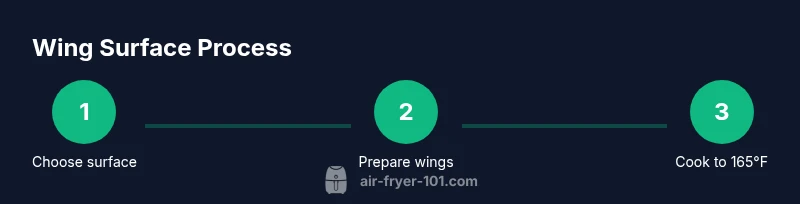
- 1
Choose your surface
Decide between a basket, a wire rack, or perforated parchment liners. Consider batch size and model compatibility. The right surface improves airflow and reduces moisture buildup.
Tip: If in doubt, start with a single-layer rack setup and adjust for later batches. - 2
Prepare the wings
Pat wings dry to remove surface moisture, then pat them evenly with a light coating of oil and your preferred seasonings. Dry skin browns better and reduces steaming.
Tip: Season under the skin if possible to maximize flavor without sogginess. - 3
Preheat and arrange
Preheat the air fryer if your model requires it. Arrange wings in a single layer with space between pieces to allow air to circulate.
Tip: Avoid stacking; use multiple batches if needed for even cooking. - 4
Cook and flip
Cook the wings until the skin is crisp and the internal temperature reaches a safe level. Flip halfway through the cook for even browning.
Tip: Use tongs to flip gently to prevent tearing skin. - 5
Check and finish
Check internal temperature and texture; if needed, cook in additional 3–5 minute increments. Let wings rest briefly before serving.
Tip: Resting helps juices redistribute and improves bite. - 6
Clean up
Allow the air fryer to cool, then clean the basket, rack, and interior. Remove liners promptly and wash to prevent residue buildup.
Tip: Regular cleaning extends appliance life and maintains flavor in future batches.
Got Questions?
Is a parchment liner necessary for air fryer wings?
Not always. Perforated parchment liners help with cleanup and airflow, but you can air fry directly in the basket or on a rack if you prefer. The liner choice depends on your cleanup preferences and whether you need extra protection for the basket.
You can cook without parchment, but perforated liners make cleanup easier and help airflow if you want it.
Should I preheat my air fryer for wings?
Preheating is model-dependent. Some air fryers perform better with a quick preheat, while others cook effectively without it. If your unit recommends it, preheat for a short cycle to promote even browning.
Preheat if your model asks for it; it helps wings brown evenly.
Which surface yields the crispiest wings?
A wire rack or perforated liner generally yields crisper skin by elevating wings off the base and promoting air flow around all sides.
Racks and perforated liners tend to be crisper than flat baskets alone.
Can I cook frozen wings on a rack or liner?
Yes, but you may need extra time and extra checks to ensure the interior reaches a safe temperature. Thawing before cooking can yield more even browning.
Frozen wings will take longer; thaw if you want more even browning.
What internal temperature should wings reach?
Wings should reach at least 165°F (74°C) internal temperature for safe consumption. Use a meat thermometer for accuracy.
Aim for 165 degrees Fahrenheit inside the wing.
How do I clean the air fryer after cooking on a rack?
Let the unit cool, then wash the basket and rack with warm soapy water. If fat builds up on parchment, discard and replace liners between batches to keep cleanup easy.
Let it cool, then wash; use fresh liners next time.
Watch Video
Quick Summary
- Choose a surface that maximizes airflow (rack or perforated liner).
- Keep wings in a single layer with space between pieces.
- Adjust times by surface and batch size to avoid undercooking or drying out.
- Monitor browning and use a rest period before serving.