What to Air Fry Leftover Pizza On: Surfaces, Temps, and Tips
Learn the best surfaces for reheating leftover pizza in an air fryer, plus timing, temps, and expert tips from Air Fryer 101 to get a crisp crust every time.


To reheat leftover pizza in an air fryer, use a parchment-lined sheet or a perforated rack to maximize airflow. The best option is a perforated rack or parchment with holes, which helps crisp the crust while melting cheese evenly. Preheat to 350°F and cook 3–5 minutes, shaking or flipping halfway for best results.
Why surface choice matters for reheating leftover pizza in an air fryer
Pizza reheating in an air fryer is all about airflow. The wrong surface can trap steam under the crust, making the base soggy and dull. According to Air Fryer 101, the surface you choose drives crispiness and even cheese melt. A perforated rack or parchment with perforations allows hot air to reach the bottom of each slice, not just the top. This simple swap can transform a limp leftover into a restaurant-quality bite. The goal is to maximize surface area exposure to hot air while preventing toppings from curling or sliding. With the right surface, you’ll notice shorter reheating times and a crust that’s surprisingly crisp, while cheese stays nicely melted. Air Fryer 101’s guidance focuses on airflow as the critical factor in achieving consistent results, especially when you’re dealing with varied crust thickness or toppings. Start with a surface that promotes air contact and adjust based on how your oven behaves in your kitchen.
Surface options you can use for leftover pizza
There are several practical options depending on what you have on hand and how many slices you’re reheating. The most common choices are parchment paper (preferably with holes) and a perforated air fryer rack. Parchment paper keeps slices from sticking and makes cleanup easy, but perforated parchment designs offer better airflow than solid sheets. A metal wire rack placed on a parchment layer can also work well, especially when you’re reheating multiple slices in a single layer. Silicone mats provide a non-stick surface, but they can slightly dampen the crust if the mat traps moisture. Avoid solid foil or dense liners, which can block airflow and lead to soggy crust. If you have a dedicated air fryer basket with a built-in rack, you may skip parchment altogether, letting the basket’s grooves do the air circulation. Always aim for a single layer per slice to ensure even crisping.
How to set up your air fryer for leftover pizza
Preparation starts with choosing the surface and preheating. Line the basket with parchment paper or set a perforated rack inside, then preheat the unit to the target temperature. Place 1–3 slices in a single layer, ensuring space between slices for air to flow freely. Avoid overlapping toppings, especially if cheese has already melted. For thin crust, a quick, high-heat pass may suffice; for thicker crust, plan for a slightly longer reheating window. The key is to keep the slices apart so air can circulate evenly around each piece. Use tongs to arrange slices and prevent dunking them in any leftover oil.
Temperature and timing guidelines by crust type
Crust thickness heavily influences reheating time. For thin crust, 325–350°F for 3–5 minutes often yields a crisp edge with soft cheese; medium crusts may benefit from 350–370°F for 4–6 minutes; thick crusts can require 360–380°F for 6–8 minutes. If your air fryer runs hot or you’re reheating multiple slices, start at the lower end and check after 3 minutes, then add time in 1–2 minute increments. Always flip or rotate slices halfway to promote uniform browning on both the crust and toppings. Remember that cheese can bubble and spill; keep a close eye during the final minutes to prevent burning.
Handling toppings and cheese melt for best results
Cheese that’s already melted can overcook quickly, so plan for a shorter final pass. Pepperoni and other cured toppings tend to crisp up nicely; if you prefer softer toppings, remove extra toppings before reheating and add them later. If you’ve got extra sauce or a lot of cheese, use a light spray of oil on the crust’s surface to encourage browning, but avoid heavy oil films that can sog the base. For veggie toppings, slice evenly so every piece heats at the same rate. The goal is a uniformly warmed slice with a crisp crust and a cheese-melt that looks glossy rather than greasy.
Troubleshooting: common issues and fixes
If you notice soggy crust, it’s usually due to stacking or too-moist toppings. Move slices to a single layer and consider a perforated rack to boost airflow. If the cheese isn’t melting evenly, briefly raise the temperature or extend the time in small increments, and rotate slices so all edges are exposed to hot air. Burning edges are typically caused by too-long cooking times at high heat; reduce time by 1–2 minutes and check frequently. If you see cheese slipping off the crust, it could be over-topped; consider lighter toppings or removing excess from slices before reheating.
Storing leftover pizza for reheating in the air fryer
Store leftover slices in an airtight container or wrap tightly to prevent drying out. When planning to reheat, separate slices so they don’t stack; separated slices reheat more evenly. If you anticipate reheating multiple days later, consider freezing slices individually on a tray before transferring to a freezer bag. This makes it easier to reheat a single slice later without thawing a larger batch. Label containers with date to track freshness. For best results, reheat within 3–4 days of the original bake.
Cleaning and maintenance after reheating leftovers
After reheating, allow the air fryer to cool, then wipe the basket and tray with a damp cloth. If there’s grease buildup, use warm soapy water and a non-abrasive sponge. Parchment residue should be removed gently to prevent clogging the unit. Regularly check for crumbs in the vents and clean the interior surfaces to maintain optimal airflow. A quick wipe-down after every few uses helps ensure consistent performance and longer appliance life.
Quick-start cheat sheet and best practices
- Use a surface that promotes airflow (perforated rack or perforated parchment).
- Preheat to 320–350°F depending on crust thickness.
- Reheat in a single layer with space between slices.
- Flip halfway for even crisping and melt.
- Avoid stacking or heavy toppings that trap moisture.
Tools & Materials
- Parchment paper or parchment liners (perforated preferred)(Non-stick; use perforated sheets if possible)
- Perforated air fryer rack(Optional but improves airflow for multiple slices)
- Silicone mat or perforated silicone sheet(Helps prevent sticking; may affect airflow slightly)
- Tongs or spatula(For safe handling and turning slices)
- Oven mitts(Protect hands when handling hot basket)
Steps
Estimated time: 8-12 minutes
- 1
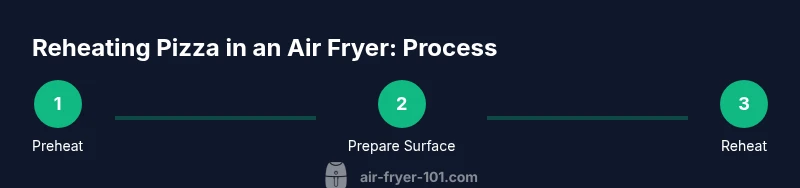
Preheat the air fryer
Begin by preheating the air fryer to the target temperature (320–350°F, depending on crust). Preheating primes the unit to deliver immediate, even heat, which helps crisp the crust rather than steaming it. Do this for 2–3 minutes before adding pizza.
Tip: Preheating reduces hot spots and speeds up crisping. - 2
Prepare the cooking surface
Line the basket with parchment paper or set a perforated rack inside. This step keeps the pizza from sticking and improves airflow around each slice. Avoid solid liners that block air.
Tip: Perforated parchment is ideal for airflow with minimal cleanup. - 3
Place slices in a single layer
Arrange 1–3 slices in a single layer, spaced evenly. Do not stack or overlap; crowding traps moisture and leads to soggy crust. If you have more slices, reheat in batches.
Tip: Spacing ensures every piece gets hot air and crisps evenly. - 4
Set time and temperature
Choose 325–350°F for thin crust or 350–370°F for thicker crust and cook for 3–6 minutes. Start with the lower end and check after 3 minutes to avoid overcooking the cheese or burning the crust.
Tip: Check early and adjust in 1–2 minute increments. - 5
Flip or rotate halfway
Turn slices halfway through reheating to promote even browning on both crust and toppings. This helps maintain consistent texture across all slices.
Tip: Flipping is especially useful for uneven slice sizes. - 6
Remove and rest
Withdraw hot slices with tongs and let them rest for 1–2 minutes. Resting lets the cheese set and prevents burns from hot cheese on the tongue.
Tip: A short rest time improves texture and flavor perception. - 7
Clean up afterward
Carefully remove any parchment and wipe the basket interior after it cools. Regular cleaning maintains airflow and performance for future batches.
Tip: Wipe while the basket is still warm to remove stuck bits more easily.
Got Questions?
What is the best surface to reheat leftover pizza in the air fryer?
A perforated rack or perforated parchment works best because it maximizes airflow to the crust while keeping toppings in place. Avoid solid liners that block air.
The best surface is a perforated rack or perforated parchment to maximize airflow and crisp the crust.
Should I preheat the air fryer before reheating pizza?
Yes. Preheating helps the crust crisp up quickly and evenly, reducing sogginess. It also shortens the total reheating time.
Yes, preheating helps the crust crisp up quickly and evenly.
Can I reheat multiple slices at once in the air fryer?
Yes, but keep them in a single layer with space between slices. If you have more slices, reheat in batches to preserve airflow and texture.
Yes, but don’t stack slices; reheat in batches if needed.
Is parchment paper safe in air fryers?
Food-grade parchment is generally safe in air fryers when used within recommended temperatures. Avoid contacting the heating element and ensure it’s not overloaded with toppings.
Yes, parchment paper is safe if used properly and not overloaded.
What happens if I overcook leftover pizza in the air fryer?
Overcooking makes the crust hard and can burn cheese. Start at the lower end of the time range and check frequently to prevent this.
Overcooking makes the crust hard; check early and adjust.
Can I reheat pizza with pepperoni or other toppings?
Yes. Pepperoni and similar toppings reheat well; if toppings look oily, you can remove excess briefly before reheating and add back after the crust is crisp.
Yes, you can reheat toppings; consider removing excess oil if needed.
Watch Video
Quick Summary
- Use airflow-boosting surfaces for crisp crust.
- Preheat and keep slices in a single layer.
- Adjust time by crust thickness and toppings.
- Flip halfway for even browning.
- Clean the basket after reheating for best results.