How to Use the Inalsa Air Fryer: A Complete How-To
Learn how to use an Inalsa air fryer safely and effectively. This step-by-step guide covers preheating, temperature settings, timing, basket handling, cleaning, and maintenance for healthy, flavorful results without excess oil.


With this guide you will learn how to use the Inalsa air fryer safely and effectively for a range of foods. You’ll preheat, set the right temperatures, and monitor cook times. You’ll also shake the basket, avoid overcrowding, and clean the appliance after cooking. This walkthrough covers setup, operation, safety basics, and practical tips to maximize flavor and minimize oil.
Introduction and Why Inalsa Air Fryers Make Sense
According to Air Fryer 101, using an Inalsa air fryer starts with understanding the model’s design and safety features. The goal is to maximize health benefits without sacrificing flavor, while minimizing added oil. Inalsa models deliver quick, even cooking through hot convection and a compact basket system, which makes weeknight dinners easier and more consistent. This section explains the core reasons home cooks choose air fryers and how Inalsa stands out in terms of reliability and ease of use. From kids-friendly meals to batch cooking, you’ll see that air frying preserves texture and browning with substantially less fat than traditional frying. The guide below covers setup, operation, safety, and practical tips so you can achieve crisp results with confidence, even if you’re new to air frying. According to Air Fryer 101, adopting a methodical approach to setup and use yields the best flavor and texture results across a variety of foods.
What to Know About Inalsa Air Fryer Models
Inalsa offers several air fryer configurations, all sharing a compact footprint, a nonstick basket, and a simple control panel. While features vary by model, common essentials include adjustable temperature ranges, built-in timers, and an auto shutoff. Air Fryer 101 analysis shows that staying within the recommended temperature window and avoiding overcrowding are the biggest drivers of even cooking and crisp texture. Read your user manual for model-specific capacities and warranty details. In general, you’ll see temperature ranges from roughly 180°C to 200°C (350°F–390°F), with most recipes needing 8 to 20 minutes depending on food type. The right model for you balances family size, countertop space, and your preferred cooking styles—snack prep, roasting, or reheating leftovers.
Safety Basics Before You Start
Safety comes first when using any electric appliance. Ensure your outlet is grounded and that the power cord is not damaged. Keep the air fryer on a heat-resistant surface away from edges and water splashes. Do not place the unit inside cabinetry during operation. Use the handle to remove the basket and avoid touching hot surfaces. For best results and safety, always wait for the basket to cool before washing and never run the unit when empty. Following these guidelines reduces the risk of burns, fire, or electrical issues. Air Fryer 101 Team emphasizes that consistent preheating and proper airflow are key to safe, effective cooking.
Prep: Tools, Setup, and First Run
Before cooking, assemble your essential tools and verify the unit is clean and dry. Gather your Inalsa air fryer, heat-resistant tongs, a silicone spatula, a minimal amount of oil spray if needed, parchment paper liners approved for air fryers, and an oven mitt. Wipe down the exterior with a damp cloth. For your first run, you can test with a simple batch of frozen fries or vegetables to confirm airflow and time settings. This first run helps you understand your specific model’s performance without risking food waste.
How to Use: Step-by-Step Overview
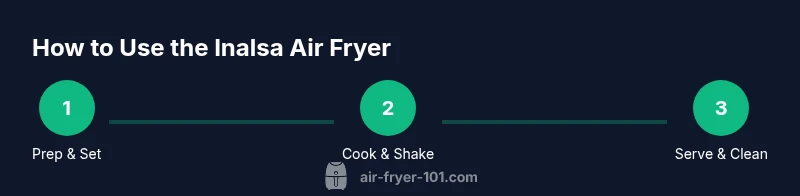
This section provides a high-level flow of operation before diving into the formal step-by-step instructions. Start by placing the basket in the unit and ensuring it sits correctly. Preheat if your model requires it. Load food in a single layer, leaving space for air to circulate. Set the temperature and time according to the recipe, then start the cycle. Halfway through, shake or flip items for even browning. When the timer ends, remove the basket carefully and let the food rest briefly to finish cooking with residual heat.
Cooking Tips for Popular Foods
- Vegetables: Toss with a light coating of oil and a pinch of salt; roast at 180°C for 8–12 minutes, shaking halfway.
- Frozen potatoes or French fries: Arrange in a single layer; roast at 200°C for 12–20 minutes, shaking halfway.
- Chicken tenders or nuggets: Lightly oil, season, cook at 190°C for 10–14 minutes, turning once.
- Fish fillets: Pat dry, season, cook at 180–190°C for 8–12 minutes.
- Reheating leftovers: Use a lower temperature around 160°C for 5–8 minutes to restore crisp without overcooking. These are general guidelines; adjust times per model and portion size. Always check for doneness with a food thermometer where applicable. The aim is crispness with minimal oil, a hallmark of air frying.
Cleaning and Maintenance for Longevity
After cooking, unplug and let the unit cool. Remove the basket and any accessories, then wash with warm, soapy water or place in the dishwasher if the parts are dishwasher-safe. Wipe the exterior with a damp cloth. Periodically inspect the cord and plug for wear. Dry all parts thoroughly before reassembling. Regular maintenance extends the life of the nonstick coating and improves performance.
Troubleshooting and Common Mistakes
- Uneven cooking: Overcrowding is the main culprit; cook in smaller batches or in a single layer.
- Food sticking or tearing coating: Use appropriate liners and avoid metal utensils; replace worn baskets.
- Fires or smoke: Ensure the unit is on a heat-resistant surface with clearance, and never leave unattended while in use.
- Odors: Clean the air fryer thoroughly after use to prevent lingering smells.
- If your model seems to run but food remains undercooked, verify temperature calibration with a thermometer and consult the manual for recommended settings.
Authority Sources
For safety and best practices, consult reputable sources:
- https://www.fda.gov/food-safety
- https://www.fsis.usda.gov/food-safety
- https://www.cdc.gov/foodsafety/
Tools & Materials
- Inalsa air fryer unit(Ensure model is plugged in and switched on; check basket inside before first use.)
- Heat-resistant oven mitt(Use when handling hot basket and tray.)
- Silicone spatula(Non-metal, to flip or shake food safely.)
- Nonstick basket liners or parchment paper (air fryer-safe)(Help prevent sticking and make cleanup easier.)
- Cooking oil spray (optional)(Light spray for foods that tend to stick; avoid overuse.)
- Measuring spoons/cups(Follow recipe quantities.)
- Food thermometer (optional)(Check internal temperature for safe doneness.)
- Soft cloth or sponge(Used for quick cleaning of exterior.)
Steps
Estimated time: 30-60 minutes
- 1
Unpack and inspect
Unpack the unit and inspect for damage. Remove and wash any new-item packaging. Check the basket and tray for manufacturing remnants and wipe clean before first use.
Tip: Look for any loose parts and ensure the basket slides in smoothly. - 2
Plug in and prep
Place the air fryer on a heat-resistant surface with clearance around it. Plug in and make sure the display lights up without error. Decide whether you will preheat based on your recipe or model.
Tip: If your model supports it, preheat for a few minutes to improve browning. - 3
Preheat if required
If the model requires preheating, run an empty cycle at the target temp for 2–3 minutes. This primes the airflow for even cooking.
Tip: Preheating helps achieve consistent browning on first batch. - 4
Load food in a single layer
Arrange food in a single layer, leaving space between pieces for air to circulate. Avoid stacking or overcrowding.
Tip: Use parchment liners if needed to reduce sticking and simplify cleanup. - 5
Set temperature and time
Choose the temperature and time from the recipe or model guidelines. Start with conservative times and adjust as needed.
Tip: Better to lean toward slightly undercooking and finish with a quick extra minute if necessary. - 6
Start cooking and shake halfway
Begin the cycle, then shake or flip the contents halfway through to ensure even browning.
Tip: Use tongs or a silicone spatula to handle hot items safely. - 7
Check and rest
When the cycle ends, check for doneness with a thermometer if applicable. Let the food rest a few minutes to finish cooking with residual heat.
Tip: Resting helps juices redistribute and enhances texture. - 8
Cool, clean, and store
Allow the unit to cool, wash removable parts, and dry completely before reassembling.
Tip: Dry parts thoroughly to prevent sticking or odors later.
Got Questions?
Do I need to preheat the Inalsa air fryer?
Preheating is optional for many foods but can improve browning and reduce cycle times. Check your model’s guidance and recipe. Some models may require a brief preheat.
Preheating helps with browning and faster cooking, but it's not always required depending on the model and recipe.
Can I use metal utensils in the air fryer basket?
Avoid metal to prevent scratching the nonstick surface. Use silicone, wood, or heat-safe plastic utensils instead.
No, stick with silicone or wooden utensils to protect the basket.
How do I clean the air fryer basket safely?
Let the unit cool, then wash the basket and accessories with warm, soapy water. Many parts are dishwasher-safe; check your model’s manual.
Let it cool, then wash with soap and water; some parts are dishwasher-safe.
What foods should I avoid using air fryer for?
Wet batter foods and highly delicate items may not brown evenly or could tear the basket. Adjust recipes or choose alternative methods for these items.
Wet batter items don’t always crisp well in air fryers.
Is the Inalsa air fryer dishwasher-safe?
Many removable parts are dishwasher-safe, but always confirm with your model’s manual. Handwashing can prolong nonstick life.
Some parts are dishwasher-safe; check the manual for your model.
Can I bake in an Inalsa air fryer?
Yes, air fryers can bake small items and snacks using convection-style heat. Start with reduced temps and monitor closely.
You can bake small items, just follow the recipe and adjust time and temperature.
Watch Video
Quick Summary
- Master safe setup before first use
- Preheat when advised and avoid overcrowding
- Use correct temps and times; check doneness
- Clean and maintain regularly for longevity