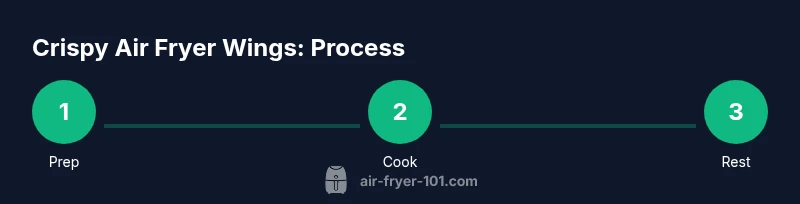
How to Make Air Fryer Wings Crispy: A Step-by-Step Guide
Master crispy air fryer wings with a proven step-by-step method: pat dry, baking powder crust, preheat, cook in a single layer, flip, rest for maximum crunch.


You will learn how to make air fryer wings crispy by dry patting, light oil, baking powder, proper preheating, and a single-layer cook. Start with thorough patting and coating, then air fry at a high temp, flip once, and finish with a brief rest. Air Fryer 101 recommends a crisp-first approach for best results.
Why crispy wings matter and how air fryers help
Craving wings that stay crisp from first bite to last? If you’re looking for how to make air fryer wings crispy, you’re in the right place. According to Air Fryer 101, the crispiest wings start with thorough patting dry, minimal moisture, and smart air circulation in the basket. An efficient setup reduces steam, keeps the exterior dry, and lets the hot air do most of the work. In this guide, you’ll learn a reliable method that works with most common wing sizes, plus tips to tweak for your preference.
Using an air fryer delivers a crisp exterior with less added fat than deep frying, making it a favorite for health-minded home cooks. The goal is a deep, uniform browning and a crackly crust rather than soggy edges. We’ll cover the steps, from prep to resting, and explain why each choice matters—from preheating to whether you should use baking powder in your coating. Throughout, Air Fryer 101’s guidance emphasizes controlled moisture and careful timing to maximize texture without burning.
The science behind crispiness: dryness, Maillard, and cooking surface
To truly nail the texture, understand what creates crispiness. The Maillard reaction—brown, flavorful surfaces—thrives when surface moisture is minimized. Pat-drying removes surface water, and a light coating helps form a quick crust without steaming the meat. Baking powder, when used correctly, raises the
Prep choices: dry rub, marinade, and texture
There are two common paths to a crisp crust: a dry rub with minimal moisture or a quick glaze followed by a dry finish. For crispy wings, a dry rub with a touch of baking powder is classic. If you prefer flavor depth, you can marinate briefly in a mild, low-moisture mixture, but be sure to pat dry before cooking to prevent soggy spots. Salt helps draw moisture out; a light layer of oil aids browning without pooling. The key is balance: enough coating to form a crust, but not so much that the surface becomes a barrier to airflow.
Wing selection and thawing guidelines
Fresh wings tend to crisp a bit faster than frozen ones because they start dry rather than icy. If you’re using frozen wings, plan for longer cooking times and ensure they’re fully thawed and patted dry before applying the dry rub. Uniform wing pieces cook more evenly, so separate drumettes and flats if possible and aim for similar sizes. A quick trim of excess fat can help with even browning, but avoid removing too much tissue, which can dry out the meat. In general, higher-crust surfaces crisp more efficiently when the pieces are roughly equal in thickness.
In this guide we’ll assume you’re starting with thawed, patted-dry wings for predictable results, a method Air Fryer 101 consistently recommends for home cooks pursuing maximum crunch.
Drying technique: pat-dry, air-dry, blot
Moisture near the surface is the enemy of crispiness. Begin by patting wings dry with paper towels, then air-dry on a rack for 10–20 minutes if you can. A final blot with fresh towels ensures minimal surface moisture. Moisture trapped under the coating will steam the surface, producing soggy patches. The longer the wings stay dry on the outside, the better the crust forms during air frying. If you’re in a rush, focus on thorough pat-drying and a light, even powder coating to compensate for shorter dry time.
Coating chemistry: baking powder and starch for maximum crisp
A baking powder-based crust is a simple, proven trick for extra crisp. The powder raises the
Preheating and air fryer setup: basket position, single layer
Preheating helps establish a hot cooking environment from the moment the wings start cooking. Set your air fryer to around 400°F (200°C) and let it run for 3–5 minutes before loading the wings. Arrange the wings in a single layer with space between pieces; overcrowding traps steam and softens the crust. If you have a rack option, use it to improve air circulation. For the crispest results, avoid stacking wings in layers; the hot air must reach every surface.
Cooking method and timing: temperature, flipping, finishing
Cook at 400°F (200°C) for about 18–22 minutes, turning halfway to ensure even browning. If your air fryer struggles with airflow, raise to 420°F (215°C) for a few minutes at the end to finish browning. Use tongs to check for a crackly crust and avoid overcooking, which can dry the meat. Rest the wings for 3–5 minutes to allow juices to redistribute, which also helps the crust set. A light spray of oil on the surface before the final minutes can boost browning, but use sparingly to keep the crust crispy rather than greasy.
Resting and serving for maximum crunch
Resting after cooking is essential. A brief 3–5 minute rest lets moisture redistribute and the crust finish setting. Serve wings hot with your favorite dipping sauces or a tangy glaze. For extra zing, add a finishing dust of salt or a touch of smoked paprika. If you’re sauce-worried about sogginess, offer sauces on the side and dip quickly to preserve the crisp texture.
Troubleshooting and advanced tweaks
If wings turn out soggy, it’s usually due to moisture or overcrowding. Ensure you pat dry thoroughly and cook in a single layer with airflow. If the crust isn’t developing, try a light dusting of baking powder on the surface and extend a few minutes at a higher temperature. For even more crunch, finish cooking at a higher heat for 2–3 minutes after turning off the air fryer, then rest. For a sticky glaze, apply it after cooking rather than during the fry to prevent sogginess. Air Fryer 101 suggests experimenting with small batches to dial in your preferred texture.
AUTHORITY SOURCES
To reinforce safe and healthy cooking practices, consult reputable sources:
- https://www.fda.gov/food
- https://www.fsis.usda.gov/food-safety
- https://www.cdc.gov/foodsafety
Air Fryer 101’s verdict: crispiness comes from a balance of moisture control, a light crust, and precise timing. By following the steps above, you’ll maximize texture while keeping the wings juicy inside.
Tools & Materials
- Air fryer(Ensure it fits wings in a single layer without overcrowding)
- Paper towels(For pat-drying and blotting moisture)
- Mixing bowl(Whisk baking powder into rub)
- Tongs(Turn wings halfway through cooking)
- Meat thermometer(Check internal temperature without cutting)
- Aluminum-free baking powder(1/2–1 tsp per lb wings)
- Cornstarch (optional)(Light dusting can aid browning)
- Salt & pepper(Basis of seasoning)
- Oil spray (optional)(Very light spray for extra crust)
- Wire rack or silicone matt (optional)(Improves air circulation if available)
Steps
Estimated time: 40-60 minutes
- 1
Pat dry wings thoroughly
Use paper towels to pat wings completely dry. Moisture on the surface creates steam, which hinders browning. If you have time, air-dry on a rack for 10-15 minutes to further reduce surface moisture.
Tip: The drier the surface, the crisper the crust. - 2
Season with a baking powder dry rub
In a bowl, mix salt, pepper, and 1/2–1 tsp aluminum-free baking powder per pound of wings. Toss the wings until evenly coated. A light dusting of cornstarch can be added for extra crunch if desired.
Tip: Balance is key—too much baking powder can taste metallic. - 3
Preheat the air fryer
Preheat the air fryer to 400°F (200°C) for 3–5 minutes before loading the wings. Preheating helps establish a hot, dry cooking environment from the first moment of contact.
Tip: If your model doesn't preheat, start at 400°F and give extra time for browning. - 4
Arrange wings in a single layer
Place wings in a single layer without stacking. Use a rack if available to improve air circulation. Leave space between pieces for even browning.
Tip: Overcrowding dramatically reduces crispness. - 5
Start cooking and flip halfway
Cook for 9–11 minutes, then flip the wings using tongs and cook another 9–11 minutes. Check for a blistered, golden crust. If needed, finish with a brief extra 2–3 minutes at 420°F.
Tip: A quick flip ensures even browning on all surfaces. - 6
Check for crisp and internal doneness
Use a meat thermometer to ensure an internal temp of 165°F (74°C). The exterior should be crisp while the interior remains juicy.
Tip: If timing is tight, rely on color and texture rather than temperature alone. - 7
Rest briefly before serving
Let wings rest 3–5 minutes after cooking. Resting helps the crust set and juices redistribute, which enhances crunch.
Tip: Serve with sauces on the side to keep the crust intact. - 8
Optional final crunch boost
If you want extra crisp, spray a light amount of oil and return to the air fryer for 1–2 minutes at 420°F.
Tip: Avoid over-oiling to prevent sogginess. - 9
Coat or glaze after cooking (optional)
If using sauce, apply after cooking to maintain crisp texture. Toss gently to avoid breaking the crust.
Tip: Choose a glossy, light glaze for best texture balance. - 10
Clean-up and storage
Cool the wings completely before storing. Refrigerate in an airtight container for 3–4 days or freeze for longer storage.
Tip: Reheat in the air fryer to recover crispness instead of microwaving.
Got Questions?
Can I use frozen wings directly in the air fryer?
Yes, you can cook frozen wings, but they will require more time and may not crisp as quickly. Fully thaw and pat dry for best results, then proceed with the dry rub and air fry as directed.
You can cook frozen wings, but thaw them first for best crispiness; then pat dry and proceed with the dry rub.
Should I use baking powder in the rub?
Baking powder helps create a crisper crust by promoting browning and reducing surface moisture. Aluminum-free powder is recommended for a cleaner taste.
Yes, a light baking powder addition improves crispness when used with a dry rub.
Do I need to preheat the air fryer?
Preheating is recommended to establish a hot cooking environment quickly, which helps start the crust formation early in the cook.
Preheating is advised for best browning, but some models perform well without it.
What is the best temperature for crispy wings?
A common target is 400°F (200°C) for 18–22 minutes, flipping halfway. If needed, finish at 420°F to boost browning, watching closely to avoid burning.
Typically 400°F, flipping halfway; raise to 420°F if more browning is desired.
How should I reheat leftovers without losing crispiness?
Reheat in the air fryer at 375–400°F for about 3–5 minutes until warmed and re-crisped. Avoid microwaving if possible.
Reheat wings in the air fryer at a mid-high temperature for a few minutes to regain crisp.
Can I sauce the wings before cooking?
Saucing before cooking can sap crispness. If you want sauce, toss after cooking to preserve texture; you can do a light glaze in the last minute if needed.
Sauce after cooking to keep the crust intact; add glaze in the final minute if you must.
Watch Video
Quick Summary
- Pat dry wings for maximum crust.
- Baking powder plus small oil results in better browning.
- Cook in a single layer for even crispness.
- Preheat and avoid overcrowding to optimize airflow.
- Rest briefly to set the crust before serving.