How to Cook Frozen Chicken Breast in an Air Fryer
A complete, step-by-step guide to cooking frozen chicken breasts in an air fryer. Learn timing, temperature, safety tips, and flavor ideas for juicy results without thawing.


Yes—frozen chicken breasts can be cooked in an air fryer with minimal prep. Preheat to 360–380°F, arrange the breasts in a single layer, and cook 15–22 minutes, flipping halfway. Check with a meat thermometer for 165°F internal; adjust time by thickness and model. Let rest 3–5 minutes before serving.
Why Air Fryer Frozen Chicken Is a Practical Choice
Cooking frozen chicken breast in an air fryer is a practical, time-saving approach for busy home cooks. According to Air Fryer 101, starting with frozen breasts in a preheated air fryer yields the most reliable results, especially when you want a fast dinner without thawing. The main advantages are speed, less cleanup, and the ability to control seasoning with minimal added fat.
The air fryer’s hot air circulation creates a crisp exterior while the interior remains juicy when the pieces are uniform in thickness. This balance is particularly important for chicken breast, which can dry out quickly if uneven in size or overcooked. For the best results, opt for boneless, skinless pieces or uniform portions and avoid overcrowding the basket. If you must cook bone-in pieces, expect longer cook times and adjust accordingly.
Air Fryer 101’s guidance emphasizes starting with a dry surface: pat dry, then season lightly or brush with oil for browning. A dry surface promotes browning and helps the seasonings stick. If you are new to air frying frozen chicken, this approach minimizes guesswork and yields consistent, reliable results across different models and brands.
Key Factors That Affect Time and Temperature
Several variables determine how quickly your frozen chicken breasts reach doneness and how they taste. Thickness is the biggest factor: a 1-inch breast will take longer than a half-inch cut. If breasts vary in size, use a quick pound to uniform thickness so the air fryer cooks evenly. Skin-on or bone-in portions require more time and heat; plan accordingly and adjust in small increments.
Starting temperature matters: frozen meat demands more time than thawed meat, and avoiding thawing can slightly extend the total cook time. The air fryer model and wattage also influence results: higher-wattage units tend to browning faster, while older or smaller models may require a minute or two more per side. The amount of oil or spray used affects browning; a light touch is enough to improve crust without turning the dish greasy.
To standardize results, preheat when possible, arrange in a single layer, and avoid stacking. Seasonings should be simple and robust to survive rapid cooking; salt helps retention of moisture, while garlic, paprika, or lemon pepper add flavor without overwhelming the chicken.
Pre-cooking Setup: Equipment and Environment
Adequate prep is essential for predictable results. Ensure your air fryer basket is clean and dry; wipe away any moisture from the surface for better browning. Have a meat thermometer ready to verify doneness, and place a plate or rack nearby for resting. If you prefer extra aroma, keep a light brush of oil ready; a fine mist helps achieve crispness without greasing the chicken.
Space between pieces matters: arrange in a single layer with about 0.5 inch of space. If you have multiple breasts, cook in batches rather than crowding the basket. This improves air flow and reduces uneven cooking. Lastly, prepare your seasonings ahead of time so you can quickly apply them after patting the chicken dry.
Step-by-Step Cooking Blueprint for Frozen Breasts
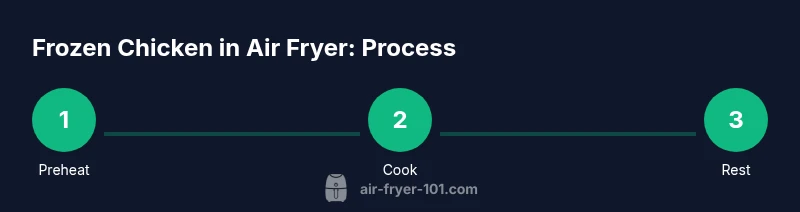
This blueprint summarizes the actions you will perform, aligned with precise timings. It’s designed to be easily followed even if you’re new to air frying. The process starts with preheating, then seasoning, then cooking, flipping, checking temperature, and resting. Each stage has an expected window depending on thickness and model.
- Preheat: If your air fryer requires preheating, set to 360-380°F for 2-3 minutes. This primes the basket for quick, even browning. Tip: Preheating can shave a minute or two off total time.
- Seasoning: Pat breasts dry, then rub with a light layer of oil and your favorite seasonings. For best results, keep seasoning simple to avoid overpowering the natural chicken flavor. Tip: Salt helps retain moisture.
- Arrange: Place breast portions in a single layer with space between pieces. Crowding makes uneven cooking and soggy exteriors. Tip: Use a rack if your model supports it.
- Cook first half: Air fry at 360-380°F for about 8-12 minutes depending on thickness. Do not flip yet unless your model prefers; check after halfway. Tip: Avoid opening the basket too often.
- Flip and finish: Turn breasts over and cook for another 6-10 minutes. The goal is 165°F internal, with juices running clear. Tip: Use tongs to avoid piercing and losing moisture.
- Check doneness and rest: Check with a thermometer. If under 165°F, continue in 1-2 minute increments. Let rest 3-5 minutes to reabsorb juices. Tip: Resting improves slicing and tenderness.
Troubleshooting Common Pitfalls
Dry chicken is the most common complaint when cooking frozen breasts in an air fryer. It usually results from overcooking or uneven thickness. To mitigate, aim for uniform pieces and verify doneness with a thermometer rather than relying solely on time. If a batch comes out dry, reduce the total cook time in the next run by 1–2 minutes.
A soggy crust can occur if the surface is wet or if too much oil is used. Pat the chicken dry and apply only a light spray of oil. For extra browning without greasiness, brush a thin layer of oil onto the surface or use a silicone brush for even coverage.
Uneven doneness often happens when pieces are different thicknesses. Pound thicker breasts to a uniform thickness or cut thicker pieces in half horizontally. Always shake the basket or rearrange the pieces midway through cooking to promote even heating.
Sticking to the basket is usually a sign of insufficient preheating or too little air flow. Lightly oil the basket surface or use a parchment liner designed for air fryers. Ensure there’s at least a half-inch of space around each piece to allow air to circulate.
Always use a thermometer to confirm doneness. Do not rely on time alone; poultry must reach 165°F (74°C) internally for safe consumption.
Safety, Resting, and Storage
Once the chicken reaches 165°F, remove it promptly and let it rest for 3–5 minutes. Resting helps the juices redistribute and results in juicier slices. If you’re not serving right away, store leftovers in an airtight container in the refrigerator for up to 3–4 days, or freeze for longer storage.
To reheat leftovers, use the air fryer at 320°F for 3–5 minutes until hot. Avoid microwaving, which can dry the meat and make it chewy. Always wash hands, utensils, and surfaces after handling raw poultry to prevent cross-contamination.
Flavor ideas: add a quick herb butter, garlic-lemon drizzle, chipotle glaze, or a simple paprika-salt blend to vary every meal without changing the cooking method.
AUTHORITY SOURCES
For poultry safety and temperature guidelines, refer to authoritative sources:
- https://www.fsis.usda.gov/food-safety
- https://www.cdc.gov/foodsafety/index.html
- https://www.fda.gov/food
Tools & Materials
- Air fryer (basket model, 4-6 qt or larger)(Ensure the basket is clean and dry before loading chicken)
- Meat thermometer(Target 165°F (74°C) for safe consumption)
- Tongs(Use to flip breasts without piercing the meat)
- Plate or resting rack(Rest meat 3-5 minutes after cooking to reabsorb juices)
- Oil spray or brush(Light coating to promote browning if desired)
- Paper towels(Pat dry frozen breasts before seasoning)
Steps
Estimated time: 25-30 minutes
- 1
Preheat the air fryer
If your model requires preheating, set the temperature to 360-380°F and preheat for 2-3 minutes. This primes the basket for even heat and improves browning.
Tip: Preheating reduces overall cook time and promotes even crust formation. - 2
Prepare and season
Pat the frozen breasts dry to remove surface ice. Lightly coat with oil or spray and season simply with salt and your favorite herbs or spices.
Tip: A dry surface helps achieve a crisp exterior. - 3
Arrange in a single layer
Place the breasts in a single, evenly spaced layer in the basket. Do not stack or touch pieces; air needs to circulate for even cooking.
Tip: Spacing is key to uniform browning and doneness. - 4
Cook first side
Cook at 360-380°F for 8-12 minutes depending on thickness. Check after halfway; avoid opening the basket too often.
Tip: Opening the basket can extend total cook time. - 5
Flip and finish cooking
Flip the breasts and cook for another 6-10 minutes until the internal temperature reaches 165°F.
Tip: Turning prevents one side from overcooking. - 6
Check doneness and rest
Use a meat thermometer to verify 165°F. Let the meat rest 3-5 minutes before slicing or serving.
Tip: Resting redistributes juices for moist slices.
Got Questions?
Can I cook frozen chicken breasts without thawing them first?
Yes. You can cook frozen chicken breasts directly in an air fryer. Expect a slightly longer cook time than thawed meat, and use a thermometer to verify doneness.
Yes, you can cook frozen chicken breasts in an air fryer. Just check with a thermometer to ensure they reach 165°F before serving.
Should I preheat the air fryer before adding frozen chicken?
Preheating is recommended when your model supports it, as it helps with browning and even heating. If your air fryer doesn’t preheat, start with a slightly longer initial cook time.
Preheating is recommended if your model supports it; it helps with browning and even cooking.
What internal temperature should frozen chicken breasts reach for safety?
The safe internal temperature for chicken is 165°F (74°C). Use a meat thermometer to verify and avoid guessing from time alone.
Cook the chicken until it reaches 165°F inside, then rest before serving.
Can I season the chicken before freezing or after?
Seasoning before cooking adds flavor; if you’re starting with frozen meat, season after patting dry and lightly oiling the surface for best adhesion.
Season the chicken after patting dry and applying a light oil, so the spices stick and flavor sticks.
Will bone-in or skin-on chicken change cooking times?
Yes. Bone-in or skin-on pieces take longer. If using bone-in breasts, add a few minutes and monitor doneness with a thermometer.
Bone-in or skin-on breasts need more time; use a thermometer to confirm 165°F.
Watch Video
Quick Summary
- Preheat when possible for crisper results
- Cook in a single layer with space between pieces
- Verify doneness to 165°F with a thermometer
- Rest meat 3-5 minutes before slicing
- Adjust time based on thickness and air fryer model