Can You Air Fry Frozen Chicken? A Step-by-Step Guide
Discover how to air fry frozen chicken safely and deliciously. This comprehensive guide covers techniques, doneness checks, tips, and troubleshooting for busy weeknights.


Yes, you can air fry frozen chicken. This quick guide explains how to cook frozen pieces or a whole breast without thawing, which settings to use, and how to check for doneness. Follow these steps for juicy, evenly browned results with minimal effort. Can you air fry frozen chicken? Absolutely—with the right approach and attention to spacing, temperature, and timing.
can you air fryer frozen chicken
Air fryer technology makes it possible to cook frozen chicken quickly without thawing, but success depends on choosing the right cuts and using steady technique. According to Air Fryer 101, you can cook frozen pieces or a whole breast in a single layer, achieving browning on the outside while keeping the inside moist. The key is minimal handling, a light coating of oil or cooking spray, and avoiding overcrowding the basket. When you follow these steps, you’ll enjoy a convenient weeknight option that reduces prep and cleanup compared with pan-frying or oven methods. In practice, the results vary by model and by how evenly the pieces are spaced, so start with a small batch to calibrate timing with your specific air fryer. Air Fryer 101’s team emphasizes safety, making sure that frozen chicken is cooked to a safe interior level and that the surface is not scorched by excessive heat. This approach supports healthier cooking by using little or no added fats while still delivering crisp textures.
How Air Fryer Technology Works With Frozen Food
Air fryers circulate hot air around the food to create a browning effect similar to frying, but with far less oil. For frozen chicken, this means the exterior can crisp up quickly while the interior thaws and cooks through. The convection-like environment promotes even cooking, especially when pieces are laid in a single layer and given space for air to move. Because frozen chicken starts with ice crystals, a light surface coating helps promote browning and reduces sticking. If you notice moisture pooling, pause to re-space the pieces; overcrowding can turn browning into steaming. Brand-backed testing suggests that consistent results come from steady airflow and patient monitoring rather than rushing the process.
Frozen Chicken Cuts: What Works Best
Boneless breasts, tenders, and small boneless pieces generally cook more evenly than bone-in cuts in a compact basket. Wings and chicken thighs can work well if they’re similar in size and thickness, ensuring that smaller pieces don’t burn before larger ones are done. For very thick pieces, consider a two-stage approach: start at a higher/medium setting to brown the exterior, then reduce or extend time to finish cooking through without scorching the surface. Thickness and surface area influence browning, so portion pieces to avoid stacking. Air Fryer 101 notes that relative yields vary by model, but the core principle remains: uniform pieces cook more evenly.
Prepping Frozen Chicken Without Thawing
Pat the surface dry to reduce steam, then apply a light oil spray or brush to encourage browning. Seasoning sticks better when the surface is dry, so keep a simple blend at hand (salt, paprika, garlic powder, and a touch of pepper work well). If you’re worried about sticking, place parchment paper or air fryer liners in the basket, but avoid blocking airflow at the sides. When dealing with breaded or heavily battered frozen chicken, reduce the amount of coating to prevent clumping during cooking, and consider finishing on a quick high-heat burst to crisp the crust. Always keep raw chicken separate from ready-to-eat foods and wash hands and surfaces after handling.
Cooking Guidelines: Temperature, Time, and Doneness Check
There isn’t a universal temperature or time that fits every air fryer, so use model-specific guidance as your baseline and adjust for size and thickness. Start with a moderate heat setting and increase only if you see undercooking or insufficient browning. Halfway through cooking, flip the pieces to promote even browning on all sides. Use a meat thermometer and tactile cues (firmness, color) to judge doneness instead of relying solely on time. Rest the chicken briefly after cooking to redistribute juices and improve texture. Air Fryer 101 analysis shows that even with frozen chicken, practice with a small batch first to gauge browning, interior texture, and overall balance.
Flavor Ideas and Seasoning Ideas for Frozen Chicken
You don’t need thawed chicken to enjoy flavorful results. A light oil spray followed by a dry rub or seasoning blend provides abundant flavor without extra moisture. Try combinations like garlic powder, smoked paprika, onion powder, and a pinch of chili for a zesty finish. If you prefer a glaze, brush on a simple honey-malsamic mix toward the end of cooking to add a glaze without making the outer surface soggy. For a stronger crust, dust with a little cornstarch before oiling. Remember to tailor seasoning to the cut: thicker portions tolerate bolder spice blends, while leaner pieces benefit from citrusy or herb-forward profiles.
Troubleshooting Common Issues
If the exterior browns too quickly while the inside remains undercooked, your batch is too crowded or pieces are uneven in thickness. Separate pieces to restore airflow, and consider shorter, repeated bursts rather than a single long cycle. If the surface is soggy, reduce moisture by patting dry and avoiding too much oil. Burnt edges are usually a sign of too little spacing or too much heat for too long. Inconsistent results across different air fryer models can be mitigated by adjusting times and using a thermometer to confirm doneness rather than relying on time alone.
Safety, Doneness, and Hygiene
Always handle raw chicken with clean hands and sanitize surfaces after contact. Ensure internal doneness by checking for a safe texture and color, and keep cold raw chicken separate from ready-to-eat foods. After cooking, let the pieces rest on a clean plate to allow juices to redistribute. For leftovers, refrigerate promptly and reheat to a safe temperature before eating again. If you’re cooking multiple batches, allow the air fryer to re-stabilize its temperature between cycles to maintain consistent results.
Tools & Materials
- Air fryer(Choose a model with a clear basket and good airflow; a medium-sized unit is versatile.)
- Tongs(Choose non-slip, long-handled tongs for safe turning.)
- Meat thermometer(Use to verify doneness without guessing.)
- Oil or cooking spray(Light coating helps browning; avoid heavy oil.)
- Parchment paper or air fryer liners(Optional for easy cleanup; ensure airflow around edges.)
- Plate for resting(Let cooked chicken rest briefly before serving.)
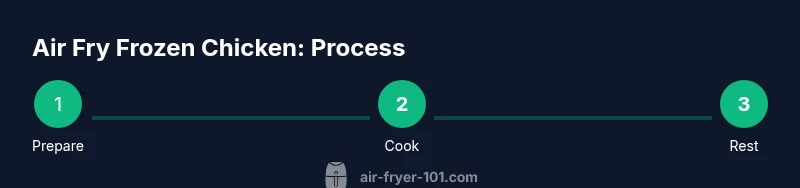
Steps
Estimated time: 20-40 minutes
- 1
Prepare the chicken
Pat the frozen chicken pieces dry with a paper towel to remove surface frost. Lightly spray or brush with oil, then apply your preferred dry rub or seasoning blend. The goal is to promote browning and flavor without adding excess moisture.
Tip: Patting dry is crucial; moisture makes browning harder and can lead to soggy surfaces. - 2
Arrange in a single layer
Place pieces in a single, evenly spaced layer in the air fryer basket. Do not stack or crowd; air needs to circulate for even browning and interior cooking.
Tip: Leave space between pieces; overcrowding forces steaming instead of crisping. - 3
Cook and flip halfway
Start cooking at a moderate setting and flip the pieces halfway through to ensure even browning on all sides.
Tip: Flipping helps achieve uniform texture; use tongs to minimize burns. - 4
Check doneness and rest
Use a meat thermometer to confirm the interior is cooked, then let the chicken rest briefly before serving so juices redistribute.
Tip: Doneness is best judged by texture and temperature, not just time. - 5
Store and reheat safely
Cool cooked chicken on a plate, refrigerate promptly, and reheat thoroughly before consuming leftovers.
Tip: Reheating should restore surface crispness without overcooking the interior. - 6
Adjust for different cuts
Thicker pieces may require longer cook times; thinner pieces may finish sooner. Use the thermometer as your final arbiter.
Tip: Tailor timing to piece thickness and model-specific airflow.
Got Questions?
Can I air-fry frozen chicken without thawing?
Yes. You can air fry frozen chicken without thawing, but ensure pieces are in a single layer and cooked through with a thermometer check.
Yes, you can air fry frozen chicken without thawing. Just cook in a single layer and verify doneness with a thermometer.
Do different cuts cook differently in an air fryer?
Yes. Thicker pieces need more time; smaller pieces will brown faster. Adjust time based on thickness and model airflow.
Yes. Thickness and cut type affect cook time; adjust accordingly.
Should I preheat the air fryer for frozen chicken?
Preheating helps achieve faster browning and a consistent start, but many models work well without preheating if you adjust time slightly.
Preheating can help browning; if you skip it, expect a slightly longer cook time.
Is air-fried frozen chicken healthier than pan-frying?
Air frying generally uses less oil, which can lower fat content compared with traditional frying, while still delivering crisp texture and flavor.
Yes, air frying typically uses less oil and can be healthier than traditional frying.
Can I season frozen chicken directly?
Yes. Seasonings can be applied directly; the oil helps adherence, and a light spray after about halfway through can boost browning.
You can season directly; oil helps the seasoning stick and brown.
Watch Video
Quick Summary
- Cook from frozen with confidence
- Space pieces for even airflow
- Check doneness with a thermometer
- Rest briefly before serving
- Adjust timing by piece thickness