Can You Air Fry Frozen Chicken? A Practical Guide
Discover how to air fry frozen chicken safely and effectively. Learn temperature, timing, safety tips, and a clear step-by-step workflow to enjoy crispy, juicy results without thawing.


Yes. You can air fry frozen chicken without thawing first, and many home cooks do this to save time. The short answer is that the air fryer’s hot, circulating air cooks frozen pieces safely as long as you follow basic food-safety rules and adjust cook times. According to Air Fryer 101, can you air fry from frozen chicken is a common question for health-conscious home cooks who want crispy texture with less fuss. The key is to start with pieces that are small enough to cook through, avoid overcrowding, and use a reliable thermometer to verify doneness. While results vary by cut, thickness, and model, the general approach is consistent: set a moderate starting temperature, progress to crisper browning, and ensure you reach a safe interior temperature. This method aligns with what the Air Fryer 101 Team recommends for safe, tasty results.
Can you air fry from frozen chicken? A practical explanation
Yes, you can air fry frozen chicken without thawing, and many home cooks rely on this method for quick weeknight meals. The approach is simple: treat the frozen pieces as if you were cooking thawed meat, but expect a longer cook time and use a thermometer to confirm doneness. According to Air Fryer 101, the core idea is to protect texture and safety by avoiding overcrowding, sticking to uniform piece sizes, and adjusting the temperature to encourage browning without burning. The result can be surprisingly juicy on the inside and crisp on the outside when you follow these fundamentals.
Air Fryer 101's guidance emphasizes safe handling of raw chicken and a clear path to reaching 165°F internal temperature. Remember that not all frozen pieces cook identically; bone-in parts, thicker breasts, and wings may need different timings. Start with a conservative temperature, check progress, and adjust as you go. This practical method helps home cooks achieve consistent results with minimal prep time.
Safety considerations when air frying frozen chicken
When air frying frozen chicken, safety should stay front and center. Do not thaw on the counter or re-freeze cooked leftovers. Wash hands, utensils, and surfaces thoroughly after handling raw chicken to prevent cross-contamination. Use a digital meat thermometer to confirm that the center reaches a safe 165°F (74°C). If you notice any pink near the bone or an uneven color, continue cooking in short increments and recheck. By following these safety habits, you minimize the risk of undercooked poultry while still enjoying a quick air-fried meal.
Choosing the right cuts and sizes from frozen
Frozen chicken comes in many shapes: boneless breasts, bone-in thighs, wings, and drumsticks. Smaller, uniformly sized pieces will cook more evenly in an air fryer. If pieces are stuck together, separate them before cooking; this improves airflow and browning. For thicker cuts, consider pounding or scoring the surface to reduce internal thickness slightly, which helps heat penetrate more rapidly. If possible, trim excess fat and pat pieces dry to reduce steam during cooking. Size uniformity is the key to dependable results when starting from frozen.
Preheating and temperature guidelines
Preheating is not always required for every model, but it often yields more consistent results. If your air fryer’s manual recommends preheating, do so for 3–5 minutes. A common starting point for frozen chicken is a moderate temperature to begin safe cooking and then a higher finish for browning. Typical ranges you might see are 360°F (182°C) to about 400°F (205°C). If you prefer a crisper exterior, move toward the higher end; if you’re concerned about drying out the center, start at the lower end and monitor carefully.
Timing by cut: what to expect when frozen
Cooking times from frozen will be longer than thawed meat, and the variation depends on piece size, whether the bone is present, and your specific air fryer model. Expect the center to take longer to heat through; crispy exterior will usually occur when the outer surface has enough time to dry and brown. A good rule of thumb is to start with a longer initial phase, then test for doneness and finish with a brief higher-heat burst if needed. Always verify with a thermometer rather than relying on color alone.
Flipping, shaking, and layering for even crispness
To maximize crispness and even browning, flip or shake the basket halfway through cooking. Maintain a single layer with space between pieces to avoid steaming. If you’re cooking multiple batches, keep finished pieces warm on a plate in a warm oven while you complete the rest. For extra browning, lightly spray or brush a small amount of neutral oil on the chicken, but avoid heavy coatings that can cause sogginess.
Using a meat thermometer for safety
A reliable instant-read thermometer is essential when cooking from frozen. Check the thickest part of the largest piece, avoiding bone. The target internal temperature is 165°F (74°C). If you’re close but not there yet, return the chicken to the air fryer and reassess in 3–5 minute increments. Don’t rely on color or juiciness alone to judge doneness.
Flavor boosters and coatings for frozen chicken
From simple salt-and-pepper to paprika, garlic powder, and a light oil spray, flavor can boost the final result without adding heavy batter. Dry rubs tend to stay on frozen surfaces better than wet marinades. For extra crunch, consider a light coat of cornstarch before air frying. If you’re feeling experimental, a dusting of grated parmesan toward the end can add a savory crust.
Common pitfalls and fixes
Common mistakes include overcrowding the basket, skipping preheating when recommended, and not verifying doneness with a thermometer. If your chicken turns out soggy, reduce moisture by patting pieces dry and ensure your air fryer basket is clean for optimal airflow. If the exterior browns too quickly while the center remains undercooked, lower the temperature and cook longer, checking frequently.
Quick-start workflow for frozen chicken breasts
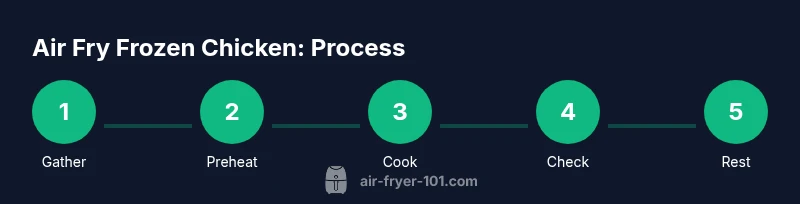
For a fast, reliable routine: preheat to 360°F, place trimmed frozen breasts in a single layer with space between pieces, cook for 8–12 minutes, shake or flip, increase to 380–400°F for 5–7 more minutes, then check for 165°F in the center. Let rest for 3–5 minutes before serving. This workflow minimizes guesswork and helps you achieve consistent results.
Tools & Materials
- Air fryer(Model with adjustable temperature and timer)
- Meat thermometer(Instant-read preferred for accuracy)
- Tongs(For turning pieces without piercing)
- Heat-safe basket or crisper tray(Designed for air fryers)
- Silicone brush or oil spray(Light oil helps crisping)
- Parchment paper or air fryer liner(Optional for drips)
- Plate or tray for resting(Let cooked chicken rest before serving)
Steps
Estimated time: 25-40 minutes
- 1
Gather ingredients and preheat
Collect frozen chicken pieces, thermometer, and tools. If your model requires preheating, set the air fryer to 360°F (182°C) for 3–5 minutes to prime the chamber for even airflow.
Tip: Preheating reduces waiting time and helps with even browning. - 2
Arrange in a single layer
Place the frozen pieces in a single layer with space between them. Do not overload the basket, as crowded pieces steam instead of crisping.
Tip: Use a rack if your basket allows it to maximize airflow. - 3
Initial cook phase
Cook at a moderate temperature for an initial phase to begin cooking through the center. Use a timer and avoid peeking too often, which can drop air temperature.
Tip: If pieces are large, extend the initial phase by a few minutes rather than raising the temperature. - 4
Flip or shake and continue
Midway through, flip or shake the basket to promote even browning on all sides. This helps prevent hot spots and ensures uniform texture.
Tip: A quick shake is often enough; avoid removing every piece if you’re in a rush. - 5
Check internal temperature
Insert a thermometer into the thickest part of the largest piece. If it hasn’t reached 165°F (74°C), return to the air fryer and test again after a few minutes.
Tip: If you’re close to 165°F, finish with a brief higher-heat burst to crisp the exterior. - 6
Rest and serve
Let the chicken rest for 3–5 minutes after cooking. Resting helps juices redistribute for juicier meat and safer slicing.
Tip: Resting also reduces the risk of burns from hot steam when you bite into it.
Got Questions?
Can I air fry frozen chicken without thawing first?
Yes. It’s safe and common to air fry frozen chicken, but expect longer cooking times and use a thermometer to ensure 165°F internal temperature.
Yes, you can air fry frozen chicken without thawing; just cook longer and check the temperature to ensure safety.
Do different cuts require different times when starting from frozen?
Yes. Thicker or bone-in pieces take longer to heat through and brown. Smaller, boneless pieces cook faster. Adjust time and temperature accordingly.
Yes. Thickness and bone presence affect how long it takes to cook and brown.
Should I preheat the air fryer for frozen chicken?
Preheating helps with even cooking and browning. If your model recommends preheating, do it; otherwise, start with the standard heat setting.
Preheating helps with even cooking and browning.
Is frozen chicken with bone in safe to air fry?
Yes. Ensure the thickest part reaches 165°F and allow extra time for heat to penetrate bone-in cuts.
Bone-in is safe as long as the inside reaches 165 degrees.
What if the exterior browns too quickly?
Lower the temperature slightly and extend total cook time, checking doneness frequently near the end.
If browning too fast, reduce heat and monitor closely.
Can I use marinades or coatings on frozen chicken?
Light seasonings or a thin oil spray work well. Heavy marinades can freeze and create uneven cooking, so apply sparingly before air frying.
Light coatings are fine; heavy marinades may hinder even cooking.
Watch Video
Quick Summary
- Start from frozen, not from thawed.
- Use a thermometer for safety (165°F/74°C).
- Avoid overcrowding for even cooking.
- Preheat if recommended and flip for crispness.
- Finish with resting for juicier meat.