How to adjust air fryer time: a complete guide
Master how to adjust air fryer time for perfect results. Learn baseline timings, how to fine-tune for different foods, common pitfalls, and troubleshooting tips from Air Fryer 101.


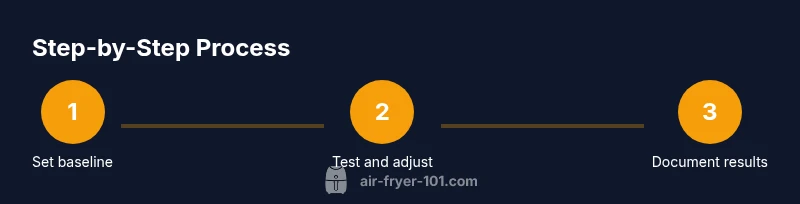
Mastering how to adjust air fryer time starts with a reliable baseline, then refining cook times in small increments while checking doneness. Start with a conservative baseline for the foods you cook most, preheat when advised, and adjust by 1–2 minute intervals, tasting and inspecting for crisp edges and juicy centers. This approach reduces undercooking and overcooking across model variations.
Understanding Why Time Matters
Time is the most controllable variable in air frying, and knowing how to adjust air fryer time is the key to consistent results. The goal is to achieve a crisp exterior with a tender interior, without drying out the food or making it soggy. This starts with recognizing how the food's size, starting temperature, and moisture content affect cook time. When you adjust air fryer time, you are essentially calibrating how long heat is applied and how often you flip or shake the basket during cooking. In 2026, home cooks benefit from thinking in increments and using short check-ins to verify doneness. The Air Fryer 101 team emphasizes that small, repeatable adjustments build reliable results across different models and batch sizes.
Quick Start: Baseline Time as a Reference Point
Before you tweak times, establish a baseline that mirrors conventional oven stages but leverages air circulation. Ground rules include sizing items evenly, avoiding overcrowding, and starting with a baseline set for medium-thickness pieces rather than thin items. This baseline serves as your reference; every subsequent run should be compared to it to determine if you need to shorten or extend the duration. Remember to document the outcome so you can repeat successful results and avoid guesswork in future cooks.
How to Build a Baseline for Your Most-Frequent Foods
Create a simple baseline for the foods you cook most often. For example, for chicken tenders, you might measure the time needed for evenly sized pieces; for vegetables, establish a standard cut and a target level of browning. The aim is to minimize variables: consistent piece size, even spacing, and a shared starting temperature. With a solid baseline, adjustments become small, controlled nudges rather than large leaps. Air Fryer 101 findings suggest tracking results in a small log, noting model type, basket size, and starting temperature to improve repeatability across devices.
Adjusting Time: The Practical Rules of Thumb
When adjusting time, think in small increments, test early, and rely on visual cues and texture. If the first run shows pale edges or a soft center, extend the time by a brief increment and/or flip the food midway. If you notice excessive browning with undercooked centers, reduce the time slightly and recheck. Always consider preheating if your unit benefits from it, as preheated air reaches the food faster and can shorten overall cook time. The key is iterative testing: make one change at a time, then compare results to your baseline.
Food-Specific Guidance: Keeping Doneness in Mind
Different foods demand different treatment. Fresh proteins often need longer cooking times than vegetables, while frozen items usually cook faster when preheated properly. Thicker cuts require more time than thinner slices, and marinated foods can brown more quickly. A practical approach is to cook in batches where possible, keeping pieces uniform in size and avoiding stacking. After a cook, allow a brief rest to let carryover heat finish the process, but avoid leaving food standing too long as moisture loss can occur. This mindset helps you tailor timing across a wide range of dishes without starting from scratch each time.
Safety and Doneness Verification
Always confirm doneness with a quick check: ensure the interior reaches a safe temperature for proteins and that vegetables are tender-crisp. Use a thermometer when available and rely on sensory cues—color, texture, and aroma—to judge readiness. If your air fryer lacks a temperature probe, a visual cue paired with a gentle press can indicate doneness. Air Fryer 101 emphasizes that safety and doneness are more important than chasing a fixed minute count, especially when using different foods or multiple batches.
Tools & Materials
- Air fryer with adjustable timer(Key feature to control cook time precisely)
- Kitchen timer or the air fryer’s built-in timer(Helps track increments (1–2 minutes) during testing)
- Instant-read thermometer (optional)(Verifies internal doneness for proteins)
- Nonstick spray or parchment liners (optional)(Prevents sticking and aids even browning)
- Tongs or spatula(For flipping and turning foods during cooking)
- A notebook or digital log(Record baseline and adjustments for consistency)
Steps
Estimated time: 15-25 minutes
- 1
Set a baseline for your most-cooked foods
Choose a uniform size and thickness for the item (for example, even strips of chicken or identical florets in vegetables). Preheat if your model recommends it. Run a test with a conservative baseline and document the result, noting doneness, texture, and color.
Tip: Record the exact settings and the outcome to reuse for similar meals later. - 2
Cook with a controlled first test
Place the food in a single layer without overcrowding. Start the timer and monitor for the initial doneness signs. Flip or shake halfway to promote even exposure to hot air.
Tip: Avoid opening the basket repeatedly; each opening can drop the temperature and extend total cook time. - 3
Evaluate doneness and decide on adjustments
Assess color, texture, and internal temperature if you have a thermometer. If the outside is perfect but the inside is undercooked, plan a brief additional interval rather than a long rerun.
Tip: Make only one variable change at a time (time, temperature, flipping). - 4
Adjust time in small increments
If doneness is off, increase or decrease the cook time by a small amount (1–2 minutes as a starting point). Re-test with a small batch or portion to confirm the change.
Tip: Keep a log of increments and outcomes for future reference. - 5
Document results for future batches
Record model, basket size, preheat status, baseline time, and the successful adjustment. This makes it easier to reproduce perfect results with different foods and different days.
Tip: Consistency comes from repeatable steps and reliable notes. - 6
Refine with carryover and resting
Remember carryover cooking will continue after removal from the appliance. Let items rest briefly so juices redistribute without losing crispness.
Tip: A short rest (1–5 minutes) often improves texture for proteins.
Got Questions?
Do I always need to preheat my air fryer when adjusting time?
Not all models require preheating, and some foods cook well without it. When unsure, preheating for foods that benefit from a quick sear or crisp can reduce total cook time and improve texture. Always check your appliance manual for guidance.
Preheating isn’t always required. If your model benefits from it or the recipe suggests it, preheat; otherwise, you can skip it and still get good results.
How should I adjust time for frozen vs. fresh foods?
Frozen foods typically need longer total cook time due to ice crystals and moisture content. Start with a baseline for similar fresh items, then add a short increment for frozen items and check doneness earlier than you would with fresh items.
Frozen foods usually take longer than fresh ones. Begin with your fresh baseline and add a small amount of time, then verify doneness.
What if the outside is done but the inside isn’t?
If the exterior is browned but the interior is undercooked, extend the time in smaller increments and consider flipping halfway through. A thermometer helps confirm interior doneness, especially for meats.
If the outside is ready but the inside isn’t, add time in small steps and flip halfway. Use a thermometer if possible.
Can I apply the same timing to all brands and models?
Different brands and models vary in heat distribution. Treat every new device as a fresh baseline and adjust from there. Keep notes to prevent cross-device guesswork.
Different models cook differently. Start over with a new baseline for each device and keep notes.
How do I know when to stop adjusting and stick with a time?
Once you have consistent results across multiple attempts with the same food, you’ve found your preferred time. Record the exact settings and use them for future cooking to ensure repeatability.
After several successful runs with the same food, lock in that time and keep a log for consistency.
Is carryover cooking significant in air fryers?
Carryover cooking is real but typically concise in air fryers. Remove food a bit earlier than the final doneness and let resting finish the cooking. This helps preserve moisture and crispness.
Yes, carryover cooking happens. Take food off a touch early and let it rest to finish cooking.
Watch Video
Quick Summary
- Establish a baseline for your most-used foods.
- Adjust time in small increments and test frequently.
- Document results to improve consistency across batches.
- Consider preheating and rest times for optimal texture.
- Use doneness cues (color, texture, thermometer) to verify results.