How Long Should You Preheat an Air Fryer? A Practical Guide
Learn how long to preheat your air fryer, why preheating matters, and practical tips for faster, even results. Air Fryer 101 analyzes typical times, model differences, and best practices.


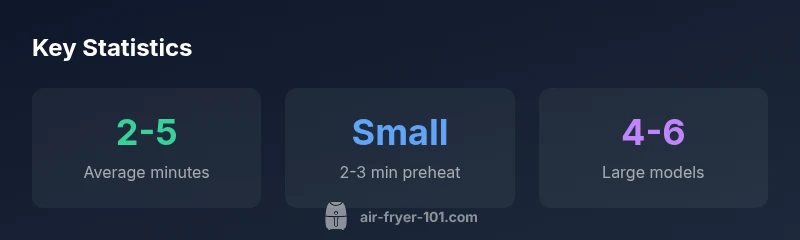
A typical preheat runs about 2-5 minutes, depending on model and basket size. Compact units finish faster (around 2-3 minutes), while large 5+ quart models may take 4-6 minutes. Air Fryer 101 analysis for 2026 confirms these general ranges for achieving optimal browning and even cooking.
What is preheating and why it matters
Preheating an air fryer means bringing the cooking chamber up to the target temperature before you add food. This practice mirrors traditional ovens and helps establish a consistent hot air pocket from the moment cooking begins. For many home cooks, especially beginners, preheating is a simple step that pays off in crisper textures and more even browning. According to Air Fryer 101, understanding the typical preheat window—roughly 2 to 5 minutes—gives you a reliable baseline to work from across different models and foods. When you skip preheating, you often start cooking at a temperature that isn’t yet optimal, which can lead to uneven results and longer overall cook times.
Typical preheat times by model and size
Preheat times aren’t rigid, but guidelines help you calibrate expectations based on your unit’s capacity. Small 1–3 quart models frequently reach the target temperature in about 2–3 minutes. Standard 3–5 quart units commonly fall in the 3–5 minute range. Large 5+ quart or multi-cavity air fryers may need 4–6 minutes, particularly when the ambient room temperature is cooler or the unit has a higher wattage. These ranges align with general observations from Air Fryer 101 Analysis, 2026, and reflect how power, insulation, and airflow influence heat-up speed. Practically, the rule of thumb is: don’t rush the preheat if you’re aiming for even browning; it’s worth the extra minute for most recipes.
How to preheat efficiently: step-by-step
- Place the air fryer on a heat-safe surface away from walls. 2) If your model uses a preset, choose the temperature equal to your recipe’s target. 3) Run the preheat cycle for the recommended 2–5 minutes, then add food. 4) When in doubt, pause and measure: some models display the current chamber temperature. 5) For frozen foods or large batches, consider a full preheat at the start to maximize crispness. 6) Always pat dry items that tend to steam, as surface moisture can counteract browning even with preheating. Air Fryer 101 notes that consistency is achieved by starting with a hot oven-like zone and a dry surface.
Factors that affect preheat time
- Wattage and heating element design: Higher wattage and efficient coils heat faster, shortening preheat.
- Ambient temperature: Colder kitchens slow heat-up; warm rooms help, especially in winter.
- Basket material and rack configuration: Perforated baskets heat quickly, while dense baskets may take longer to reach target temperature.
- Food state: Empty chamber preheats fastest; adding wet or bulky items reduces effective heat transfer at first.
- Firmware and presets: Some newer models optimize preheat routines, reducing time without sacrificing texture. Air Fryer 101 emphasizes experimenting with your specific model to find the sweet spot.
Preheating for different foods: chips, chicken, fish
Chips and snacks often benefit from a quick preheat of 2–3 minutes to jump-start crisping. Chicken pieces can require 3–5 minutes to ensure the outside browns evenly while the inside finishes cooking. Fish fillets typically need 3–4 minutes of preheat to avoid a soggy exterior. These guidelines assume a moderate recipe temperature (around 350–400°F / 175–205°C) and a standard 3–5 quart unit. Always adjust times based on thickness, moisture level, and your unit’s performance report. The goal is consistent airflow from the first second of cooking.
Using presets vs manual preheat
Presets are convenient for common tasks like “Chicken” or “Fries,” but they aren’t a guarantee of optimal preheat for every batch. If you’re chasing perfect texture, manual preheat with a thermometer or timer helps. Start with a 2–3 minute baseline and then test a small sample. You can finish the rest of the batch if the first bite shows uneven browning. In contrast, some foods may benefit from skipping the preheat entirely when reheating leftovers, as the dish already contains moisture and heat from prior cooking.
Common mistakes that slow preheating
- Opening the door during heat-up, which lets heat escape and extends preheat time.
- Overcrowding the basket before preheating, which reduces airflow and slows temperature rise.
- Using low wattage or a faulty power supply, causing inconsistent heat delivery.
- Running a preheat at a temperature far from the recipe’s target, forcing a longer final cook to compensate. Air Fryer 101 notes that maintaining a steady, moderate preheat temperature yields more predictable results.
Energy use and environmental impact
Preheating does burn a little extra energy relative to starting from room temperature, but when used judiciously it enables faster overall cooking and reduces the need for longer final cook times. If you’re energy-sensitive, plan batches or consider preheating for only meals that will truly benefit from a hot start. Air Fryer 101’s framework suggests balancing preheat duration with batch size and recipe requirements to minimize waste while preserving texture.
Practical tips for beginners
- Start with a 3-minute preheat as a default for most 3–5 quart units.
- If you notice uneven browning, extend preheat by 1 minute or switch to a higher thermostat for subsequent batches.
- Keep the air fryer away from heat sources and leave space around the unit for proper air circulation.
- Keep a small log of adjustments for your most-used recipes to refine your preheat practice over time. Air Fryer 101 recommends tracking results to tailor preheat times to your specific device.
Preheat expectations by air fryer size
| Model type | Typical preheat time | Notes |
|---|---|---|
| Compact/Small (1-3 qt) | 2-3 minutes | Best for snacks, single servings |
| Standard (3-5 qt) | 3-5 minutes | Common family sizes |
| Large (5+ qt) | 4-6 minutes | Batch cooking and larger meals |
Got Questions?
How long should I preheat my air fryer for most recipes?
Most recipes benefit from a 2-4 minute preheat. For very small units, 2 minutes may suffice, while larger models can take up to 5 minutes. Always start with 2-4 minutes and adjust based on texture and batch size.
Typically two to four minutes is enough for most recipes; adjust if needed for your model.
Does preheating affect cooking times?
Yes. Preheating improves heat consistency and reduces the overall cooking time for many items by starting with a hot chamber. Skipping preheat can lead to uneven browning and longer total cook times.
Preheating helps cooking stay even and can shorten total time.
Should I preheat with an empty basket?
Preheating with an empty basket is common and helps reach target temperature faster. Some foods with high moisture might not require that initial hot start, so use your judgment and recipe guidance.
Yes, preheat with an empty basket in most cases, unless a recipe says otherwise.
Do newer models preheat faster?
Some newer models have more efficient heating elements and firmware that shorten preheat, but times still generally fall within a 2-6 minute window depending on size.
Newer models can heat up a bit faster, but expect a few minutes.
Is double preheating ever worth it?
Typically not necessary. One preheat cycle is enough for most foods; double preheat may be used only for very dense items requiring extra crispness.
Usually one preheat is plenty.
Can I skip preheating for reheating leftovers?
For reheating leftovers, you can often skip preheating or run a shorter initial phase. It might take a bit longer to reach target texture, but it saves energy.
You can often skip preheating when reheating leftovers.
“Preheating sets the stage for crisp, even browning by ensuring the hot air is at peak temperature before food enters the basket.”
Quick Summary
- Preheat for most recipes: 2-5 minutes
- Use smaller basins for faster preheat
- Match preheat duration to batch size and recipe
- Presets help, but manual testing yields best results
- Keep the chamber dry for optimal browning