How to Make Frozen Garlic Bread in an Air Fryer
Master frozen garlic bread in the air fryer with this comprehensive guide. Learn timings, temps, and toppings for perfectly crispy crusts and warm centers every time.


Cook frozen garlic bread in a preheated air fryer at about 380°F (193°C) for 6–8 minutes, in a single layer. Flip halfway to ensure even browning, then check for a golden crust and a warm center. For extra crispness, add 1–2 minutes if needed, and brush on additional garlic butter after cooking. Adjust time by thickness and toppings.
Why the air fryer is ideal for frozen garlic bread
For home cooks who want a fast, snack-ready side, the air fryer shines with frozen garlic bread. The hot, circulating air creates a crisp outside while keeping the inside tender, without needing extra oil. According to Air Fryer 101, this method consistently yields a golden crust and evenly warmed centers, making it a reliable weeknight option. When you cook frozen garlic bread in the air fryer, you gain speed, convenience, and control over browning. This approach minimizes sogginess that can come from microwaving or oven methods and offers a simple, predictable workflow. The result is bread that tastes bakery-fresh, with a satisfyingly crunchy exterior and a soft interior, perfect for dipping or topping with extra garlic butter.
In contrast to the oven, the air fryer delivers more even heat in a shorter time, which helps prevent the bread from drying out. You can cook multiple varieties from plain to cheese-tlecked garlic bread by adjusting toppings and thickness. Air frying is especially practical for small batches and quick gatherings, where you want crispy results without heating a full oven. As you explore different brands and styles of frozen garlic bread, remember that the key to consistency is avoiding overlap and maintaining a single-layer setup so air can circulate freely.
Factors that influence crispiness: bread thickness, butter, cheese
Crispiness is a function of heat flow, moisture content, and surface fat. Thinner slices brown quickly and evenly, while thicker, denser loaves may need a minute or two longer. A light butter layer on top enhances browning through the Maillard reaction and adds flavor, but an overly thick layer can cause soggy patches if the butter pools. Cheese toppings provide extra browning and a gooey finish, but can also trigger uneven melting if piled too high. When selecting frozen garlic bread, consider size and shape: long baguette slices, rectangular sheets, or bread sticks behave differently in a compact basket. To optimize texture, keep slices in a single layer with space between them so hot air can circulate, and avoid stacking.
Preheating and placement: prep for best results
Preheating the air fryer primes the chamber for immediate heat, giving you a consistently crisp crust from the first bite. Place frozen garlic bread slices in a single layer; overcrowding slows browning and can lead to soggy centers. If you’re worried about butter pooling, you can line the basket with perforated parchment or foil, but ensure some air pockets remain to maintain airflow. Always use tongs to place slices and flip halfway to promote uniform browning on both sides. If your model has a wide basket, consider trimming slices that extend past the edge so every piece cooks evenly.
Cooking guidelines by thickness and size
Thin slices (about 1/4 inch) typically reach a golden, crisp exterior in 6–7 minutes at 380–390°F (193–199°C). Medium slices (about 1/2 inch) may need 7–9 minutes, with a flip at the halfway point. Bread sticks or thicker pieces can take 9–12 minutes. Keep an eye on the highest-kissed edges to avoid burning. If your garlic bread is cheese-tlecked, you’ll want to monitor closely during the last minute to prevent scorching. For best results, test one piece first, then batch-cook the rest.
Flavor boosters and toppings: elevate the result
After cooking, brush on extra garlic butter for a fresh aroma, or sprinkle chopped parsley, grated Parmesan, or red pepper flakes for a kick. If you like extra cheese, add shredded mozzarella or cheddar during the last 1–2 minutes of cooking to melt perfectly. For a healthier twist, use light butter alternatives and herbs like dill or thyme. Don’t skip salt on the bread itself; a pinch can enhance overall flavor when combined with garlic.
Troubleshooting common issues: soggy, undercooked, or uneven browning
If you notice soggy bottoms, check that slices aren’t overlapping and that you haven’t crowded the basket. Under-browned pieces often mean you needed a longer cook time or a higher heat setting; test a small batch to dial in your preference. If the tops brown before the centers heat through, lower the temperature slightly and extend the cooking time in small increments. For cheese-heavy varieties, consider topping with a thin layer of garlic butter after cooking to improve surface gloss without delaying doneness.
Cleaning up and maintenance after air frying bread
Let the air fryer cool fully before cleaning. Remove any crumbs from the basket and wipe the interior with a damp cloth; avoid abrasive cleaners that can damage non-stick coatings. If you used parchment or foil, discard and wash any residue away. Regularly inspect the fan and vents for crumbs that may impede airflow. A clean unit ensures consistent browning and reduces the risk of smoke during future cooks.
Quick reference tips for best results
- Use a single layer with space between slices for even browning.
- Preheat to 380–390°F (193–199°C) for best crusts.
- Flip halfway and check at the 6-minute mark for best texture.
- Add garlic butter or cheese after cooking for extra flavor without sogginess.
Final thoughts on perfection every time
Mastering frozen garlic bread in the air fryer comes down to timing, placement, and a few simple add-ons. With practice, you’ll dial in your preferred texture—crisp edges with a soft, warm center—while keeping the garlic aroma vibrant and not burnt. The technique scales well for small gatherings or quick solo snacks, and it adapts to different brands and bread shapes with only minor tweaks.
Tools & Materials
- Air fryer(Choose a model that holds a single layer of slices in the largest basket.)
- Parchment paper or perforated foil(Use to reduce cleanup; ensure airflow isn't blocked.)
- Silicone brush(For brushing extra garlic butter after cooking.)
- Kitchen tongs(Safe flipping and handling without tearing bread.)
- Knife or scissors(Trim slices to fit basket if needed.)
- Butter or garlic butter spread(Optional extra spread before or after cooking.)
- Garlic powder or minced garlic(Enhance garlic flavor if desired.)
- Salt and herbs(Optional seasoning for flavor depth.)
Steps
Estimated time: 12-15 minutes
- 1
Preheat the air fryer
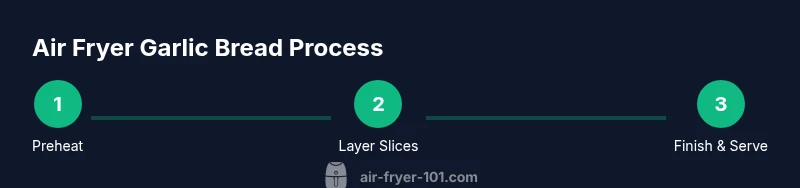
Start by preheating the air fryer to 380°F (193°C) for 2–3 minutes. Preheating ensures immediate heat on contact and helps the bread begin browning quickly.
Tip: If your model runs hot, reduce to 370°F and extend the cook time by 1–2 minutes to avoid burnt edges. - 2
Arrange slices in a single layer
Place frozen garlic bread slices in a single layer, ensuring slight space between pieces. Overlapping blocks air circulation and leads to uneven browning.
Tip: Use tongs to place slices carefully and keep them intact for flipping later. - 3
Cook the first side
Insert the basket and start at 380–390°F (193–199°C) for 3–4 minutes to begin browning the crust. Time varies with thickness and brand.
Tip: Check early; you want a light golden edge rather than a deep bronze. - 4
Flip the slices
Open the air fryer and flip each slice with tongs to promote even browning on the opposite side.
Tip: Flip at exactly the halfway point for consistent results across all pieces. - 5
Finish cooking
Continue cooking for another 3–5 minutes until the crust is crisp and the center is warm. Cheese-topped varieties may need the extra minute.
Tip: If the top browns too quickly, reduce temperature to 370°F (187°C) and add time in 1-minute increments. - 6
Optional toppings after cook
If desired, brush with extra garlic butter or sprinkle parsley and grated Parmesan after cooking for maximum aroma and flavor.
Tip: Butter melts best on hot slices; apply immediately after removal from the basket. - 7
Rest briefly and serve
Let the garlic bread rest for 1–2 minutes before serving to set the crust and prevent a hot mouthful.
Tip: Pair with marinara or melted cheese for dipping. - 8
Storing and re-crisping
Store any leftovers in an airtight container in the fridge for up to 2 days. Reheat briefly in the air fryer at 350°F (177°C) for 2–3 minutes.
Tip: Re-crisping works best if the slices are laid flat, not stacked.
Got Questions?
Can I cook garlic bread directly from frozen without thawing?
Yes. Frozen garlic bread can go straight into the air fryer. Cooking from frozen preserves crust integrity, though you may need a minute longer. Start with 6–8 minutes and assess doneness.
You can cook it frozen—start with six to eight minutes and check for doneness; adjust as needed.
How long should I preheat the air fryer for garlic bread?
Preheating for 2–3 minutes at 380–390°F helps ensure a crisp crust from the start. Skipping preheat can lead to uneven browning.
Preheat 2–3 minutes at about 380–390 degrees Fahrenheit for best results.
Can I use regular bread instead of frozen garlic bread?
Yes, you can use regular bread, but you’ll need to adjust time and heat for the softer interior. Slice evenly and toast until golden.
You can use regular bread; just adjust time to achieve a similar crisp exterior.
Why is my garlic bread soggy in the middle?
Sogginess usually comes from crowding or insufficient heat transfer. Cook in a single layer with air space and consider a higher temp for faster surface browning.
Crowded slices or too-low heat cause soggy centers; cook in a single layer and adjust heat if needed.
How do I reheat leftovers in the air fryer?
Reheat at 350°F (177°C) for 2–3 minutes until warmed through and crust is regained. Avoid overcooking to prevent dryness.
Reheat at 350 degrees for a couple of minutes until warm and crispy.
Is garlic bread in the air fryer healthier than oven?
Air frying typically uses less oil than pan-frying, and you can control portions and toppings easily. Overall health impact depends on butter quantity and toppings.
It can be healthier than pan-frying since you use less oil, but it depends on what you add.
Watch Video
Quick Summary
- Preheat, then cook in a single layer for even browning.
- Flip halfway to achieve uniform texture.
- Tailor time to thickness and toppings for best results.
- Customize with herbs or extra garlic butter after cooking.