Chicken Breast Air Fryer Guide: Juicy & Fast
Learn how to cook chicken breast in an air fryer for juicy, evenly cooked results. This guide covers temps, times, seasoning, and safety tips for weeknights.


According to Air Fryer 101, you will learn how to cook juicy, evenly cooked chicken breast in an air fryer. You’ll need boneless, skinless breasts, a little oil, salt, pepper, and a thermometer. This quick answer previews essential steps: trim, season, preheat, cook by thickness, rest briefly, and check for 165°F to ensure safe, juicy results.
Why chicken breast is a popular choice for air frying
Chicken breast is a staple for home cooks because it’s lean, versatile, and cooks quickly in an air fryer. The absence of skin reduces fat, but you can still achieve a juicy outcome with proper technique. In Air Fryer 101’s tests, boneless, skinless breasts respond well to moderate seasoning and a short rest after cooking. The air fryer’s convection circulates hot air to brown the surface while sealing juices inside, giving a crisp exterior without deep-frying. When selecting chicken for this method, aim for uniform thickness to ensure even cooking. If you have a very thick piece, consider pounding or butterflying to achieve a consistent ¾- to 1-inch thickness; this helps the heat penetrate evenly rather than creating a dry outer edge and undercooked center. Whether you’re prepping for a busy weeknight or meal prepping, air-fried chicken breasts offer predictable results with minimal oil and cleanup.
The science behind air frying: moisture retention and browning
Air frying uses hot convection to rapidly transfer heat to the surface of the chicken. The Maillard reaction creates browned, flavorful crusts, while the quick circulation helps seal surface moisture, reducing overall drying. Because the air fryer uses far less oil than pan-frying, the fat contributes mostly to flavor and texture rather than greasiness. For best results, pat the chicken dry before applying oil and seasoning; a dry surface browns more evenly. Avoid overcrowding the basket to keep airflow unobstructed, which ensures uniform color and texture on all pieces. Resting the finished chicken briefly allows juices to redistribute, improving juiciness when you bite in.
Selecting the right chicken breast: thickness, size, and prep
Uniform thickness is essential for even cooking. If breasts vary in size, consider trimming to a consistent ¾- to 1-inch thickness or gently pounding larger pieces. Pat dry to remove surface moisture, then apply a light coating of oil or oil spray to help seasonings stick and promote browning. For extra flavor, you can brine briefly (15–20 minutes) or marinate up to 2 hours, but keep the surface dry before air frying to prevent soggy crusts. Decide whether you want a minimalist approach with salt and pepper or a bold rub with paprika, garlic powder, and dried herbs. A little goes a long way with lean chicken, so start with ½ teaspoon total seasonings per piece and adjust to taste.
Preparing flavors: simple seasoning and marinade options
Dry rubs are quick and effective: combine salt, pepper, paprika, garlic powder, onion powder, and a touch of chili for warmth. If you prefer moisture plus flavor, a quick marinade of olive oil, lemon juice, garlic, and herbs can be brushed on for 15–30 minutes (do not oversaturate, as long contact can begin to alter texture). For a crusty exterior, toss chicken in a light cornstarch or almond flour coating before seasoning. Always pat the surface dry after marinating to maximize browning. For healthier options, choose spices with bold flavors rather than relying on heavy sauces. These flavor foundations keep the chicken juicy while delivering a satisfying bite.
Preheating and temperature basics for consistent results
Preheating helps you achieve a quick sear and even heat distribution. A common starting point is 360°F (182°C) for boneless chicken breasts. If your pieces are particularly thick, you may choose 350°F (177°C) to prevent over-browning before the interior is cooked. Time the cooking to 8–12 minutes, flipping halfway. Always use a meat thermometer to confirm an internal temperature of 165°F (74°C). Rest the chicken for 3–5 minutes after cooking to redistribute juices. If you’re cooking multiple breasts, ensure they fit in a single layer without touching; crowding can lead to uneven browning.
Step-by-step base recipe: quick method
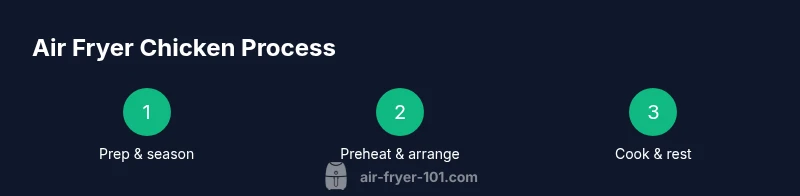
- Trim and pat dry the chicken breasts. 2) Lightly coat with oil and apply your chosen seasonings. 3) Preheat the air fryer to 360°F (182°C). 4) Place chicken in a single layer, ensuring space for air to circulate. 5) Cook 8–12 minutes, flipping once at the halfway point. 6) Check internal temp, aiming for 165°F (74°C). 7) Rest 3–5 minutes before slicing. 8) Optional glaze or crust can be added after resting. 9) Serve and enjoy with a healthy side. 10) If cooking thicker pieces, extend time in 2-minute increments until done.
Variations for vivid flavor: spices, coatings, and crusts
Experiment with different international flavors by varying spice blends: a smoked paprika rub for a charred crust, cumin and chili for a southwest profile, or Italian herbs for a lighter finish. For a crispier exterior, dust with cornstarch or almond flour before air frying. A light honey-malsamic glaze added after cooking offers a glaze without soggy crusts. If you’re avoiding added sugars, opt for savory herb blends and a touch of lemon zest. These variations let you customize protein-rich meals without extra fat.
Troubleshooting common issues and fixes
If the chicken is undercooked in the center, extend the cooking time in 2-minute increments, keeping an eye on doneness. If the exterior browns too quickly, reduce the temperature by 10–15 degrees or reduce the total cook time. If the piece turns out dry, consider a shorter cooking duration next time or a slightly higher oil spray to improve moisture retention. Ensure the basket is not overcrowded and that pieces are similar in thickness. For extra juiciness, let the meat rest before slicing to allow juices to redistribute.
Storage, safety, and reheating for leftovers
Store cooked chicken in an airtight container in the refrigerator for up to 3–4 days. For longer storage, freeze in small portions; thaw in the refrigerator overnight before reheating. To reheat, set the air fryer to 350°F (177°C) and heat for 3–5 minutes until warmed through, with a brief rest after rewarming. Reheating can dry out the texture, so consider adding a splash of broth or a light brush of oil before returning to heat to maintain moisture.
Quick serving ideas and pairings
Pair air-fried chicken with roasted vegetables, a bright salad, or whole grains like quinoa or brown rice for a balanced meal. Add a yogurt-based sauce or a lemon-garlic drizzle for extra flavor without adding heavy fats. For meal prep, slice the chicken and pack with colorful veggies and a portion of grains for grab-and-go lunches.
Tools & Materials
- boneless, skinless chicken breasts(Aim for 6–8 oz pieces for even cooking)
- olive oil or cooking spray(Light coating to aid browning)
- salt and pepper(Base flavor enhancer)
- garlic powder or paprika (optional)(Adds depth and color)
- meat thermometer(Cue for safe doneness 165°F)
- tongs or silicone spatula(Turn and handle chicken safely)
- air fryer(A basket-style air fryer works best)
- parchment liners (optional)(Keep the basket clean; avoid contact with coils)
- broad, flat plate for resting(Rest helps juices redistribute)
Steps
Estimated time: 25-30 minutes total
- 1
Prepare the chicken
Trim any visible fat and pat dry with paper towels to create a surface that browns nicely. This prevents steaming and ensures better crust formation.
Tip: Dry surface = better browning. - 2
Season the meat
Lightly oil the surface and apply your chosen seasonings or rub. This helps flavor adhere to the meat and promotes even browning.
Tip: Start with a small amount of oil; too much can cause soggy crust. - 3
Preheat the air fryer
Preheat to 360°F (182°C) for 2–3 minutes so the first contact is hot and sears the surface quickly.
Tip: Preheating reduces cooking time and improves crust formation. - 4
Arrange in the basket
Place breasts in a single layer with space between pieces for air to circulate. Do not overcrowd the basket.
Tip: If needed, cook in batches. - 5
Cook and flip
Cook for 8–12 minutes, flipping once halfway to ensure even browning on both sides.
Tip: Check thickness and adjust time if needed. - 6
Check temperature
Use a meat thermometer to verify an internal temperature of 165°F (74°C). If under, return to air fryer in 1–2 minute increments.
Tip: Doneness matters for safety and juiciness. - 7
Rest and serve
Let the chicken rest for 3–5 minutes before slicing to retain juices.
Tip: Resting prevents juice loss when cut. - 8
Optional finish
Apply glaze or crust after resting if desired and reheat briefly just before serving.
Tip: Glazes can steam the crust if applied early.
Got Questions?
Can I cook frozen chicken breast in an air fryer?
Cooking frozen chicken is possible but takes longer and may require extra monitoring. You’ll want to increase total time and check doneness with a thermometer. For best results, thaw to an even thickness first.
You can cook frozen chicken in an air fryer, but it takes longer and you should check doneness with a thermometer to ensure safety.
Is bone-in chicken breast suitable for air frying?
Bone-in breasts are tougher to cook evenly in an air fryer and may require longer times or different chunking. For beginner-friendly results, use boneless, skinless breast portions.
Bone-in breasts can be trickier to cook evenly in an air fryer, so boneless is recommended for best results.
Can I marinate the chicken before air frying?
Yes. A brief marinade (up to 2 hours) can boost flavor. Pat the surface dry before air frying to maintain a good crust and browning.
Marinating before air frying is fine and adds flavor; just pat dry before cooking.
What if the crust burns before the inside cooks?
Lower the temperature slightly and monitor closely. If needed, reduce time or flip more often to prevent over-browning while the center finishes cooking.
If the crust browns too fast, lower the temperature a bit and watch the cook time closely.
How should I reheat air-fried chicken?
Reheat at 350°F (177°C) for 3–5 minutes to restore warmth and some crisp. Avoid overcooking to keep the meat juicy.
To reheat, use a moderate heat and a short time to keep it juicy.
What should I serve with air-fried chicken?
Pair with roasted vegetables, whole grains, or a fresh salad. A light yogurt-dill sauce or lemon-tahini drizzle complements the lean protein well.
Pair it with veggies and grains for a balanced meal; a light sauce adds brightness.
Watch Video
Quick Summary
- Choose uniform chicken pieces for even cooking
- Preheat and cook at moderate heat to brown without drying
- Resting improves juiciness and yields cleaner slices
- A thermometer ensures safe, reliable doneness
- Flavor with simple rubs or light marinades for best results