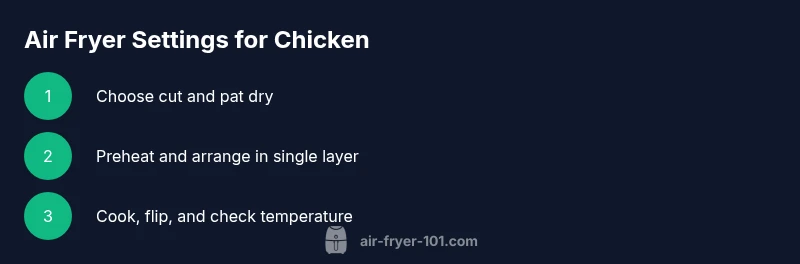
Air Fryer Settings for Chicken: Crisp, Juicy Perfection
Discover how to optimize air fryer settings for chicken to achieve crispy skin and juicy meat. This guide covers temperatures, cook times, preheating, and safety tips for healthier, tastier results.


Air fryer settings for chicken, when dialed in correctly, yield crisp skin and juicy meat. You’ll need a reliable air fryer, a rack for thicker cuts, and a food thermometer to verify doneness. This quick guide covers temperatures, cook times, and preheating to prevent dry poultry for beginners and seasoned cooks alike.
Why air fryer settings for chicken matter
According to Air Fryer 101, proper air fryer settings for chicken can dramatically improve texture and moisture by leveraging convection heat and careful timing. The convection-style hot air circulates rapidly, creating a crisp exterior while sealing in juices. Getting the settings right reduces guesswork, minimizes dry patches, and helps even thicker cuts cook through without burning the outside. This section will introduce the core ideas: the role of cut type, preheating, airflow, and resting in achieving reliable results with air fryer chicken. You’ll notice that small adjustments in temperature and time translate into noticeably better outcomes across different models and batch sizes. By following a consistent framework, you’ll build confidence in your cooking and enjoy restaurant-like textures at home.
Understand your chicken cut and how it affects settings
Chicken comes in many shapes: boneless skinless breasts, bone-in thighs, drumsticks, breasts with skin, and wings. Each cut has different thickness and fat distribution, and thus responds differently to heat. Boneless skinless breasts cook faster and can dry quickly if you push time too high; bone-in thighs need more time but benefit from slightly higher heat to crisp the skin while the meat remains juicy. Wings, with their small size, often brown fast but require careful timing to avoid undercooking the meat near the bone. A practical rule of thumb is to start with a single layer in a basket and measure thickness; if a piece is under 1 inch thick, you’ll want shorter times; if thicker, plan extra minutes or a second rest period. Remember your primary keyword: air fryer settings for chicken, and think about how each cut will interact with airflow and surface browning.
Preheating and airflow: building the right setup
Preheating helps set a stable cooking environment and reduces cook variance between batches. Most models benefit from a brief preheat, typically 3–5 minutes at your target cooking temperature. Use a rack or a perforated basket to promote airflow under the pieces, which encourages even browning rather than steaming. If you’re using a standard basket, keep the pieces in a single layer with space between them; overcrowding will create soggy edges and uneven doneness. A light coating of oil or a spray can help with browning, but it isn’t mandatory for all chicken cuts. The goal is to maximize surface contact without creating a greasy finish, and to maintain consistent airflow throughout the cook.
Practical example: boneless chicken breast
For boneless chicken breast, start with pat-dried meat and a light coating of oil or a dry rub. Preheat the air fryer to the mid-range temperature recommended for chicken, then place the breasts in a single layer. Cook with a flip halfway through to ensure even browning on both sides. Use a thermometer to check for 165°F (74°C) in the thickest part before removing from heat. If the piece is thicker than about 1 inch, allow an additional minute or two, watching closely near the end to prevent overcooking. Rest briefly before slicing to retain juices and tenderness. This approach balances a crisp exterior with juicy interior, showcasing the best of air fryer settings for chicken.
Temperature and time framework: a starting point
A flexible starting point for common cuts is to use 360–380°F (182–193°C) for boneless breasts in 7–12 minutes, turning once for even browning. Thighs and drumsticks may benefit from 380–400°F (193–204°C) for 11–15 minutes, depending on thickness and bone presence. Wings often finish faster, around 10–12 minutes at a similar temperature range, especially if they’re separated. Always tailor times to thickness, model performance, and the thickness variance between pieces. Rely on a meat thermometer rather than guesswork to confirm doneness and reduce the risk of undercooked or overcooked poultry.
Doneness checks and safety basics
Internal temperature is the most reliable indicator of doneness. For chicken, aim for 165°F (74°C) in the thickest portion. Allow chicken to rest 3–5 minutes after removing from the air fryer; carryover heat will finish the job and improve juiciness. Use a digital thermometer for accuracy, and avoid slicing immediately to prevent a loss of moisture. If you notice pink near the bone or uneven doneness, identify the batch that undercooked and adjust next time by adding a minute or two and ensuring pieces are in a single layer with airflow.
Flavor boosters and healthy swaps
To maximize flavor without adding extra fat, try dry rubs or spice blends that include garlic, paprika, cumin, chili powder, and citrus zest. A light coat of oil helps browning but isn’t mandatory for low-fat results. For healthier cooking, consider brining or marinating briefly to improve moisture retention, then pat dry before air frying. After cooking, finish with a squeeze of lemon or a splash of herbs to brighten the dish. These approaches leverage air fryer settings for chicken to enhance taste without compromising health goals.
Common mistakes and how to fix them
Common issues include overcrowding, uneven browning, and overcooking the outside while the inside remains underdone. Fix overcrowding by cooking in batches or using a rack to lift pieces. If browning is uneven, flip pieces more frequently or rotate the basket during cooking. Overcooking is often caused by extended times or high temps for thicker cuts; shorten times by a minute or two and check internal temperature early. Finally, avoid rinsing raw chicken before cooking, which can remove surface oils and reduce browning.
Resting, slicing and serving
Allow the chicken to rest briefly after cooking to let juices redistribute. Rest times of 3–5 minutes for smaller pieces and 5–10 minutes for larger cuts help maintain tenderness. Slice against the grain for tenderness and serve with sides that complement crisp textures, such as roasted vegetables or a fresh salad. This final step completes the process and ensures the best eating experience when using air fryer settings for chicken.
Cleaning and maintenance for consistent results
After cooking, let the air fryer cool and then wash the basket and tray with warm soapy water, removing any stuck-on residue. Regularly inspect and clean the heating element and interior to prevent oil buildup that can affect browning. A quick wipe-down after each use preserves performance and helps maintain accurate temperatures for future batches.
Quick reference by cut: breasts, thighs, wings
- Boneless breasts: 360–380°F for 7–12 minutes, flip once. 165°F internal temp. Rest 3–5 minutes.
- Bone-in thighs: 380–400°F for 11–15 minutes, check near the bone. 165°F inner temp. Rest 5–7 minutes.
- Wings: 360–380°F for 10–12 minutes, shake halfway through. 165°F at the thickest part. Rest briefly before serving.
Bringing it all together: model-to-model adjustments
Different air fryer models vary in heat distribution and airflow. If your model runs hotter or cooler, start with the lower end of the temperature range and monitor the first batch closely. Use a rack when possible to maximize air exposure and reduce the risk of soggy edges. With practice, you’ll calibrate your settings to your specific model, making air fryer settings for chicken consistently reliable across various pieces and batch sizes.
Tools & Materials
- Air fryer(Choose a model with reliable temperature control and adequate capacity for your typical batch)
- Rack or elevated insert (optional)(Helps air circulate under thicker cuts)
- Digital instant-read thermometer(Essential for verifying 165°F (74°C) doneness)
- Oil spray or brush (optional)(Used sparingly to promote browning)
- Paper towels(Pat dry chicken thoroughly before seasoning)
Steps
Estimated time: Total time: 25-40 minutes depending on cut and thickness
- 1
Choose the chicken cut and prep
Select boneless breasts for quick meals or thighs for juicier result. Pat dry thoroughly, trim any excess fat, and apply a light seasoning or dry rub. The goal is to create a dry surface that browns well in the hot air.
Tip: Patting dry is critical for browning; moisture creates steam that slows crust formation. - 2
Preheat the air fryer to the target range
If your model supports preheating, run the unit at the desired cooking temperature for 3–5 minutes before adding chicken. If it doesn’t, simply set the temperature and give a brief warm-up period.
Tip: Preheating helps achieve consistent internal temperatures and crisp edges from the start. - 3
Arrange chicken in a single layer
Place pieces in a single layer with space between them. Use a rack if available to maximize airflow under each piece, which promotes even cooking and browning.
Tip: Avoid stacking or crowding; air needs space to circulate for uniform results. - 4
Cook and flip as needed
Cook at the target temperature, flipping or shaking halfway through to ensure even browning. Watch for the moment when the exterior becomes crisp while the inside reaches the safe temperature.
Tip: Flipping improves surface texture and prevents overcooking on one side. - 5
Check doneness and rest
Use a thermometer to confirm 165°F (74°C) in the thickest part. Rest for 3–5 minutes before serving to retain juices.
Tip: Resting reduces juice loss and improves tenderness. - 6
Adjust for model differences
If your air fryer tends to run hot or cold, adjust temperature by ±10–20°F and tailor time by a minute or two after your first batch.
Tip: Keep a small log of your adjustments for future batches.
Got Questions?
What is the ideal preheating temperature for chicken in an air fryer?
Preheating helps achieve a consistent crust. Start around the mid-range for your chicken cut and adjust based on model performance. Always verify doneness with a thermometer.
Preheat to a mid-range temperature for your cut and check with a thermometer to ensure doneness.
Can I cook bone-in chicken in an air fryer?
Yes, bone-in cuts work well in an air fryer, but they need a bit more time. Check the thickest part to ensure the internal temperature reaches 165°F.
Bone-in chicken cooks fine in an air fryer; just allow extra time and check with a thermometer.
Do I need to use oil when air frying chicken?
Oil is optional. A light spray can aid browning, but you can achieve good results with dry rubs alone if you monitor the cooking time closely.
Oil is optional; a light spray helps browning, but dry rubs work too with proper timing.
How do I know when chicken is done without overcooking?
Use a digital thermometer; target 165°F in the thickest part. Let the meat rest a few minutes after cooking to finish carryover heating.
Check with a thermometer at 165°F and rest briefly before serving.
Are air fryer settings the same for wings and breasts?
No. Wings are smaller and brown quickly, while breasts are thicker and require more time. Adjust times and flip more frequently for even results.
Wings and breasts differ in size and time; adjust accordingly.
What if my air fryer model cooks unevenly?
Test a single layer first, use a rack if possible, and rotate batches. Small changes in placement can fix hot spots.
Test a single layer and rotate batches to fix hot spots.
Watch Video
Quick Summary
- Pat dry chicken before air frying.
- Preheat when possible to stabilize cooking heat.
- Use a thermometer to hit 165°F reliably.
- Rest meat briefly before serving for juiciness.