Air Fryer Baking: The Ultimate How-To for Perfect Results
Learn how to bake successfully in an air fryer with practical tips, safe bakeware, and step-by-step guidance. Discover temperature adjustments, timing, and common recipes that translate from oven to air fryer.


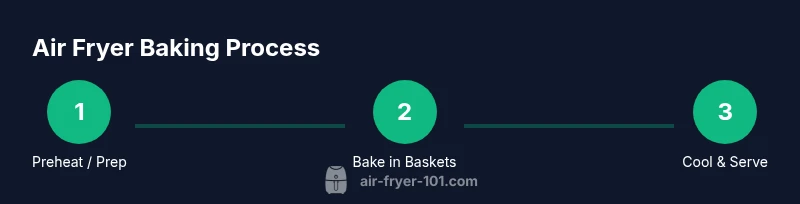
Step-by-step, you will learn how to bake in an air fryer: choose the right bakeware, preheat when needed, and adjust temperature and time for best results. The guide covers muffins, cookies, small breads, and more, plus tips to avoid soggy bottoms and uneven browning. Expect practical examples and model-specific tips.
Why bake with an air fryer matters
Baking in an air fryer offers a compact, energy-efficient alternative to a full-size oven. The circulating hot air rapidly browns the exterior while keeping the interior moist, and it often uses less oil than traditional methods. For home cooks, this means quicker batch work, convenient cleanup, and the ability to test new flavors in small quantities. According to Air Fryer 101, baking in an air fryer can reduce oil usage and still deliver bakery-style textures when you use the right bakeware and spacing. In this section, we unpack the fundamentals: how air fryers heat, how heat distributes in a compact cavity, and which recipes translate well to air fryer baking. We’ll outline expectations for muffins, cookies, and tiny loaves, and how disciplined batch sizes and proper preheating yield consistent results. Air Fryer 101’s team emphasizes practice with a few starter recipes to learn your model’s quirks.
How air fryer baking differs from traditional oven baking
The core difference is scale and airflow. An air fryer uses a compact chamber with a high-velocity fan, so heat reaches batter and dough more directly and quickly. That means you often bake at a lower temperature and for a shorter time than in a large oven, but you still want a steady, even browning. Because the basket can trap steam, baked goods may finish with a crisper crust while staying moist inside. Translate your favorite oven recipes by using similar pan sizes, reducing the heat by one or two levels, and checking doneness a few minutes earlier than the oven guideline. Air Fryer 101 recommends testing a small batch first to dial in times for your specific model.
Essential bakeware and space planning for air fryer baking
Not all bakeware performs the same in a compact air fryer. Best bets are oven-safe metal pans, silicone muffin cups, silicone baking mats, and small loaf pans that fit your basket. Always line or grease bakeware unless the recipe provides a non-stick option. Use parchment liners sized to the pan and trim any excess to avoid crowding the airflow. Silicone molds are excellent for portioned cakes or muffins because they release cleanly and withstand the hot air stream. Space is key: keep at least a finger’s width between items and the basket walls to prevent soggy bottoms and uneven browning. If you don’t have a rack insert, rotate items halfway through baking to maximize airflow. Choosing the right bakeware and keeping the basket clean dramatically improves consistency.
Preheating, loading, and spacing for even baking
Preheating is optional on some models but often yields better results, especially for bakes with a delicate crumb. If you preheat, 2–3 minutes is usually enough; skip it if your recipe already accounts for it. Load batter or dough into evenly thick pans, avoiding domed centers. Place bakeware on a rack if your model includes one, or elevate with a small trivet so air can circulate underneath. Do not overcrowd the basket; crowded batches steam rather than bake, leading to soggy edges. Start with the recommended time, then check for doneness 2–5 minutes early and extend in small increments if needed. Let the baked goods rest briefly after removing them from the air fryer so the interior finishes setting.
Practical recipes to start with and how to adapt
Begin with simple items that translate well: muffins in a muffin tin, cookies on a small sheet, and a mini loaf or quick bread in a small pan. For each recipe, adjust the oven temperature to the air fryer equivalent and reduce bake time. Use a thermometer or toothpick check: done means a clean toothpick or a registered internal temperature per the recipe. Start with batch sizes that fill only half or two-thirds of the basket so air can circulate and the crust browns evenly. If adapting a recipe with jam fillings or moist centers, consider lowering moisture by 10–20% or using thicker fillings to prevent leaking. Air Fryer 101 suggests keeping a small library of go-to bakeware sizes so you can swap in seconds without overloading the basket. For best results, document your times and temperatures for each model and reuse your notes.
Authority sources and further reading
For readers who want to validate guidance and explore safety considerations, here are authoritative references:
- U.S. Food and Drug Administration: https://www.fda.gov
- Extension services from land-grant universities: https://extension.oregonstate.edu
- National Institute of Food and Agriculture: https://www.nifa.usda.gov
Air Fryer 101 analysis notes that these sources help frame general food-safety and baking best practices when experimenting with air fryer recipes.
Troubleshooting common issues in air fryer baking
If your baked goods come out pale and underdone in the center, consider extending the bake time slightly or increasing the temperature by a small amount, ensuring you don’t over-brown the exterior. If the tops brown too quickly, tent with a small sheet of foil and monitor closely. Crusts that are too dry can result from overbaking or too-dry batter; adjust moisture content or bakeware to improve humidity in the chamber. Uneven browning can often be solved by rotating the pan or using a rack to improve airflow. Always preheat if your model responds best to it, and give air fryer baked goods a few minutes to rest before slicing to set the crumb.
Next steps: a starter plan for your kitchen
Create a simple 7-day starter plan focusing on 2–3 core recipes (muffins, cookies, mini loaf). Start each session with clean, prepared bakeware and a confirmed preheat routine. Track bake times and temperatures in a small notebook or app, then replicate the best-performing settings for your next batch. As you gain confidence, expand your library of runtimes and adjust based on model-specific quirks.
Tools & Materials
- Air fryer with adjustable temperature(Familiarize yourself with the minimum and maximum temps.)
- Oven-safe bakeware (metal pans, silicone muffin cups, silicone mats)(Ensure each piece fits inside your basket without touching sides.)
- Parchment paper or parchment liners(Use only when it won’t block air flow.)
- Silicone spatula or brush(For greasing and release.)
- Tongs or oven mitts(Handling hot bakeware safely.)
- Instant-read thermometer(Useful for verifying internal doneness for certain items.)
- Cooling rack or trivet(Elevate baked goods after baking to finish setting.)
- Measuring cups and spoons(For precise batter and ingredient portions.)
Steps
Estimated time: Total: 25-45 minutes
- 1
Preheat the air fryer
If your model benefits from preheating, set the temperature a few minutes early and let the air fryer come to heat. This helps with even browning and a reliable crumb. If your recipe specifies, follow those timings instead.
Tip: Preheating reduces cold spots and improves rise in muffins and cakes. - 2
Prepare bakeware and liners
Grease pans lightly or line with parchment, and arrange batter evenly to one depth. Thin, uniform layers promote even heat transfer and prevent sinking in the center.
Tip: Use silicone cups for muffins to ensure easy release and consistent portioning. - 3
Load and space ingredients
Place bakeware in a single layer with space between items to allow airflow. If using multiple items, stagger or rotate them during baking.
Tip: Crowding causes soggy edges and uneven browning. - 4
Set temperature and time
Choose the air fryer setting appropriate for your recipe and start with a conservative time. Check doneness early and add time in small increments as needed.
Tip: Many air fryer recipes finish sooner than oven equivalents; err on the side of less time first. - 5
Check for doneness
Use a toothpick or thermometer to verify; center should come out clean or reach the recipe’s target internal temp.
Tip: Test a small, early batch to calibrate for your model. - 6
Cool and release
Let baked goods rest on a rack after removing from the air fryer to finish cooking and set the crumb.
Tip: Cooling is essential for slicing cleanly and avoiding gummy textures. - 7
Clean and reset
Allow the basket to cool, then wash with warm, soapy water. Wipe the interior and ensure vents are clear for your next bake.
Tip: Regular cleanup prevents residue buildup that can affect browning and flavor.
Got Questions?
Can I bake a cake in an air fryer?
Yes, you can bake small cakes or muffins in an air fryer using silicone molds or small metal pans. Start with a tested recipe and monitor closely, since baking times can be shorter than in a conventional oven.
Yes, you can bake small cakes or muffins in an air fryer; use proper pans and monitor closely, as times are often shorter.
What bakeware is safe for air fryer baking?
Use oven-safe metal pans, silicone molds, and parchment liners cut to fit your basket. Avoid glass that may crack under high heat and ensure the piece fits without protruding beyond the basket.
Use oven-safe metal or silicone bakeware; cut parchment to fit and avoid oversized pieces.
Do I need to preheat the air fryer for baking?
Preheating helps some recipes establish a reliable crust and rise, but many bake items can skip preheating if the recipe accounts for it. Check your model and recipe guidelines.
Preheating helps with browning and rise, but follow the recipe; some items don’t need it.
What temperatures work best for cookies in an air fryer?
Start with a moderate temperature and keep a close eye on the first batch, since cookies can brown quickly in compact spaces. Thinner doughs bake faster; thicker doughs may need longer but at a lower heat.
Cookies bake quickly; monitor early and adjust temp or time as needed.
Can I bake bread or rolls in an air fryer?
Yes, small loaves, rolls, or quick breads can work if they fit the pan and the batter is not too dense. Expect different crumb and crust than a traditional oven.
Small breads can work, but expect differences in texture and crust.
How should I clean after air fryer baking?
Let the unit cool, remove unused bakeware, wash the basket and tray with soap and water, and wipe the interior. Regular cleaning prevents off-flavors and improves airflow.
Cool, wash the basket and tray, wipe the interior, and dry thoroughly.
Are there safety considerations I should know?
Follow manufacturer guidance for maximum load, avoid touching hot surfaces, and never place liquids in the hot air fryer chamber. Use heat-resistant tools and keep a safe distance from the heat source.
Follow safety guidelines, handle hot parts with care, and avoid liquids in the hot chamber.
Watch Video
Quick Summary
- Master airflow: avoid crowding and ensure space for even browning
- Preheat when advised; it improves rise and texture
- Use appropriate bakeware; silicone molds and small pans fit well
- Adjust oven-based recipes by reducing time and temperature safely
- Document model-specific timings for consistency