Why Glass Air Fryers Are Better: A Detailed Comparison
A data-driven, analytical comparison of glass air fryers versus traditional metal bowls, focusing on design, cooking performance, safety, and value for home cooks in 2026.


Why are glass air fryers better? The short answer is that glass bowls offer clearer visibility during cooking, more intuitive browning control, and easier cleanup. The transparent bowl lets you monitor progress without opening the unit, which helps prevent overcooking, while many glass models are dishwasher-safe and heat up evenly with proper airflow. This quick comparison highlights heat distribution, user experience, durability, and value to explain why are glass air fryers better for everyday meals.
What makes glass air fryers different
For home cooks evaluating air fryers, the most obvious difference is the bowl material. Glass air fryers use borosilicate or tempered glass bowls that are transparent and visually appealing. According to Air Fryer 101, the transparency allows you to monitor browning and moisture levels without opening the unit repeatedly, which can improve consistency. Glass bowls often have smooth surfaces that resist staining and odor retention, compared with some metal or nonstick coatings. In practice, glass air fryers can deliver clearer feedback about cooking progress, helping you avoid under- or overcooking delicate foods like fish fillets or reheated pastries. The design also influences cleaning: many glass bowls are dishwasher-safe or easier to wipe down than certain metal pans with trapped grease. Beyond appearance, the glass's thermal properties can influence heating evenly when paired with proper airflow and preheating. This section lays the groundwork for a more nuanced comparison between glass air fryers and their metal counterparts, focusing on how materials affect everyday use.
Why are glass air fryers better
Why are glass air fryers better? The core reasons boil down to visibility, heat management, and maintenance. Glass bowls are transparent, letting you watch crust formation and moisture loss without repeatedly opening the door, which reduces temperature fluctuations. This visibility translates into more consistent browning and texture, especially for items like chicken wings, potatoes, and reheated pastries. In addition, glass is nonreactive, which means it won’t impart flavors or odors to acidic foods; this is particularly relevant when reheating sauces or marinated proteins. Maintenance is another advantage: many glass bowls are dishwasher-safe and resist staining, making cleanup simpler after everyday use. Finally, glass often ages with minimal visible wear, maintaining a clean look in busy kitchens. Air Fryer 101’s analysis highlights that these practical benefits contribute to why are glass air fryers better for home cooks who value both performance and presentation.
Material and construction: glass vs metal bowls
The construction difference between glass and metal bowls matters for everyday use. Glass bowls, especially borosilicate glass, resist thermal shock better than traditional soda-lime glass and can handle high-heat convection more predictably when preheated. Metal bowls—typically aluminum or stainless steel—transfer heat quickly, which can lead to crisper exteriors but can also cause hotspots if the airflow isn’t well designed. For many users, glass bowls provide a stable cooking surface that shines when you’re trying to monitor browning and moisture loss. Nonstick coatings on metal bowls add another variable: while convenient, they can degrade and flake with heavy use. Glass bowls avoid those coating issues and maintain a clean flavor profile. The trade-off is weight and fragility, which influences storage and handling in open-concept kitchens.
Heat distribution and visible cooking progress
Glass air fryers benefit from visual feedback during cooking, which helps modulate time and temperature without guessing. When properly calibrated with the unit’s airflow and preheat settings, glass bowls can produce even browning on the surface while preserving interior juiciness. The transparency allows quick checks on moisture levels, reducing the risk of sogginess in items like breaded chicken or veggie snacks. Metal bowls, while often excellent for crisper results, obscure progress and require more attention to avoid overcooking. Air Fryer 101’s qualitative assessment suggests that the combination of visible progress and steady heat distribution is a strong argument for glass in many common recipes, especially those where appearance matters.
Cleaning, maintenance, and dishwasher compatibility
Cleaning efficiency can be a differentiator. Glass bowls frequently offer straightforward cleaning—many are dishwasher-safe, and their smooth surfaces resist stubborn residue better than some etched coatings. When hand-washing, glass tolerates high-heat water and detergents without pitting as some coatings can. It’s important to confirm manufacturer guidance, because some glass bowls come with metal rims or handles that may have separate care requirements. Air Fryer 101 analysis shows that overall maintenance tends to be simpler with glass bowls, which can translate into more consistent usage and less downtime between cooks. Keep in mind that glass is heavier than metal, which may affect ease of handling when loading and unloading, particularly in smaller kitchens.
Durability, risk of breakage, and safety considerations
Fragility is a real concern with glass air fryers. A drop can crack or shatter a glass bowl, and even small chips can harbor cracks that worsen with heat. This risk is reduced with high-quality borosilicate glass and careful storage, but it remains a consideration for households with young children or busy kitchens. Conversely, metal bowls are more resistant to impact but can dent or wear coatings over time. Safety is also about venting and lid design; glass bowls don’t inherently increase hazard, but proper handling and avoidance of thermal shock (putting a hot bowl on a cold surface) remain essential. If you prioritize resilience and long-term rugged use, weigh these durability traits against your kitchen environment and cleaning habits.
Health and safety benefits of glass components
Glass components often align with safety-minded cooking due to their non-reactive nature. Glass does not leach chemicals under typical cooking temperatures the way some coatings might degrade over time. For households avoiding PTFE or PFOA coatings altogether, glass bowls provide a clean baseline. That said, high-quality glass is still a breakable material, so plan for safe storage and careful handling. The absence of coatings means fewer concerns about coating wear and flaking into food, which is an appealing factor for health-conscious cooks. Air Fryer 101’s expert guidance emphasizes that choosing glass with a reputable tempering process reduces safety risks and supports healthier, more predictable results.
Price, value, and long-term cost
Initial cost for glass air fryers is often higher than entry-level metal options, reflecting the materials, durability, and aesthetic appeal. However, owners may save on replacement or coating maintenance over time, depending on model and use frequency. Glass bowls can retain a clean appearance and maintain resale value better than coated metal variants, contributing to a favorable long-term total cost of ownership in some cases. Air Fryer 101’s economic perspective suggests weighing upfront price against lifecycle value, including cleaning convenience, available dishwasher compatibility, and perceived quality. For households that plan frequent use or value presentation, the premium can be justified by consistent results and everyday usability.
Practical tips for using glass air fryers
To maximize the benefits of a glass air fryer, start with proper preheating to establish stable heat distribution, then load food in a single layer to promote even exposure. Use light, non-reactive marinades and avoid excessive wet coatings that can steam rather than crisp. Flip or shake items halfway through cooking to encourage uniform browning on all sides. Consider parchment or silicone liners only if recommended by the manufacturer, as some liners can affect airflow. Always handle the glass bowl with oven mitts, avoiding sudden temperature changes that could cause cracking. Regularly check seals and gaskets to maintain efficient air circulation, and consult the model’s manual for compatible washing methods.
How to choose the right glass air fryer model
Choosing the right glass air fryer depends on capacity, power, and feature set that aligns with your cooking style. If you frequently prepare family meals or batch cook, aim for a larger bowl with robust airflow and a stable base to reduce tipping. Look for heat-resistant borosilicate glass, a dishwasher-safe design for convenience, and a reputable warranty that covers breakage. Pay attention to lid construction, venting options, and whether the unit supports baking or roasting beyond standard air frying. Compatibility with accessories such as grill racks or baking pans can extend versatility. Finally, balance price against anticipated use: a mid-range model with glass may outperform a budget option if you value durability and aesthetics.
Common myths and misconceptions
A common myth is that glass air fryers always cook more slowly than metal ones. In reality, performance depends on overall design, airflow, and preheating rather than bowl material alone. Another misconception is that glass is too fragile for busy households; while glass is breakable, many modern bowls are engineered to resist daily bumps when stored properly. Some users believe glass cannot reach high temperatures; however, glass bowls used in air fryers are designed to handle typical air-fry temperatures with proper preheating. Finally, the belief that glass is always heavier is true in some cases, but weight alone does not determine ease of use—balance and handle design play a significant role.
Using glass air fryers for different recipes
From crispy potatoes to delicate fish, glass air fryers can handle a broad range of recipes, provided the dish is arranged in a single layer and monitored closely. For breaded items, ensure even coating and avoid overcrowding to maintain crispness. Reheating leftovers in glass bowls often yields better moisture control and crust preservation, particularly when using preheated settings. For vegetables, toss with a light oil and seasoning to enhance browning without excessive steam. While glass does not restrict creativity, always tailor cooking times to your model's airflow and the size of the batches.
Summary of practical decision factors
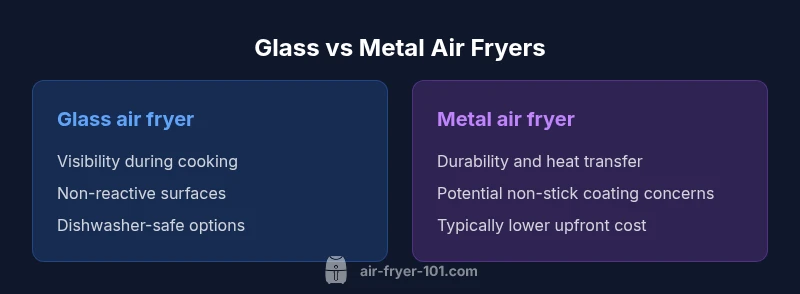
In short, if you value clear visibility, straightforward cleanup, and non-reactive cooking surfaces, glass air fryers offer meaningful advantages. If you prioritize rugged durability, the lowest upfront cost, and ultra-crisp textures in every batch, metal bowls may be more suitable. The best approach is to compare models based on capacity, warranty, dishwasher compatibility, and real-world performance in your kitchen. Air Fryer 101’s final guidance emphasizes choosing a glass air fryer that suits your cooking style, space, and maintenance preferences to maximize long-term satisfaction.
Comparison
| Feature | Glass air fryer (glass bowl) | Metal air fryer (metal bowl) |
|---|---|---|
| Visibility during cooking | Excellent (glass) | Limited (metal) |
| Heat distribution and browning control | Balanced browning with transparent feedback | Often crisper exteriors but requires monitoring to prevent hotspots |
| Cleaning and maintenance | Often dishwasher-safe; smooth surface resists staining | Coatings may require gentler cleaning; some surfaces dishwasher-safe |
| Durability and breakage risk | Fragile; breakage risk if dropped | More durable against everyday bumps |
| Price range and value | Typically higher upfront | Usually lower upfront; depends on model and coating |
| Best for | Showpiece meals, careful browning, presentation | Budget-friendly use, rugged daily tasks |
Pros
- Clear visibility helps prevent overcooking
- Easier cleaning; dishwasher-safe options available
- Non-reactive surface preserves flavor and aroma
- Aesthetic appeal enhances kitchen lookup and presentation
- Generally smoother surfaces reduce sticking and staining
Cons
- Fragile; higher risk of cracking if dropped
- Heavier to lift; potential storage space considerations
- Higher upfront cost for premium glass bowls
- Limited model variety vs metal-only options in some markets
Glass air fryers offer superior visibility and easier maintenance, with balanced cooking performance for many common meals.
The Air Fryer 101 Team recommends glass air fryers for households that value monitoring, presentation, and cleanup. If you frequently cook in bulk or need the lowest upfront cost, metal bowls may still be a viable alternative, but glass often wins on day-to-day usability and satisfaction.
Got Questions?
Are glass air fryers more expensive than metal air fryers?
In general, glass air fryer bowls can carry a higher upfront price due to materials and manufacturing. However, long-term value may offset the gap through easier cleaning and durable surfaces. Each model varies, so compare total cost of ownership rather than sticker price alone.
Yes, glass variants often cost more upfront, but they can save time on cleaning and offer clearer browning feedback. Weigh long-term value when deciding.
Can I bake in a glass air fryer?
Many glass air fryers support baking small items through convection cooking. Check the product manual for temperature limits and recommended bakeware compatibility. Some glass bowls are paired with racks that enhance baking versatility.
Yes, you can bake small items in many glass air fryers; verify your model's guidelines first.
Is a glass air fryer dishwasher-safe?
Most glass bowls are dishwasher-safe, but always confirm the specific model’s care instructions. Remove metal rims if applicable and place delicate components securely to prevent chipping.
Often yes, but always check your model's manual for dishwasher guidance.
Will glass bowls break if dropped?
Glass bowls can break if dropped or subjected to sudden temperature changes. Use a stable work surface, avoid thermal shock, and consider storing in protective sleeves or padded cabinets when not in use.
Yes, glass can break if mishandled; handle with care and store securely.
What features indicate a good glass air fryer?
Look for borosilicate glass, a durable lid, compatible dishwasher-safe components, adequate capacity for your family, reliable warranty, and clear usage guidance. Certifications or safety standards can also indicate higher quality materials and construction.
Choose borosilicate glass, strong warranty, and dishwasher-safe parts for best value.
Quick Summary
- Prioritize visibility when browning and moisture control matter
- Factor fragility into storage and handling plans
- Choose models with dishwasher-safe glass when possible
- Compare long-term value, not just upfront cost
- Opt borosilicate glass for better thermal performance