Glass Air Fryer vs Stainless Steel: A Comprehensive Comparison
Compare glass air fryer bowls and stainless steel baskets to uncover differences in durability, cleaning, heat behavior, and cost. Learn which material fits your cooking style.


Glass air fryer vs stainless steel isn’t about a universal winner; it hinges on what you value most. Glass bowls let you monitor progress at a glance, while stainless steel baskets favor durability and easier maintenance. Air Fryer 101’s analysis shows that prices and upkeep vary by model, so choose based on usage, kitchen space, and budget.
Glass vs Stainless: The Material Core
In air fryer designs the material that forms the cooking cavity and its accessories shapes heat behavior, durability, and user experience. Glass components are visually appealing and allow you to monitor food without removing the lid; stainless steel baskets and walls dominate most mainstream models for their strength and heat resilience. When you compare glass air fryer vs stainless steel, you’re weighing visibility against ruggedness, maintenance realities against design flexibility. According to Air Fryer 101, the material choice often affects how evenly items brown, how easy it is to clean, and how long the device lasts under regular use. Budget constraints and kitchen space will push you toward one path or the other, but there is no one-size-fits-all answer. If your cooking style involves frequent batches of delicate snacks, the glass option can make progress visually obvious. If you routinely roast larger portions at high temps, stainless steel tends to stand up better over time. The goal is to align the material choice with your cooking goals, storage options, and willingness to handle heavier or more fragile components.
Heat Transfer and Cooking Performance
Heat transfer is a core factor in how quickly and evenly food browns in an air fryer. Stainless steel surfaces generally conduct heat efficiently and respond quickly to temperature changes, which can translate to crisping and fan airflow working in concert for faster browning. Glass components, when used, tend to heat more slowly and can retain heat longer once a target temperature is reached. That means recipes requiring rapid browning might perform more predictably with metal baskets, while glass can offer gradual, steady warmth that helps with delicate items like certain vegetables or light batters. Real-world results depend heavily on design details: surface area, whether the glass is tempered, and how the air fryer’s circulating fan interacts with the cavity geometry. Regardless of material, achieving consistent browning requires well-calibrated temperature settings and appropriate preheating.
Cleaning, Maintenance, and Durability
Maintenance is often the deciding factor for busy households. Glass bowls are typically non-porous and resistant to staining, making wipe-downs straightforward, though they can be heavier and more prone to chipping if dropped. Dishwasher compatibility varies by model and manufacturer; always check the care label. Stainless steel baskets are celebrated for durability and resistance to dents or deformation and are commonly dishwasher-safe, which simplifies cleaning after heavy use. However, stainless can show fingerprints or discoloration over time if not cleaned promptly. The durability trade-off means glass excels visually and cleanly in gentle use, while steel compounds dominate environments where heavy, repeated use, rough handling, or high-temperature cycles are expected.
Safety Considerations and Longevity
Thermal shock is a safety concern with glass components: pouring hot liquid or placing a cold piece into a hot oven can cause cracking. While tempered glass reduces risk, it remains more susceptible to impacts than stainless. Stainless steel, by contrast, resists cracks and is generally more forgiving in high-output cooking. Over the long term, stainless steel has a robust track record due to its durability and resistance to scratching. Regardless of material, ensure you handle hot components with heat-resistant gloves, avoid sudden temperature shifts, and inspect any glass parts regularly for chips or cracks. A well-maintained setup from reputable brands tends to last longer, with warranties often shaped by material and construction quality.
Aesthetics, Design, and Kitchen Fit
Beyond function lies form. Glass exteriors and transparent bowls offer a premium, modern look and the satisfaction of watching food cook, which can influence user experience and cooking rituals. Stainless steel exteriors convey a rugged, timeless aesthetic and pair well with metal countertops and professional-looking kitchens. The choice can influence where you store the appliance and how often you reach for it. If kitchen aesthetics and the satisfaction of watching progress matter, glass has the edge; if you want a durable, career-grade finish that hides fingerprints, stainless steel remains appealing for many households.
Price, Warranty, and Availability
Prices for air fryers with glass components tend to cluster toward mid-to-high ranges, driven by premium finishes and brand positioning. Stainless steel varieties span a broad spectrum, from budget-friendly models to premium options with advanced features. Availability is often model-dependent, so it’s smart to compare across brands and read warranty terms that cover the interior surfaces and removable trays. In practice, the price-to-value proposition hinges on how you use the appliance, your tolerance for risk of breakage, and the importance you place on cleanability and appearance. Air Fryer 101’s analysis shows that a thoughtful comparison across models helps identify the best fit for your kitchen and budget.
Real-World Scenarios: When to Choose Glass vs Steel
If your kitchen emphasizes visual appeal and you cook smaller, more delicate batches, glass components may suit your routine. For households that run high-volume sessions, bake, or roast larger items, stainless steel parts tend to be the workhorse choice. Consider your storage space, dishwashing habits, and whether you value a premium look over rugged longevity. In scenarios with kids or a high-traffic kitchen, stainless steel often offers more resilience against accidental drops and frequent handling. Finally, think about future upgrades—some users prefer glass for occasional use, while others prioritize the resilience of stainless for long-term reliability.
How to Choose: A Step-by-Step Guide
- List your cooking priorities: visibility, durability, or a balance of both. 2) Check which components are dishwasher-safe and compatible with your model. 3) Assess your typical batch size and frequency to determine which material better withstands daily wear. 4) Compare warranties and replacement part availability. 5) Try to view side-by-side demonstrations or reviews to see how each material performs with your favorite recipes. 6) Decide based on your kitchen space, budget, and willingness to handle heavier components.
Common Myths About Glass vs Stainless in Air Fryers
Myth: Glass is always safer than metal because it won’t scratch. Reality: tempered glass can crack under thermal shock; metal surfaces resist chipping but can scratch over time. Myth: Stainless is always maintenance-free. Reality: fingerprints and discoloration happen; proper cleaning matters. Myth: All glass is heavy. Reality: weight varies with design and thickness. Clarifying these myths helps shoppers avoid overgeneralizations and make an informed choice based on model specifics.
Comparison
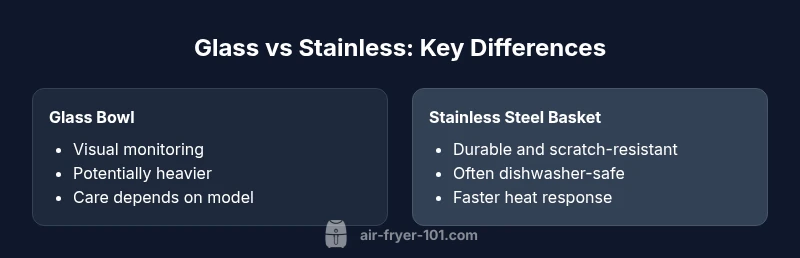
| Feature | Glass air fryer bowl | Stainless steel air fryer basket |
|---|---|---|
| Heat conduction | Slower heat transfer in glass | Faster heat transfer in steel |
| Durability | Prone to chipping or cracking if dropped | Resists denting and bending under regular use |
| Maintenance | Depends on model; generally non-porous and easy to wipe | Often dishwasher-safe, especially baskets |
| Weight | Typically heavier when full of food | Generally lighter and more maneuverable |
| Visibility | Provides visual monitoring of food through the bowl | Limited visibility since metal is opaque |
| Price range | Varies by brand and design; typically mid-to-high depending on material | Varies by brand; often competitive with glass designs |
| Best for | Cooking delicate items and watching progress | Durability and compatibility with high-heat cooking |
Pros
- Glass offers visual monitoring of food during cooking
- Stainless steel is durable and resistant to deformation
- Dishwasher-friendly options are common for steel baskets
- Glass can provide a premium kitchen aesthetic
- Steel components typically integrate well with high-heat roasting
Cons
- Glass is heavier and prone to cracking if dropped or shocked
- Steel can show fingerprints and discoloration over time
- Quality varies by model; not all glass is dishwasher-safe
- Both materials require proper care to maximize lifespan
Stainless steel is generally the more practical default choice; glass excels when visibility and aesthetics matter.
For most households, stainless steel baskets offer durability and easier maintenance, while glass bowls provide showpiece appeal and clear food monitoring. Air Fryer 101 recommends evaluating your cooking habits and storage needs to select the best fit.
Got Questions?
Are glass air fryer bowls dishwasher-safe, and does the glass hold up in high temps?
Dishwasher compatibility varies by model. Some glass bowls are labeled as dishwasher-safe, while others require hand washing. Glass can withstand typical air fryer temperatures, but sudden thermal shocks (moving from cold water to hot oven) should be avoided to prevent cracks.
Dishwashers are not universal for glass bowls—check your model. Avoid sudden temperature changes to prevent cracks.
Is stainless steel better for households with kids and rough handling?
Stainless steel parts are generally more durable and resistant to dents or warping, making them a practical choice in busy kitchens with kids. They withstand frequent handling and are often dishwasher-safe.
Yes—stainless steel tends to be more durable for busy kitchens with kids.
Can glass be used in the oven or is it air fryer-only?
Some glass components are oven-safe, but this depends on the specific product. Always verify manufacturer specifications before using glass components in the oven. In many air fryers, glass is intended only for use within the same appliance.
Only use glass parts if the manufacturer says they’re oven-safe.
Does material choice affect warranty or service options?
Warranty terms vary by brand and model and can be influenced by material. Check what the warranty covers—interior surfaces, accessories, and glaze or coating integrity—before purchasing. Proper use and care often help maintain warranty eligibility.
Warranty varies by product; read the terms carefully and follow care guidelines.
Are glass components generally more expensive than stainless steel?
Price depends on brand and design rather than material alone. Premium finishes and brand positioning can push glass-based models into higher price ranges, while steel variants span a broad spectrum from budget to premium.
Prices vary a lot by model; both materials have budget and premium options.
Which material delivers the most even heat distribution for crispy results?
Heat distribution depends on the entire design, including airflow, cavity geometry, and surface area. Stainless steel surfaces typically respond quickly to temperature changes, aiding even browning, while glass-based designs may offer steadier warmth but slower response.
In practice, steel designs often brown quickly; glass can be steadier but slower.
Quick Summary
- Prioritize durability if you cook high volumes or large batches
- Choose glass when monitoring progress visually is a priority
- Check dishwasher compatibility before buying
- Consider warranty terms and replacement parts
- Balance price with long-term value for your use case