Why Air Fryer Instead of Oven: A Comprehensive Comparison
An analytical side-by-side look at air fryers vs ovens, focusing on speed, energy use, health benefits, and value to help home cooks choose the best kitchen tool.


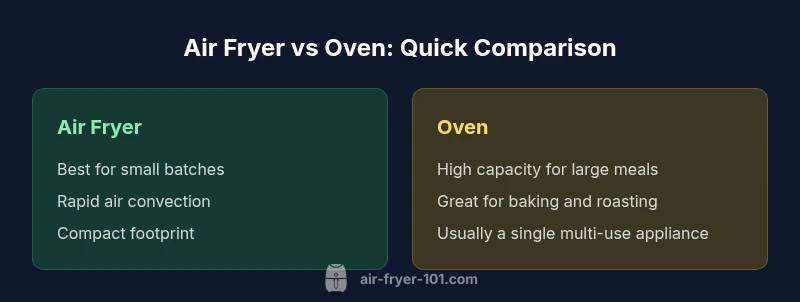
Air fryers excel for quick, small-batch meals thanks to rapid air circulation and minimal preheating, making them a strong default for weeknights. Ovens win when you need high capacity, baking versatility, or large roasts. Use the air fryer for speed and efficiency, and the oven for volume and baking precision.
Why the Question Matters
In modern kitchens, the question of why air fryer instead of oven matters for busy families and health-conscious cooks. The choice affects weeknight speed, energy use, texture, and overall meal quality. For many households, a quick decision between these two appliances shapes daily menus, grocery planning, and cookware strategies. The Air Fryer 101 team emphasizes a clear approach: identify your typical batch size, favorite foods, and available kitchen space before choosing a primary tool. According to Air Fryer 101, understanding the trade-offs helps avoid buyer's remorse and ensures you select a solution that aligns with health goals, convenience, and budget. This guide compares core performance factors, clarifies when each appliance shines, and offers practical benchmarks you can apply in your own kitchen.
How an Air Fryer Works vs a Conventional Oven
Air fryers use a compact chamber with a high-powered heating element and a fan that circulates hot air at rapid speeds. The result is a convection-like environment focused on crisping surfaces with little to no oil. Conventional ovens, in contrast, rely on radiant heat from elements and slower air movement, creating even results across larger cavities. The fundamental difference is efficiency of heat transfer: air fryers optimize surface heating for small items, while ovens excel at even cooking for larger, flatter, or multi-rack dishes. This distinction explains why some foods crisp beautifully in an air fryer but bake more evenly in an oven. Both appliances can achieve delicious outcomes, but their physics guide how you should use them.
Speed and Efficiency: Time Savings
Time is money in the kitchen, and the air fryer often delivers faster results for many everyday dishes. For meals built around small portions or bite-sized snacks, you’ll notice shorter cook times and minimal preheating. The oven remains competitive for larger quantities or items that benefit from slow, steady heat. Efficiency also depends on batch size: a single tray in a conventional oven can take longer to heat and cook than a compact air fryer basket. When you’re aiming to serve multiple family members quickly, the air fryer’s ability to start cooking almost immediately after setup can shave minutes off the overall process.
Batch Size and Capacity Realities
A key difference between the two appliances is batch capacity. Air fryers offer convenient, compact baskets that work best for individual servings or small families. If you routinely cook for a crowd or prepare multiple dishes at once, a conventional oven provides larger capacity and the ability to use multiple racks. You may find that certain meals scale better in an oven, while others—like chicken wings, fries, or roasted vegetables—shine in an air fryer. Your decision should align with typical weekly menus and whether you prioritize speed or volume.
Texture, Crispness, and Flavor Outcomes
Crispness is a common objective for many home cooks, and air fryers are known for delivering that signature bite with minimal oil. The airflow and proximity to the heating element promote browning and surface texture efficiently. Ovens can also achieve crispness, especially with convection settings, but they often require more careful rack placement and occasionally a touch more oil. When texture matters, test a few dishes (fries, chicken nuggets, vegetables) in both devices to observe how their surface browning and interior softness compare. The result is a meal that meets your preferred texture profile.
Energy Use and Environmental Footprint
For small meals, air fryers typically use less energy than heating a full-size oven due to shorter preheat times and smaller cooking space. However, when you’re cooking large batches or bulk items, an oven might be more energy-efficient overall because it handles more food per heating cycle. Energy considerations should factor in your typical cooking patterns, pantry staples, and the frequency with which you cook large meals. This broader view helps you decide which appliance aligns with your sustainability goals.
Cleanup, Maintenance, and Longevity
Cleaning practices differ between air fryers and ovens. Air fryers often have removable baskets and crisper trays that are dishwasher-safe or easy to hand-wash. Ovens may require more effort for racks, trays, and interior walls, especially if splatters occur. Longevity depends on build quality, frequency of use, and how well you maintain the appliance. Regular cleaning, avoiding abrasion during scrubbing, and following manufacturer recommendations extend the life of both devices. A habit of quick post-cook cleaning can keep either appliance performing at a high level for years.
Price, Value, and Long-Term Costs
Initial investment varies for both options. Air fryers offer a mid-range price with ongoing savings in energy costs for small meals. Ovens may be a larger upfront commitment if you’re buying new, but they deliver broad versatility that can reduce the need for additional appliances. When evaluating price, consider how often you’ll use the device for your typical meals, the energy profile of your household, and whether you already own a convection oven. Long-term value depends on cooking patterns and maintenance costs over time.
Special Scenarios: Small Kitchens, Weeknights, and Large Families
In small kitchens, the compact footprint of an air fryer can free up valuable counter and cabinet space. For busy weeknights, the quick setup and short cook times of air fryers often translate to faster dinners. Large families or gatherings may still favor the oven for multi-dish preparation and high-volume baking. A practical strategy is to keep both tools available: use the air fryer for quick snacks and single-serving meals, and rely on the oven for large roasts, casseroles, and batch baking.
Buying Guidelines: What to Look For in an Air Fryer vs Oven
When buying, prioritize capacity, wattage range, preset programs, and the ease of cleaning. For ovens, consider cooking flexibility, oven size, convection capabilities, and temperature accuracy. If you anticipate frequent use of air fryer features, look for models with robust airflow, reliable heating elements, and wide temperature ranges. In contrast, if you expect to bake bread or roast large cuts, a conventional oven with reliable range and even heat will be more suitable. Your decision should reflect your cooking goals, kitchen space, and budget.
Practical Cooking Scenarios: Quick Recipes and Tips
This section offers starter ideas to help you test the two appliances side by side. Try air-frying frozen french fries, chicken tenders, and vegetables with minimal oil for crisp results. For oven testing, bake cookies or sheet-pan meals that require even browning and longer cooking times. Keep a simple log of the outcomes—texture, browning, moisture, and taste—to guide future choices. With practice, you’ll understand which dishes are most likely to benefit from each appliance and how best to optimize heat and airflow.
Comparison
| Feature | Air Fryer | Conventional Oven |
|---|---|---|
| Cooking Speed | Very fast for small batches | Slower for small batches due to preheating; overall cooking time longer for many dishes |
| Preheat Time | Minimal or none for many models | Requires longer preheating before cooking |
| Batch Capacity | Small to medium portions in a compact basket | Large capacity with racks for bulk cooking |
| Texture and Crispness | Excellent surface browning with little oil | Even browning and crusting; good versatility for baking |
| Energy Use | Typically lower energy for small meals | Can be higher energy for small batches; efficient for larger meals |
| Versatility | Best for snacks, fries, and small entrees | Best for baking, roasting, and multi-dish meals |
| Price Range | Mid-range depending on capacity and features | Wide range; can be budget to premium based on size and features |
| Best For | Quick meals, small households, energy-conscious use | Large families, baking enthusiasts, multi-dish cooking |
Pros
- Faster cooking for small batches
- Lower oil intake and crispy results
- Compact footprint fits small kitchens
- Simple, straightforward operation for beginners
- Easy cleanup for many models
Cons
- Limited batch capacity for large meals
- Initial cost even for mid-range models
- Not ideal for certain baked goods and large roasts
- Requires storage space for an additional appliance
Air fryer is ideal for speed and small-batch meals; oven remains the go-to for large quantities and baking versatility.
For quick weeknight meals and energy efficiency in small batches, the air fryer wins. If you routinely cook large roasts or bake multiple items at once, the oven offers clear advantages.
Got Questions?
Is an air fryer faster than an oven in everyday cooking?
Yes, for many everyday meals, especially when cooking small portions, because of shorter preheat times and rapid air circulation. For large meals, the oven can be competitive or faster depending on the dish.
Air fryers are usually faster for small meals, while ovens excel with large batches.
Can you bake in an air fryer?
Many air fryers offer bake settings and can handle smaller baked goods or cookies. Large loaves or wide sheet pans are often better suited to a conventional oven.
Yes, for small bakes; use the oven for bigger baking projects.
Do air fryers use less energy than ovens?
Air fryers typically use less energy for small meals due to shorter cook times and smaller cooking space. For larger meals, ovens may be more efficient overall because they handle more food per heating cycle.
Usually more energy-efficient for small batches, less so for large cooks.
What foods are best prepared in an air fryer?
Crispy snacks, frozen favorites, and smaller protein portions typically turn out best. Larger roasts or delicate baked goods often perform better in a traditional oven.
Great for fries, chicken tenders, and snacks; not ideal for big roasts.
What should I look for when buying?
Prioritize capacity, wattage, preset programs, and ease of cleaning. For ovens, look for temperature accuracy, convection capability, and space for larger dishes.
Choose based on batch size and cooking goals, plus easy cleanup.
Quick Summary
- Choose air fryer for fast, small batches.
- Reserve oven for large meals and baking versatility.
- Evaluate kitchen space and energy use in decision.
- Invest in models with easy cleaning and reliable safety features.
- Test a few recipes to learn each appliance's strengths.