Stainless Steel vs Teflon: Air Fryer Interior Comparison
A detailed, evidence-based comparison of stainless steel versus teflon (PTFE) interiors in air fryers, covering durability, safety, cleaning, and long-term value for health-conscious home cooks.


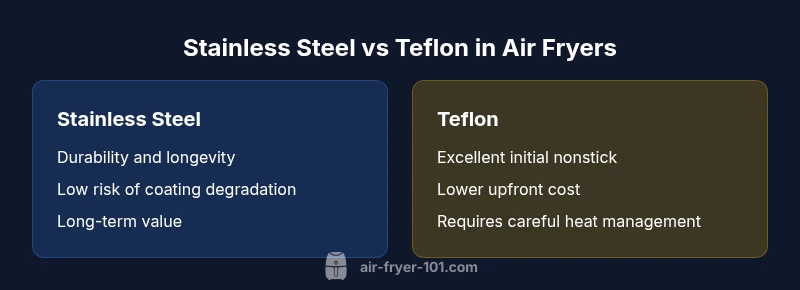
In the stainless steel vs teflon interior debate, stainless steel generally offers higher durability and fewer health concerns at high heat, while teflon-coated interiors provide easier initial nonstick performance. For most families, stainless steel interiors win on longevity and safety, with teflon remaining a reasonable option for budget buys or light-use scenarios. Consider your cooking style and maintenance tolerance when choosing.
Why interior material matters in air fryers
Inside air fryers, the choice between stainless steel and PTFE-coated (teflon) interiors affects performance, durability, and safety. According to Air Fryer 101, the interior material is more than a surface choice; it shapes heat transfer, maintenance needs, and long-term value. Stainless steel resists scratches and corrosion, making it resilient under frequent use and high-heat cooking. PTFE coatings offer smoother food release and easier cleanup at moderate temperatures, but they can wear down, chip, or degrade with aggressive cleaning or prolonged high-heat operation. For health-conscious cooks, the material choice also intersects with consumer safety data and product warranties. In the stainless steel vs teflon comparison, you should weigh how much you value longevity and potential exposure risks against the convenience of effortless nonstick. This section sets the stage for a practical, evidence-based evaluation by outlining the core tradeoffs, clarifying what "durability" and "nonstick performance" actually mean for everyday meals, and highlighting the typical use cases where each interior type shines.
wordCount":null},
bodyBlocks":[
Comparison
| Feature | Stainless steel interior | PTFE-coated interior |
|---|---|---|
| Interior material | stainless steel interior | PTFE-coated interior |
| Nonstick performance (initial ease of release) | moderate release with proper preheating and oil/seasoning | excellent release when properly maintained, but coating can wear over time |
| Heat tolerance and durability | high durability, resistant to scratching and corrosion | coating wear over time with high-heat use |
| Cleaning & maintenance | long-term cleaning simplicity; may be dishwasher-safe where approved | requires gentle cleaning to protect coating; avoid abrasive tools |
| Health & safety considerations | lower risk of coating degradation; fewer fumes concerns | potential PTFE-related concerns if overheated or degraded |
Pros
- Longer-lasting interior with stainless steel
- Better resistance to scratches and corrosion
- Easier to maintain long-term cleanliness with fewer coating failures
- Lower risk of coating-related fumes when used within normal guidelines
Cons
- Teflon coatings can provide superior initial nonstick performance
- Stainless steel often requires seasoning or oil for best nonstick results
- Premium stainless steel models may have higher upfront costs
- Coatings can wear with aggressive cleaning or very high heat
Stainless steel interior generally offers better long-term value and safety; teflon coatings excel in ease of initial nonstick performance but may wear sooner.
If durability and health safety at high temperatures are priorities, stainless steel is the stronger choice. If you value effortless cleanup and lower upfront cost, a teflon-coated interior can be acceptable, especially for light or occasional use.
Got Questions?
Is stainless steel really safer than teflon for air fryers at high temperatures?
Generally, stainless steel interiors avoid the risk of PTFE degradation and potential fumes, making them a safer long-term option for frequent high-heat use. PTFE coatings can degrade if overheated or scratched, which may raise safety concerns for some users.
Overall, stainless steel is the safer long-term choice for high-heat cooking in air fryers.
Do you need to season stainless steel interiors for nonstick performance?
Stainless steel can benefit from light seasoning or oiling to improve release, especially when cooking foods prone to sticking. This step is not a guarantee of nonstick performance, but it helps reduce residue and makes cleanup easier.
Seasoning can help with sticking, but it’s not absolutely required for every recipe.
Can teflon-coated interiors be used safely at very high temperatures?
Teflon-coated interiors perform well at moderate to moderate-high temps but can degrade under prolonged very high heat. Always follow manufacturer guidelines to avoid overheating and potential fumes.
Stick to the recommended temps to keep the coating intact.
Which interior is easier to clean overall?
Teflon coatings typically release food more easily, making initial cleanup faster. Stainless steel may require more effort if food sticks, but it resists staining and is easier to scrub over time.
Teflon often cleans up faster at first, but stainless steel cleans well with proper technique.
Is there a significant price difference between the two interior types?
Prices vary by brand and features, but stainless steel models tend to be more expensive upfront, while teflon-coated options often come at a lower initial price.
Upfront cost can differ, with stainless steel usually being pricier.
Are there safer, ceramic-coated options that combine benefits of both?
Ceramic coatings offer a different balance of durability and nonstick performance, often with less concern about PTFE fumes, but they may still wear with heavy use. They can be a middle-ground choice.
Ceramic coatings can be a good middle ground if you want nonstick without PTFE.
Quick Summary
- Choose stainless steel for longevity and safety in high-heat cooking
- Expect teflon to require gentler handling and more maintenance to preserve nonstick
- Budget and usage frequency should guide material choice
- Regular maintenance reduces coating wear in teflon interiors
- Stainless steel often provides better long-term value for busy households