Combined Air Fryer + Microwave: A Thorough Comparison
Explore whether a two-in-one air fryer and microwave fits your kitchen. This analytical guide weighs space, performance, and value to help home cooks decide between a single unit and separate appliances.


A combined air fryer and microwave can save counter space and simplify weeknight meals, but it often sacrifices top performance in one or both functions. If you value compact convenience and basic versatility, a single unit may fit your needs. If you want best-in-class air frying or roasting, separate appliances will typically deliver stronger results.
What is a combined air fryer and microwave?
A combined air fryer and microwave is a single appliance that merges two cooking methods: convection-style air frying for crisp textures and microwave for quick reheating and defrosting. The design aims to save countertop real estate while offering a reasonable range of capabilities. For home cooks evaluating whether to buy, it helps to understand the core trade-offs: you gain convenience and footprint reduction, but you may lose some performance room compared with two dedicated devices. If you’re wondering can you get a combined air fryer and microwave, the answer is yes in many mainstream models, but sizing, power, and feature sets vary widely across brands. According to Air Fryer 101, these units are particularly popular in compact kitchens, dorm rooms, and spaces where maximizing every inch of counter space matters. The real question becomes: does the convenience justify any compromises in taste, speed, and capacity for your typical meals?
How performance typically differs across modes
Most combined units balance two very different tasks, and that balancing act shows up in results. Air frying modes tend to prioritize crispiness and browning, but they often have smaller baskets and require careful positioning of food for even results. Microwave modes excel at speed for reheating and defrosting but may deliver uneven heat or moisture loss if a built-in stage lacks high power or even distribution. When you ask if a two-in-one can outperform dedicated devices, expect trade-offs rather than perfection in both directions. For many households, this means adequate day-to-day results with the trade-off of not achieving professional-level crispness or the same even microwave heating you’d get from a standalone unit.
Space, footprint, and layout considerations
Counter space is the most tangible benefit of a combined unit. In small kitchens, apartment setups, or shared spaces, a single appliance can free up cabinet space and reduce cable clutter. Design variations matter: some models are compact with shallow depths, while others resemble compact microwaves with a broader footprint to accommodate the dual functions. Ventilation, placement near a heat-sensitive surface, and easy access to the door are all important in tight layouts. If you cook for a family or batch meals, you may feel the trade-off in capacity more quickly, since most two-in-one devices use smaller cavities than their standalone counterparts. Air Fryer 101’s guidance emphasizes measuring your counter space and comparing internal volumes to your typical batch sizes before deciding.
Cooking versatility: defrosting, reheating, baking, and crisping
Versatility is a major selling point of combined units, but it can be a double-edged sword. Expect reliable reheating and quick defrosting, with the ability to bake small items and achieve light browning. The air frying function can deliver a decent crisp on french fries, chicken nuggets, and vegetables, but it may not achieve the extra-crisp texture some cooks love from a dedicated air fryer. For baking, the microwave portion can handle simple cakes or mug-bakes, yet larger, multi-serve recipes may require multiple batches. When evaluating models, look for presets that align with your favorite foods and check whether the unit supports manual timing and temperature control for more complex dishes.
Price, value, and total ownership
Price remains a strong determining factor. Two-in-one units are often positioned as affordable entry points for compact kitchens, but the gap between a high-quality two-in-one and two separate devices can widen quickly when you factor in long-term performance, repair costs, and feature breadth. Ownership costs include energy use, potential replacement cycles, and the complexity of the control panel. Air Fryer 101 notes that buyers should compare not just the upfront price but also expected lifespan and warranty coverage. In many cases, a mid-range two-in-one offers a compelling balance for casual users, while performance-focused buyers may prefer separate devices for maximum capability and reliability.
Design patterns and features to watch
Manufacturers implement a range of design patterns for two-in-one units. Common features include: a combined door with dual-access zones, shared or separate racks, preset menus that cover a subset of oven and microwave tasks, and a clean control panel with a learning curve. Pay attention to door clearance, interior cavity shape, and whether the rack system can accommodate both air-frying baskets and microwave-safe containers. Aesthetics matter less than performance in a kitchen that demands dependable results, but a user-friendly interface dramatically improves day-to-day experience. Look for models with intuitive controls, clear LED displays, and the ability to adjust time and temperature without multiple menus.
Durability, build quality, and maintenance expectations
Durability hinges on the quality of the enclosure, hinges, and interior coatings. In two-in-one devices, the microwave cavity and air frying basket may endure different wear patterns; ensure the tray or rack is robust and easy to clean. Maintenance often centers on cleaning the interior after greasy meals and seasoning the air frying components if the model uses non-stick surfaces. Always consult the manufacturer’s cleaning guidelines to preserve non-stick coatings and prevent odors. Regular descaling of the microwave cavity, particularly if you use it for steamed or reheated dishes, helps maintain performance. A durable two-in-one should resist fingerprints and scratches, with a gasket seal that remains solid over time.
Operating controls, presets, and usability
Ease of use can make or break a two-in-one appliance. Some units offer dedicated quick-start presets for popular foods, while others rely on manual controls that require more deliberation. Check for a clearly labeled temperature range and a straightforward time model so you can reach precise results. A friendly feature set includes child lock, easy-clean surfaces, and a display that remains legible from typical kitchen angles. If you cook for beginners or busy households, a simple, well-structured interface reduces mistakes and saves time.
Choosing between combined vs separate appliances: a decision framework
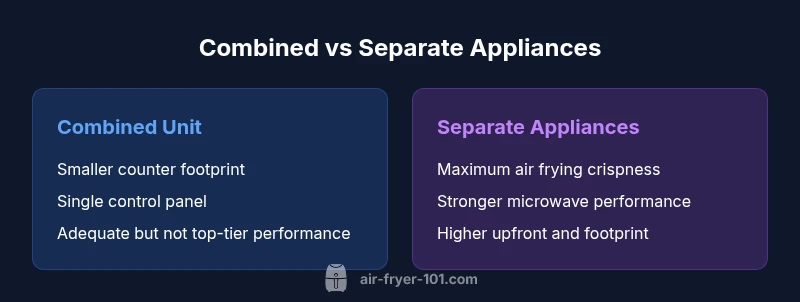
To decide, quantify your priority areas: space, budget, and performance needs. If counter space is the critical factor, a two-in-one might be compelling, especially in a studio or small apartment. If you need maximum air frying crispness or the most reliable microwave reheating, a separate setup is usually the better long-term choice. Create a simple decision matrix that scores each option on space, performance, capacity, cost of ownership, and warranty. This approach turns a fuzzy preference into a clear rationale for your kitchen layout and usage patterns.
How to read a spec sheet for a combined unit
Start with the basics: exterior dimensions, interior cavity size, wattage ratings for microwave and convection, and available presets. Then check construction and materials for durability and ease of cleaning. Look for a consistent temperature control range, uniform heating performance, and whether the microwave is a true inverter or a standard high/low power design. Finally, verify the warranty terms and the presence of a reliable customer support channel. A careful reading of specs helps you avoid surprise costs later on.
Comparison
| Feature | Combined Air Fryer + Microwave | Separate Air Fryer + Microwave | |
|---|---|---|---|
| Footprint on countertop | Smaller footprint due to a single unit | Larger footprint with two devices | |
| Power flexibility | Shared power management; potential limits on peak power | Independent power per device; higher peak performance possible | |
| Air frying performance | Adequate for everyday crisping, not top-tier | Dedicated air fryer typically delivers stronger crispness | |
| Microwave performance | Good enough for reheating/defrosting; not premium microwave power | Highest microwave performance with a dedicated unit | |
| Capacity | Typically smaller internal cavity for air fry function | Typically larger combined capacity per device (and two devices total) | |
| Maintenance | One surface to clean; combined controls may be more complex | Two devices require more cleaning time but separate components may be easier to dry | |
| Price range | Moderate price for a single unit | Higher upfront cost for two separate devices |
Pros
- Space-saving solution for small kitchens
- One interface for common tasks reduces learning curve
- Lower upfront clutter and fewer cords
- Budget-friendly entry point for basic versatility
- Ideal for single-user households or shared spaces
Cons
- Compromised performance versus dedicated devices
- Limited capacity may require batch cooking
- Fewer advanced presets and customization options
- Potential longer cooking times for some tasks
- Repair expenses can be higher if the unit fails and affects two functions
Combined units suit small spaces and casual cooks; separate devices win on performance and capacity
If space and convenience are your top priorities, a two-in-one unit is worth considering. If you routinely rely on peak air frying quality or large microwave capacity, separate appliances are usually the better choice and may offer longer-term value.
Got Questions?
What is a combined air fryer and microwave?
A combined unit merges air frying and microwave capabilities into a single appliance. It saves space but may trade off some performance compared to standalone models. Understanding your typical cooking tasks helps determine if this trade-off is acceptable.
A single appliance that does air frying and microwaving. It saves space but may not match dedicated devices in every task.
Are combined appliances worth it for small kitchens?
For very small kitchens or single-person households, a two-in-one unit can be a smart space saver. If your meals rely on crisp textures or large reheating needs, you may outgrow its capabilities faster than you expect.
Great for tiny kitchens, but think about your biggest cooking needs before buying.
Can you bake and roast with a combined unit?
Yes, many models include bake and roast options, but the quality and capacity can be limited by the combined design. Expect smaller batch sizes and shorter maximum temperatures than a dedicated oven.
You can bake and roast, but in smaller batches and with some limits.
How should I clean a two-in-one unit?
Unplug before cleaning. Remove any baskets or racks and wash with mild soap. Wipe the interior with a damp cloth after cooling. Avoid using abrasive cleaners on non-stick surfaces and follow the manual for any special parts.
Let it cool, then wash the baskets and wipe the interior gently.
What warranty considerations matter?
Check the warranty terms for both the microwave and air frying components. Look for coverage that includes replacement parts, electronics, and doors. Some brands offer separate coverage parts for the two functions, which can affect long-term support.
Look for solid coverage on both functions and easy access to service.
Quick Summary
- Assess your kitchen space before buying a two-in-one unit
- Prioritize models with robust air frying presets and reliable microwave power
- Check cavity size against your typical batch sizes
- Compare warranty coverage and expected lifespan
- Consider long-term maintenance when choosing between options