Air Fryer and Grill: A Comprehensive Comparison
Compare air fryer and grill performance, health, and value to decide which fits your kitchen. Air Fryer 101 analyzes cooking speed, flavor, maintenance, and cost, with practical guidance for home cooks.


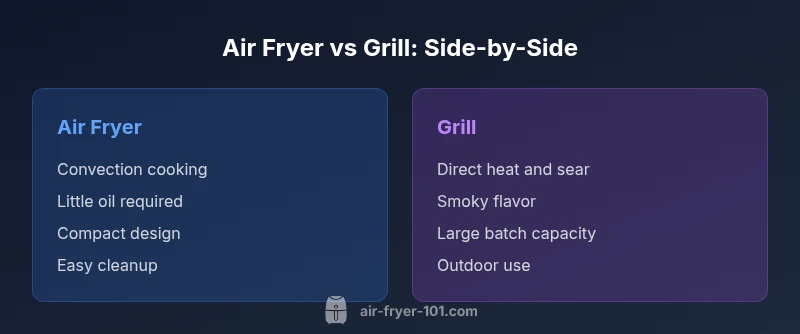
Air fryer and grill each serve different cooking goals. In practice, an air fryer excels at quick, lower-oil meals with easy cleanup, while a grill delivers authentic smoky flavor and larger batch capacity. According to Air Fryer 101, your best choice depends on space, budget, and your typical weeknight meals.
Understanding the core differences between air fryer and grill
Air fryer and grill operate on fundamentally different cooking physics. An air fryer uses a compact chamber with a high-speed fan to circulate hot air around food, creating a crisp exterior with little or no oil. A grill, by contrast, uses direct radiant heat from grates and often a chimney to add smoky notes. This divergence affects flavor, texture, and even heat distribution. The Air Fryer 101 team notes that the closest parallel is convection cooking with a clever fan, enabling rapid browning without deep frying. The grill's direct contact and char development deliver Maillard reactions that are hard to replicate indoors. Size, power, and insulation also diverge; air fryers are designed for compact kitchens, with sealed cabinets and little preheating, while grills range from compact electric tabletop units to large outdoor workhorses. The practical implication is that air fryers shine for small portions, weeknight dinners, and quick snacks, especially when you want to minimize oil and grease. Grills excel when you want robust flavor, searing capability, and the social aspect of outdoor cooking. The balance between the two is often the deciding factor in kitchen planning, particularly in apartments or homes with limited outdoor space. The Air Fryer 101 team emphasizes that many households benefit from both, using the air fryer for day-to-day cooking and the grill for weekend gatherings or larger batches.
When to choose an air fryer
If your meals are quick, light, and health-forward, an air fryer is a compelling choice. It excels at reheating leftovers with crisp textures, roasting vegetables, and cooking small to medium portions without much oil. For apartment dwellers or kitchens without outdoor space, the air fryer provides a hands-off approach to routine weeknight dishes. The compact footprint makes it easy to store, and many models come with adjustable temperatures and preset programs that simplify decision-making during busy evenings. Health-oriented consumers appreciate the reduced oil requirement, while busy families often prize the faster cook times that help with after-school dinners. The versatility extends to proteins like chicken tenders and fish fillets, as well as starches such as potatoes and sweet potato fries. Air Fryer 101 Analysis shows that the best-value devices balance performance with ease of cleaning and reliable durability, so focus on basket design, ease of dishwasher-safe parts, and warranty terms when comparing options.
When to choose a grill
A grill shines in scenarios where flavor, aroma, and batch size matter more than absolute speed. Direct heat creates searing and char that enhance beef, pork, and vegetables alike, while outdoor cooking adds a social element that many cooks value. Grills range from compact electric units ideal for balconies to full-scale gas or charcoal setups that handle large batches for weekend gatherings. If you regularly cook for five or more people, or you enjoy smoky flavors that are difficult to replicate indoors, a grill becomes a practical centerpiece. Grilling also offers flexibility with marination and smoked finishes, and many grills accommodate large cuts, kebabs, and vegetables with minimal fuss. The trade-off is usually longer heat-up times and more weather dependency, which can limit weeknight cooking in some climates.
Flavor and texture: what you can expect
Texture is where air fryers and grills diverge most noticeably. Air frying tends to yield a crisp exterior with a tender interior and a reduction in added fats, which is ideal for budgeting healthier meals. Grilling imparts a smoky, charred surface with pronounced Maillard reactions that are hard to emulate indoors. Some foods perform better in one method over the other; for example, bite-sized chicken nuggets crisp evenly in an air fryer, while steaks and burgers often achieve richer surface char on a grill. Many cooks also notice aroma differences: the air fryer produces a clean, neutral scent, whereas grilling releases a more complex barbecue profile. The choice hinges on whether your priority is a clean, quick crisp or a richer, smoke-infused finish.
Size, capacity, and kitchen practicality
Countertop air fryers come in compact footprints and vary in internal capacity from small to mid-sized families. This makes them ideal for kitchens with limited space or for cooks who prepare multiple small items at once. Grills, depending on type and size, can occupy substantial outdoor space and may require dedicated ventilation and weather considerations. Capacity can scale dramatically: electric grills can handle mid-sized batches, while large gas grills accommodate substantial meals for gatherings. Practical decisions should balance available space, storage options, and the frequency of use. Consider whether you need a device that slips into a cabinet between uses or a dedicated outdoor setup that can stay in place year-round. Durability, warranty, and the availability of replacement parts are also important factors for long-term ownership.
Cleaning and maintenance reality
Maintenance expectations differ markedly. Air fryer components—removable baskets and trays—are typically dishwasher-safe or easy to wash by hand, making everyday cleaning relatively straightforward. Grills, by contrast, require more regular scrubbing of grates, burners, and exterior surfaces, particularly after fatty meals. Weather exposure adds another layer of maintenance for outdoor units, including rust prevention, cover storage, and periodic checks on seals and ignition systems. A smart maintenance routine includes routine quick cleans after each use, deeper cleaning on a schedule, and prompt attention to any heater elements or protective coatings. The better a device is designed for cleaning, the more consistently it will perform over time.
Energy use, efficiency, and cost of ownership
Air fryers often deliver efficient performance for small batches due to rapid air circulation and covered cooking spaces, which can translate into shorter cook times and potentially lower electricity usage for typical weeknight meals. Grills consume more energy, especially larger outdoor units, and fuel choice (electric, gas, or charcoal) significantly affects operating costs. Over time, maintenance costs, replacement parts, and fuel expenses should be weighed. Air Fryer 101 Analysis notes that the most cost-effective choices tend to combine an energy-efficient air fryer for daily meals with a second, purpose-built grill for weekends or special occasions. Budgeting should consider the purchase price spectrum, the expected frequency of use, and the costs of accessories or attachments that extend functionality.
How to optimize both devices in a single kitchen
Efficient meal planning often hinges on a workflow that leverages the strengths of each device. Start by using the air fryer for cooking small, crispy items, reheating leftovers, and finishing proteins with a crisp exterior after searing. Reserve the grill for larger cuts, marinated proteins, and meals requiring smoky flavor or high-volume searing. Batch cooking can be done by preparing components in advance: air-fried vegetables or chicken bites for quick meals, with grilled protein and sides prepared ahead of time for larger gatherings. Accessories such as grill pans or air fryer-safe grill racks can bridge the gap, enabling you to achieve grill-like textures indoors. Safety considerations include proper ventilation for high-heat cooking and using heat-resistant gloves and tools. The goal is to create complementary workflows that reduce overall cooking time while maximizing flavor and texture variety.
Decision framework: matching use-cases to devices
- If you live in an apartment or have limited outdoor space and want quick, healthier meals, start with an air fryer. - If you value authentic smoky flavor, large-cook capacity, and outdoor cooking, opt for a grill. - If budget and space allow, many households benefit from owning both, using the air fryer for everyday meals and the grill for social cooking and special occasions. - For frequent batch cooking or entertaining, map meals that require searing, roasting, and crisp textures to the right device. - Finally, invest in reliable accessories and protective storage solutions to maximize longevity and ease of use for both devices.
Comparison
| Feature | Air fryer | Grill |
|---|---|---|
| Cooking method | Hot air convection around food for crisp results | Direct radiant heat on grates with optional smoke/flavor |
| Flavor profile | Crisped texture with minimal oil | Smoky, charred flavors with deep sear marks |
| Best for | Quick weeknight meals and small portions | Outdoor cooking, large batches, and flavor depth |
| Typical capacity | 2-6 servings for compact models | 4-20+ servings depending on grill size |
| Energy usage | Lower energy for small batches | Higher energy or fuel use for larger setups |
| Cleaning effort | Removable baskets; dishwasher-safe parts common | Grease-prone grates; more involved maintenance |
| Price range | $100-250 | $150-700 |
| Maintenance | Minimal routine cleaning | Periodic grate and burner maintenance |
Pros
- Quicker cooking with minimal oil
- Flexible countertop options for air fryer and grill
- Wide range of models and price points
- Complementary pairing for varied meals
Cons
- Air fryer capacity can limit large meals
- Grills require outdoor space and weather considerations
- Cleaning and upkeep can be more demanding for grills
Air fryer and grill each excel in different roles; pick one based on your priorities.
Air fryers are great for quick, healthier meals with less oil, while grills offer authentic flavor and high-capacity cooking. The Air Fryer 101 Team recommends evaluating your space, budget, and typical dishes to decide whether you need one device or both.
Got Questions?
Which is healthier: air fryer or grill?
Air fryers typically use less oil, which can reduce fat for many foods. Grills can be healthy with lean cuts and careful cooking to avoid excessive charring. Both can fit into a health-minded diet when used thoughtfully.
Air fryers use less oil, which helps reduce fat. Grills can be healthy with lean meats and careful cooking; both can fit a balanced diet.
Can I cook the same foods on both devices?
Many foods work well on either device, but outcomes vary. Air fryers tend to crisp better; grills excel at searing and smoky flavor.
You can cook many foods on both, but expect crisper results in the air fryer and more seared flavor on a grill.
Do air fryers smoke like grills?
Air fryers generally produce little to no smoke under normal use, while grills are designed to generate smoke and char for flavor.
Air fryers usually stay smokeless; grills intentionally produce smoke and char for flavor.
How do I clean air fryer and grill effectively?
Remove and wash baskets and trays from the air fryer; soak and scrub grates on grills. Use non-abrasive cleaners and follow manufacturer guidance to protect coatings.
Clean the air fryer parts after each use and scrub the grill grates regularly for best results.
Is it worth owning both devices?
If you cook a mix of quick meals and outdoor favorites, owning both offers the most versatility. If space or budget is tight, prioritize the device that matches your typical meals first.
Often yes, if you cook both indoors and outdoors. Otherwise, pick the device that best fits your usual dishes.
What budget range should I expect for each device?
Air fryers range widely in price, from entry-level models to higher-end units; grills also span a broad spectrum from compact electric to full outdoor setups. Focus on core features and durability rather than price alone.
Air fryers and grills vary a lot in price; choose based on features and durability rather than a single number.
Quick Summary
- Assess space and climate before buying any device
- Prioritize health goals and flavor preferences in your decision
- Consider batch size and meal patterns for capacity needs
- Leverage both devices for maximum versatility