How to Clean an Air Fryer with Vinegar: Step-by-Step
Discover how to clean an air fryer with vinegar safely and effectively. This educational guide covers prep, ratios, step-by-step cleaning, maintenance tips, and common questions for healthy, appliance-friendly results.


Unplug and cool your air fryer, then clean with a vinegar-water solution to cut grease and deodorize. Remove the basket and pan, wipe the interior with a damp cloth, soak the basket in vinegar solution for five to ten minutes, rinse, dry, and reassemble. This gentle, food-safe method uses common ingredients and minimizes chemicals.
Why vinegar is a practical choice for cleaning the air fryer
Vinegar is a practical, budget-friendly cleaner for many kitchen appliances, including air fryers. If you are looking to clean a clean air fryer with vinegar effectively, this approach minimizes harsh chemicals while preserving taste and appliance longevity. According to Air Fryer 101, white vinegar's acidity helps dissolve baked-on grease and neutralize odors without leaving behind toxic residues. When used in a diluted form, it is gentle on most nonstick coatings and metal finishes. The chemistry is simple: acetic acid breaks down fats, and the fresh smell helps you know the unit is drying out after use. The trick is to avoid soaking electronic components and to ensure you never submerge the base in water. With careful technique, vinegar cleaning delivers a quick refresh, reduces scrubbing time, and keeps your air fryer ready for healthier meals.
Pre-clean prep and what to remove before you start
Before diving into cleaning, power off the unit and let it cool completely. Remove all detachable parts—the basket, pan, and any racks. This gives you full access to the interior surfaces and makes soaking easier. Avoid getting liquids into the exterior vents or control panel. If your model has a non-removable interior insert, plan for a gentler wipe-down rather than full submersion. Having the right setup ready saves time and reduces the risk of damage during cleaning. As you prep, lay out towels and a clean workspace to catch drips and protect countertops.
The vinegar cleaning solution and safety tips
A simple vinegar solution balances effectiveness with safety. Mix one part white vinegar with one part water in a shallow dish or spray bottle. This 1:1 ratio is enough to loosen grease without leaving strong odors or harming surfaces. Do not mix vinegar with bleach or other cleaners, and never pour liquids directly into the main unit; always use a damp cloth for interior cleaning. Wear gloves if you have sensitive skin and ensure good ventilation as the unit air-dries. If your air fryer has a nonstick coating, avoid abrasive scrubbers that could scratch the surface.
Interior cleaning: wipe, soak, and rinse
Start by wiping the interior walls with a microfiber cloth lightly dampened with the vinegar solution. For stubborn spots, dampen a sponge and gently scrub in circular motions. For ceiling and corners, a soft brush can dislodge built-up residue. After an initial wipe, you may soak removable components in the same vinegar solution for five to ten minutes to loosen residue more effectively. Rinse thoroughly with clean water to remove any vinegar traces, then dry with a clean towel before reassembly.
Basket and tray care: soaking, scrubbing, and drying
The basket and tray often bear the brunt of cooking spray and oil. Soak them in the vinegar solution for five to ten minutes to soften grease, then use a non-abrasive sponge to scrub away residue. Rinse under warm running water and dry completely with a soft towel. If you notice hard-to-remove spots, a second light soak followed by gentle scrubbing should do the trick. Ensure there are no water droplets on metal edges before reassembling.
Deodorizing and reassembling: final checks
After washing, give the interior a final wipe with a clean, damp cloth to remove any lingering smell of vinegar. Allow all parts to air-dry completely—about 30 minutes in a warm, dry spot—before reassembling. Reconnect the power and run a short test cycle with water to confirm no rinse water remains and that the unit operates normally. Regularly cleaning with vinegar can reduce odors from future cooking and preserve the appliance’s life.
Routine maintenance and when to deep-clean
In busy kitchens, a light clean every week or two helps prevent buildup. If you notice lingering smells, smoke, or visible grease, perform a deeper cleaning using vinegar as described above and inspect gaskets and seals for signs of wear. Keep a cleaning calendar to track when you last cleaned the interior and baskets. This routine maintenance minimizes stubborn buildup and keeps your air fryer performing at its best.
Tools & Materials
- White vinegar(Food-safe cleaning agent; use standard household vinegar)
- Water(Dilution partner for vinegar solution)
- Microfiber cloths(For interiors and exterior wipe-downs)
- Non-abrasive sponge(Gentle scrubbing on stubborn spots)
- Small dish or spray bottle(Hold or dispense vinegar solution)
- Toothbrush or small cleaning brush(For tight corners and crevices)
- Dish soap (optional)(For extra grease if needed)
- Drying towel(Pat dry and remove moisture)
Steps
Estimated time: 20-30 minutes
- 1
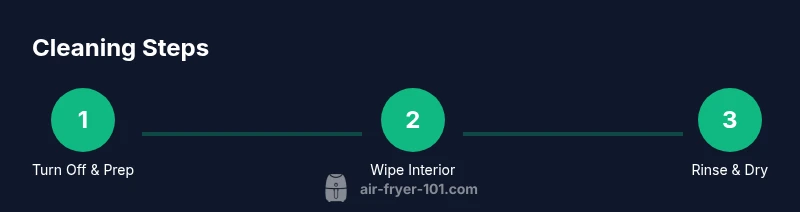
Power off and cool
Unplug the unit and allow it to cool completely before handling. This prevents burns and protects electronics. Do not immerse the base in water.
Tip: Always start with a cold, unplugged unit to avoid accidents. - 2
Remove detachable parts
Take out the basket, pan, and any racks. This gives full access to every surface that collects grease.
Tip: Place parts on a towel to catch any drips. - 3
Prepare vinegar solution
Mix equal parts white vinegar and warm water in a bowl or spray bottle. A warm solution cleans more effectively than cold.
Tip: Use warm water for faster grease loosening. - 4
Wipe interior with solution
Dampen a microfiber cloth with the solution and wipe the interior walls. Avoid soaking electronic components.
Tip: Wipe in a circular motion to lift residue. - 5
Soak and scrub removable parts
Soak the basket and pan in the solution for five to ten minutes, then scrub gently with a non-abrasive sponge.
Tip: For stubborn spots, use a soft brush rather than metal scrubbers. - 6
Rinse and dry
Rinse all parts with clean water and dry thoroughly with a towel. Ensure no moisture remains in crevices.
Tip: Drying completely prevents steam buildup during next use. - 7
Reassemble and test
Put the basket and tray back, then run a short test cycle with water to verify cleanliness and operation.
Tip: Check that no vinegar smell lingers after the test run. - 8
Final interior wipe-down
Do a final wipe around the interior with a damp cloth to remove any remaining residue and ensure a neutral scent.
Tip: A quick final pass keeps odors at bay between uses.
Got Questions?
Is vinegar safe to use on non-stick air fryer surfaces?
Yes, when diluted and used with non-abrasive methods, vinegar is generally safe for non-stick coatings. Avoid abrasive scrubbing that could scratch the surface.
Yes, but dilute it and avoid scrubbing the coating aggressively.
Can vinegar damage my air fryer’s electronics?
Keep liquids away from the control panel and electrical contacts. Wipe the interior with a damp cloth rather than pouring liquid inside.
Avoid getting liquids near electronics; wipe the interior with a damp cloth only.
How often should I clean my air fryer with vinegar?
Do a light wipe-down after each use and a deeper clean every 1-2 weeks, or as needed when you notice buildup or odors.
Clean lightly after each use and do a deeper clean every couple of weeks.
What if the vinegar smell lingers after cleaning?
Rinse again with clean water, dry thoroughly, and run an empty cycle with plain water to vent the aroma.
Rinse again, dry, and run a water cycle to air out the scent.
Is lemon juice a good substitute for vinegar?
Lemon juice can deodorize but may leave a citrus scent. Vinegar is more neutral and generally more effective for grease removal.
Lemon can deodorize, but vinegar is more neutral and effective for grease.
Can I use vinegar to deodorize every model?
Most standard air fryer models tolerate vinegar cleaning when applied to removable parts. Always consult your manufacturer’s guidelines for specific model cautions.
Most models are fine with vinegar on removable parts; check your manual for specifics.
Watch Video
Quick Summary
- Use a 1:1 vinegar-to-water solution for most interiors.
- Avoid soaking the main unit; focus on detachable parts and surfaces.
- Rinse and dry thoroughly to prevent future odors.
- Regular light cleaning reduces heavy buildup over time.