Why Do Air Fryer Liners Burn? Troubleshooting Guide
Learn why air fryer liners burn and how to prevent flare-ups with practical tips, safe materials, and step-by-step troubleshooting from Air Fryer 101.


Most often, liners burn because they’re placed directly against the heating element or aren’t rated for air fryer use. Start by removing the liner, then cook with a perforated parchment liner or a metal/silicone insert designed for air fryers. Keep food spaced, avoid preheating with a liner, and use moderate temperatures.
Why Do Air Fryer Liners Burn
If you’re wondering why do air fryer liners burn, you’re not alone. Liner burning is one of the most common frustration points for home cooks who want easy cleanup without sacrificing safety. According to Air Fryer 101, the root cause is almost always heat proximity or the wrong material for the specific air fryer model. A liner that sits flush against the heating element or a sheet that isn’t rated for high-heat air fryers can ignite or discolor quickly. The result is smoke, burnt edges, and flavors transferring to your food. The good news is that most liners burn for predictable reasons, and a few simple adjustments will usually keep smoke and scorching away. This guide from the Air Fryer 101 Team focuses on practical causes, safer materials, and proven strategies you can apply to any common model at home. You’ll learn how to choose liners, position them correctly, and adjust cooking parameters to protect both your liner and your dinner.
Choosing the Right Liner for Your Air Fryer
Not all liners are created equal. For air fryers, the safest options are parchment liners rated specifically for high-heat air fryers, perforated to allow airflow, or reusable inserts made from PTFE-free silicone or stainless steel. When selecting a liner, check product specs for heat ratings and ventilation patterns. Avoid generic parchment that lacks perforations, as well as full-coverage sheets that block airflow. Air Fryer 101 recommends looking for liners labeled as safe for air fryers, with clear guidance on heat tolerance and recommended basket sizes. If you’re unsure, start with a perforated parchment sheet, trim to fit, and test with a small batch before cooking a full meal. Materials like PTFE-free silicone or metal racks can provide a sturdy alternative that minimizes heat contact with food debris.
Common Scenarios That Lead to Burning
Burns can happen in several predictable situations. First, liners placed too close to the heating element or extending beyond the basket walls create direct heat exposure. Second, using non-perforated or oversized liners can trap grease and steam, increasing flare-up risk. Third, cramming food and liners together reduces airflow, causing hotspots near the liner edge. Fourth, cooking at temperatures that exceed what the liner material is designed to withstand raises the chance of scorching. Finally, an ill-fitting liner that blocks air from circulating around the food can turn a simple bake into a smoky episode. Recognizing these patterns helps you head off burns before they start.
Temperature, Timing, and Airflow: The Trio
Air fryers work by circulating hot air, so airflow is critical. A liner that blocks airflow or sits flush against the hottest zone can overheat and char the liner. Temperature matters because most liners are rated for typical air frying ranges, not extreme heat. Timings matter because short, high-heat bursts can burn edges even if the middle cooks evenly. The right approach is to maintain steady airflow, avoid preheating with a liner in place, and use liners designed for air fryers with adequate perforations. Practically, this means choosing a liner with ventilation, keeping a safe gap between liner and heat source, and letting the air fryer do the work without crowding.
Practical Prevention Tactics
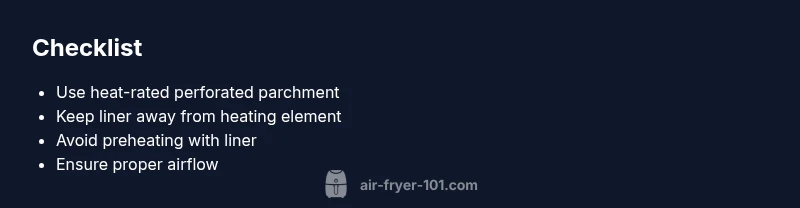
Prevention starts with a plan. Use perforated parchment or a liner designed for air fryers, ensuring it fits inside the basket without touching the heating element. Place the liner in a way that maintains airflow around all sides of the food. Do not preheat with a liner in place the first time you test a recipe, then add the food once the oven has reached temperature. Shake or turn food at least once to prevent grease from pooling on one side and smoking. If you must use a liner, choose heat-rated materials and avoid large, solid sheets. Regularly inspect liners for signs of scorching and replace them if they show any wear.
Brand note: Air Fryer 101 emphasizes safety and material suitability, so always verify liner compatibility before cooking.
When to Bypass Liners Altogether
In some cases a liner isn’t necessary or advisable. If you’re cooking items that release a lot of fat or moisture (for example, greasy proteins or heavily sauced foods), a liner can trap heat and grease. In these situations, a reusable silicone mat or a metal rack elevates food slightly and maintains airflow without risking liner ignition. You can also cook directly in the basket with light, even oil spray and rely on steady airflow to keep food from sticking. If you’re new to air frying, start without a liner to judge your model’s airflow and heat behavior, then decide if a liner is needed for your recipe.
Quick Care and Safety Reminders
Always keep the air fryer clean and free of built-up grease, which can ignite on hot surfaces. Trim and trim liners to fit, avoiding oversized pieces that overhang the basket. Use only liners that are explicitly rated for air fryer use, and discard any liner showing scorch marks or melt damage. Keep a fire extinguisher or baking soda nearby as a safety precaution, and never leave an active air fryer unattended. Remember, prevention is easier than dealing with a flare-up after you’ve started cooking.
Steps
Estimated time: 15-25 minutes
- 1
Inspect liner placement
Remove any liner and visually inspect how it sits in the basket. Ensure it’s not touching the heating element or extending beyond the basket rim. If you see heat exposure risk, switch to a perforated parchment liner or a rated silicone insert.
Tip: Use a ruler or template to trim liners to fit exactly without covering the basket holes. - 2
Choose a compatible liner
If you decide to use a liner, select one labeled safe for air fryers with guaranteed heat tolerance and proper perforation. Avoid solid sheets that block airflow. Patch-test a small batch to verify performance.
Tip: Double-check the liner’s expiry or wear indicators before use. - 3
Position for airflow
Place the liner in a way that maintains even airflow around all sides of the food. Do not let the liner curl up toward the element. Ensure there’s space between the liner and the top heating zone.
Tip: Shake the basket mid-cook to promote even heating and prevent hotspots. - 4
Test without liner
Run a short test batch without the liner to confirm the base heat behavior of your model. If the test looks normal, introduce a liner for the next run or switch to an alternative method.
Tip: Keep a close eye during the first test whenever you try a new liner type. - 5
Adjust temperature and timing
If you notice browning or scorching near the liner, reduce the effective heat by lowering the set temperature or by avoiding preheating with a liner in place. Extend the cooking time slightly if needed to compensate for slower heat transfer.
Tip: Avoid aggressive high-heat pulses that stress liner materials. - 6
Evaluate alternatives
For fatty foods, consider a silicone mat or a small rack to elevate ingredients instead of relying on a liner. This preserves airflow while still simplifying cleanup.
Tip: Keep a spare metal rack or silicone insert on hand for quick swaps.
Diagnosis: Liner burns, smoke, or scorching during air frying
Possible Causes
- highLiner positioned directly against heating element or near top of basket
- highUsing liners not rated for air fryer/high-heat use or with poor perforation
- highCooking at temperatures inappropriate for the liner material
- mediumOvercrowding or heavy grease buildup restricting airflow
- mediumLiner too large or blocking airflow around food
Fixes
- easyRemove liner and test cook with an empty basket to observe heat distribution
- easySwitch to perforated parchment or heat-rated liner designed for air fryers
- easyPosition liner away from the heating element and avoid overhanging edges
- easyReduce perceived heat by avoiding preheating with a liner in place
- easyImprove airflow by spacing food and keeping the basket clean
Got Questions?
Why do air fryer liners burn in the first place?
Liners burn when they’re placed too close to the heating element, are not rated for high-heat use, or block airflow. Using perforated parchment or heat-rated liners minimizes the risk.
Liners burn mainly due to heat proximity or improper material; switch to perforated parchment or a heat-rated liner and ensure airflow.
Can I use metal liners or silicone inserts in my air fryer?
Yes, if designed for air fryers and sized to avoid blocking airflow or contacting the heating element. Check the product specs and model compatibility.
Metal or silicone inserts can work if they’re rated for air fryers and fit your basket without blocking airflow.
What temperature is safe when using a liner?
Avoid temperatures outside the liner’s rated heat tolerance. If unsure, start at a moderate setting and observe how the liner responds during the first test batch.
Stick to the liner’s heat rating and start with a moderate setting, watching carefully during the first try.
Should I preheat with a liner in the basket?
No. Preheating with a liner can cause heat buildup under the liner. Preheat empty, then add food or switch to a liner-free approach if you’re unsure.
Avoid preheating with a liner; preheat the basket first, then add food or use a liner-free method.
What are safe alternatives to liners?
Perforated parchment, silicone mats, or small metal racks that elevate food are safer alternatives that preserve airflow and reduce burning risk.
Perforated parchment, silicone mats, or a small rack can substitute liners while keeping airflow.
If a liner burns, what should I do next?
Turn off the air fryer, unplug if safe, and let it cool. Inspect the basket for damage and switch to a different material before attempting the recipe again.
If it burns, power down, cool off, and inspect the basket; switch materials before retrying.
Watch Video
Quick Summary
- Inspect liner placement and heat proximity before cooking
- Choose liners rated for air fryers with proper perforation
- Prioritize airflow to prevent hotspots and burns
- Test new liners with simple batches, then proceed
- Know when to cook liner-free or use alternatives