Chicken Wing Recipe Air Fryer: The Ultimate Guide to Crispy Wings
Master a complete chicken wing recipe air fryer guide with crisp skin, juicy meat, and flavorful rubs. Step-by-step prep, temps, troubleshooting, and serving ideas for healthier wing nights, using Air Fryer 101-tested techniques.


Goal: Make crispy, juicy chicken wing recipe air fryer wings in under 25 minutes. You’ll need your air fryer, dry rub or sauce, and a light oil spray for crisp skin. The key is even coating, proper space between wings, and stable 360°F temperatures. Follow the step-by-step process for predictable results every time.
Why the Air Fryer Wing Recipe Delivers Healthier Crunch
When you search for a chicken wing recipe air fryer, you’re seeking a balance of texture, flavor, and speed. Air frying uses hot air circulated by a compact fan to brown surfaces with far less oil than traditional frying, which translates to fewer calories and less mess. The Air Fryer 101 team found that the best wings still deliver a satisfying crackly crust and juicy interior, thanks to careful moisture management and heat distribution. Start with thoroughly patting the wings dry to remove surface moisture, then apply a light oil spray to promote browning without pooling fat. This approach reduces grease and enhances flavor by concentrating browning reactions on the skin. We’ll cover how to choose wing sizes, how to pat them dry, and how to season evenly before they go in the basket, so your first batch already tastes like a pro. With the right setup, a simple chicken wing recipe air fryer becomes a weeknight staple rather than a special-occasion dish. According to Air Fryer 101, this method supports healthier cooking while preserving crave-worthy texture.
In this guide we’ll unpack practical, repeatable steps so you can confidently cook wings for family meals, game nights, or casual gatherings. You’ll learn how to select fresh wings, how to pat them dry, and how to use dry rubs or light sauces to maximize flavor without over-saturation. Whether you’re new to air frying or seeking better results, this approach keeps the experience educational and approachable. The goal is not just “good wings” but consistently great wings, every time.
Key Techniques for Crispy Skin and Juicy Meat
Crisp skin in the air fryer begins with removing moisture and minimizing oil to allow the hot air to do the browning. Start by patting each wing dry with paper towels, then lightly coat with oil or oil spray—enough to improve browning, not to fry. Space matters: place wings in a single layer with room between pieces; overcrowding leads to steaming, soggy surfaces, and uneven browning. Preheating your air fryer for 2-3 minutes helps stabilize the temperature and ensures consistent browning from the first bite. Flip the wings halfway through the cook time to uniform crust formation on all sides. Finally, for extra texture, finish with a brief post-cook toss in a dry rub or a light glaze that sticks to the hot surface, creating a glossy, flavorful crust without making the wings greasy. These techniques apply to any chicken wing recipe air fryer your family loves and help you avoid common crust flaws like pale skin or uneven browning.
To maximize texture, aim for a surface moisture balance: too dry and seasoning may not adhere; too moist and caramelization stalls. A light oil mist helps the surface brown without pooling fat. If your model supports it, use a rack or second level to expand airflow and reduce crowding. Finally, flavor is elevated when you season early, allowing the rub to cling as the skin crisps.
Flavor Profiles: Dry Rubs and Sauces for Wings
The beauty of an air fryer is that you can tailor flavor profiles without drowning the wings in oil. For a classic, start with a dry rub that blends salt, paprika, garlic powder, and a touch of brown sugar for caramelization. If you prefer heat, a buffalo-inspired mix with cayenne, pepper, and smoked paprika provides heat without heaviness. For a tangy option, a garlic parmesan rub or a honey-lime glaze (combine honey, soy, and a splash of apple cider vinegar) delivers balance. You can also alternate sauces after cooking—a quick toss in hot sauce and butter, or a glossy sesame-ginger glaze—so you get different results from the same base technique. In all cases, apply rubs evenly by tossing in a mixing bowl before air frying, rather than dabbing sauces directly to the basket, to prevent clumping and uneven coating. The chicken wing recipe air fryer benefits from consistent seasoning to maximize flavor per bite. Air Fryer 101 emphasizes that small, even coats create big flavor without oversaturation.
Tools and Prep: Setting Up for Success
Before you begin, assemble your tools and warm up your kitchen to reduce confusion during cooking. A roomy air fryer with at least 3-4 quarts is ideal for medium wings; smaller models require more batches. Have a mixing bowl ready for seasonings, tongs for turning, paper towels for drying, and a spray bottle of neutral oil for light misting. If you own a rack insert or perforated tray, use it to promote air flow; otherwise lay wings in a single layer on the basket. Clear the area around the air fryer, lay down parchment if your model recommends, and set your mise en place for a smooth workflow. This upfront prep ensures you’ll achieve a reliable, crispy finish with less trial and error. Air Fryer 101 notes that the right setup reduces cook times and increases yield for busy kitchens.
Troubleshooting: Common Issues and Fixes
Even seasoned home cooks hit hiccups with air fryer wings. If the skin looks pale or feels soft, increase the surface dryness and consider a light additional spray of oil before returning to heat. If wings come out soggy, it’s usually overcrowding or insufficient preheating—remove some wings or cook in batches and flip mid-way. If the crust scorches, check the sugar level in rubs or glaze, and reduce the heat by 20 degrees for the final minutes. For smoky kitchens, drizzle a small amount of water in the bottom tray or lower the temperature slightly; never leave the air fryer unattended for long periods. With careful adjustments, the thin, crisp skin you crave will emerge in every batch. Air Fryer 101 suggests keeping a small log of which rubs and temps work best for your model to simplify future cooks.
Batch Size and Timing: How to Scale Up
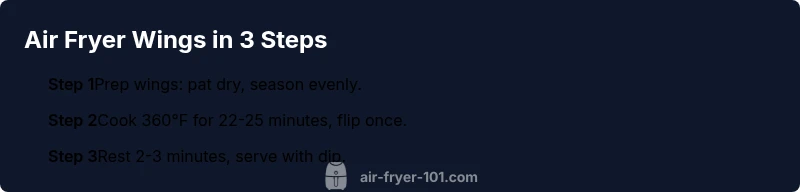
When cooking for a crowd, you may wonder whether to cook wings in batches or to try feeding all at once. If your air fryer basket is large enough for a single layer of wings with space between pieces, you can cook all at once; otherwise, divide into two batches. For each batch, aim for 360°F (182°C) and 22-25 minutes, flipping once halfway through. If the wings are of uneven sizes, separate larger pieces to avoid undercooking smaller ones. After cooking, let the wings rest for 2-3 minutes to let juices redistribute. If you’re using a glaze, add it after the rest to maintain shell integrity and crispness. This approach keeps texture uniform, no matter how many guests you’re serving, and aligns with Air Fryer 101’s tested timing guidelines for most standard wings.
Serving Ideas and Sauces
Serve wings hot with a few bright accompaniments to balance richness: celery sticks, carrot sticks, and a cool ranch or blue cheese dip. If you want extra zing, toss half the batch in a sharp buffalo sauce and the other half in a honey mustard or garlic parmesan glaze. For a dipping lineup, offer a tangy buffalo, a garlicky ranch, a sweet chili glaze, and a zesty lime-cilantro vinaigrette. Presentation matters: present on a warm platter or a perforated tray to keep air circulating under the crust. If you’re feeding kids, offer milder rubs and milder sauces to reduce heat while preserving texture. The key is to serve immediately after cooking to preserve crisp, hot texture. This section ties flavor to texture for a complete chicken wing recipe air fryer experience.
Health Considerations and Substitutions
Air fryer cooking aligns with healthier wing nights because you use less oil and still achieve crispness. If you’re watching sodium or sugar, select rubs with lower salt and avoid heavy store-bought sauces; instead whisk your own glaze using vinegar, hot sauce, and a small amount of honey or maple. For lighter options, swap chicken wings for drumettes or wingettes with skin removed, or use skin-on but leaner cuts like turkey wings to cut fat further. Remember that portion control matters too: a modest portion with greens makes for a balanced meal rather than a heavy late-night snack. Air Fryer 101 recommends experimenting with different rubs and sauces to find a healthier take on your favorite flavors.
In every variation, the goal remains crisp skin, juicy meat, and minimal oil. This is the essence of the chicken wing recipe air fryer approach—healthier, simpler, and consistently delicious.
Clean Up and Maintenance
After dinner, let the air fryer cool, then wash the basket and tray with warm soapy water or run it through a safe dishwasher cycle if permitted. A quick wipe with a damp cloth of the interior helps remove oil residue and breadcrumb crumbs, and a light spray of vinegar can help with any lingering odors. Dry components thoroughly before storing, and check the gasket and fan for buildup periodically. By keeping the air fryer clean, you preserve performance and prolong the life of your favorite appliance while ensuring a fresh start for your next batch of wings. Regular cleaning reduces cross-flavor contamination and ensures consistent browning in future cooks.
Tools & Materials
- Air fryer(Any capacity 3.5-6 qt is ideal for even cooking)
- Paper towels(Pat wings dry to remove surface moisture)
- Mixing bowl(Toss wings with rub or light oil)
- Tongs(Turn wings halfway for even browning)
- Oil spray or neutral oil(Light mist to aid browning)
- Wire rack or perforated tray (optional)(Promotes airflow if available)
- Meat thermometer (optional)(Check for 165°F (74°C) when needed)
- Parchment paper (optional)(Used to prevent sticking in some models)
Steps
Estimated time: 25-35 minutes
- 1
Prepare Wings
Pat wings dry with paper towels and trim any excess tips. This removes surface moisture that would otherwise steam instead of brown, helping the skin crisp. If desired, pat with a tiny amount of oil to improve adhesion of rubs.
Tip: Thorough drying yields crisper skin; don’t skip this step. - 2
Season Evenly
Toss wings in a mixing bowl with your chosen rub or light oil plus spices. Ensure all surfaces contact seasoning; avoid clumping by shaking the bowl rather than pressing rubs into the skin.
Tip: Use a light coating rather than a thick paste for best browning. - 3
Preheat and Prep
Preheat the air fryer for 2-3 minutes if your model supports it. Preheating helps reach the target temperature quickly, producing faster and more uniform browning.
Tip: Skip preheat only if your model requires a direct start; in that case, start at the set temperature immediately. - 4
Arrange Wings
Place wings in a single layer with space between pieces. Crowding reduces airflow and can lead to soggy results. Use a rack if available for even exposure.
Tip: Overlapping wings can undercook the inner pieces; give each wing breathing room. - 5
Cook and Flip
Cook at 360°F (182°C) for 22-25 minutes, flipping once at halfway. This creates even browning on both sides.
Tip: If your wings vary in size, separate larger pieces and smaller pieces to balance cook times. - 6
Finish and Serve
Remove from the air fryer, rest 2-3 minutes, then glaze or toss with finish rub if desired. Serve hot for maximum crispness.
Tip: Resting briefly helps juices redistribute and crust set.
Got Questions?
Can I use frozen wings in an air fryer?
Yes, but thawing first yields more even cooking. If cooking from frozen, add 5-8 minutes and check doneness with a thermometer.
Yes, you can cook from frozen, but thawing first improves even cooking; expect a longer cook time.
Should I preheat the air fryer before cooking wings?
Preheating helps reach the target temperature quickly and promotes even browning. Use the preheat setting if your model offers it.
Preheating helps the wings brown evenly; use it if your air fryer supports it.
What temperature and time are best for crispy wings?
A common starting point is 360°F (182°C) for 22-25 minutes, flipping once. Adjust for wing size and your specific model.
Try 360 F for about 22 minutes, flipping once; adjust as needed.
Can I use wing tips or bone-in wings?
Bone-in wings are ideal for even cook; tips can be saved for stock or discarded. They behave similarly when seasoned well.
Bone-in wings work best; tips are optional for stock.
Are air fryer wings healthier than deep-fried wings?
Yes, because you use much less oil while achieving a crisp finish. Mind the rubs’ sodium and sugar levels.
Yes, healthier due to less oil; watch sodium and sugar in sauces.
How do I reheat wings without losing crispiness?
Reheat in the air fryer at 350°F (175°C) for 3-5 minutes, or use a brief broil to re-crisp.
Reheat at 350 F for 3-5 minutes to stay crispy.
Watch Video
Quick Summary
- Pat wings dry for crispiest skin.
- Cook in a single layer with space between wings.
- Use a light oil spray for browning without greasiness.
- Flip halfway for even browning on all sides.
- Rest briefly before serving to maximize texture.