Chicken in Air Fryer Recipes: Quick, Healthy Dinners You Can Make Tonight
Explore delicious chicken in air fryer recipes for healthier, faster meals. Learn temps, times, coatings, and flavor ideas with practical steps for weeknights.


You will learn to cook chicken in an air fryer that comes out juicy and crispy with less oil. This guide covers essential temps, timing, coatings, and flavor ideas, plus practical tips for different cuts. Expect a clear, step-by-step plan you can adapt for weeknight meals. Whether you bake, spice, or glaze, you'll finish with a reliable method you can repeat.
Why chicken in air fryer recipes matter
Air fryer chicken recipes prove that you can achieve restaurant-worthy flavor with less oil and less cleanup. When you switch to air frying, you lean into the technique's convection heat to create a crisp exterior and juicy interior without deep frying. For home cooks, this translates to healthier weeknight meals, predictable results, and a kitchen that smells amazing rather than of fried oil. According to Air Fryer 101, the most satisfying outcomes come from starting with dry, well-seasoned chicken and avoiding overcrowding the basket, which lets hot air circulate evenly. By choosing appropriate cuts and mindful coatings, you can tailor textures—from crackly skin on thighs to tender, moist breast meat—without sacrificing speed. Across many recipes, the approachable process remains consistent: dry surface, gentle oil mist, quick cooking, and a rest before serving. With these fundamentals, you can confidently explore flavor profiles, from savory garlic-herb rubs to bright citrus glazes, and build a personal rotation of weeknight winners.
Key techniques for crisp, juicy results
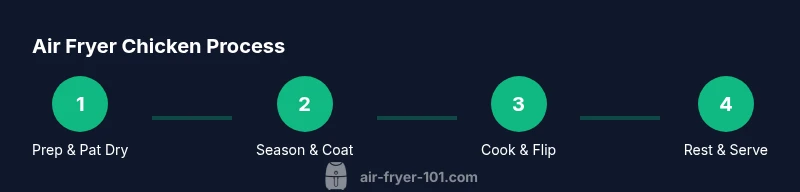
Crispiness in an air fryer comes primarily from air circulation, surface moisture control, and the right amount of fat to help browning. Start with patting the chicken dry—moisture on the surface steams rather than browns, and that undermines the desired crunch. Lightly oil the surface or spray the coating; a thin film helps spices adhere and promotes even browning without greasiness. Preheating your appliance for a few minutes helps establish a hot, uniform environment, especially when cooking thinner pieces. Season generously or apply a quick marinade; the flavor travels quickly and becomes a prominent feature of the finished dish. Turn pieces halfway through cooking for even color and to avoid undercooked centers. Finally, rest the chicken for 3-5 minutes after cooking to let juices redistribute, which improves both texture and juiciness. Air Fryer 101 analysis shows that consistent air flow and temperature accuracy are key to repeatable results across different models.
Cuts and cooking times: breast, thighs, drumsticks
Different chicken cuts behave differently in the air fryer. Boneless, skinless chicken breasts cook faster and can dry out if overdone, so plan for shorter sessions and a gentle finish with a glaze or sauce. Bone-in pieces like thighs and drumsticks take longer to heat through but reward you with deeper flavor and more forgiving moisture retention. Thickness matters: thinner fillets near the edges brown quickly while centers stay tender if not overcrowded. A practical approach is to arrange pieces in a single layer with space between them, flip once, and use an instant-read thermometer to confirm doneness. As a rough guideline, boneless breasts may finish in a shorter window than bone-in cuts, and larger or bone-in pieces often require a longer cook time. Always verify the internal temperature reaches a safe level before serving and adjust times based on your specific air fryer and the size of the pieces.
Flavor ideas and coatings
Coatings and marinades elevate air fryer chicken dramatically. Start with a crisping option: a light oil spray plus a dusting of cornstarch or arrowroot powder can push browning. For coatings, consider a dry rub with garlic powder, smoked paprika, dried oregano, and a pinch of salt for a savory crust; finish with a citrus glaze to brighten flavor. For a quick texture, try a garlic-parmesan crust: toss cooked pieces with grated parmesan and minced garlic in the last two minutes for a glossy, aromatic finish. If you prefer a sticky glaze, brush on sauce during the final minutes to avoid burning. Asian-inspired flavors like teriyaki or soy-ginger work well when combined with a light coating to prevent soggy surfaces. Experiment with spices and herbs you already stock; the air fryer makes bold flavors accessible without extra oil, supporting healthier cooking goals while delivering crisp, flavorful results.
Troubleshooting and safety tips
Dry, uneven cooking and rubbery texture are common early hurdles. Start by drying the surface and ensuring an even layer with space between pieces. If your coating isn't browning, you may need a touch more fat and a higher temperature for the last few minutes, but watch closely to prevent burning. Keep in mind safe handling: raw chicken should be kept cold until ready to use, hand-wash all surfaces, and use separate utensils to avoid cross-contamination. Use a thermometer to confirm an internal temperature of 165°F (74°C) before serving. If you see color but still a pink center, give the pieces extra time and rotate their position. For sticky sauces, apply late in the cook to prevent residue buildup inside the basket. If your air fryer runs a bit cooler than the label suggests, compensate by increasing time slightly and checking with a thermometer.
Meal prep, storage, and budget tips
Air fryer chicken scales well for batch cooking. Cook a larger batch, then portion into meal-prep containers for lunches or quick dinners. Keep cooked pieces in the refrigerator for 3-4 days and reheat briefly in the air fryer to preserve texture. Freeze uncooked portions instead of fully cooked for longer storage; thaw in the fridge before cooking. Plan a small number of versatile coatings and sauces so you can pair the same chicken with different sides to avoid menu fatigue. Buy bone-in thighs or drumsticks in bulk when prices are favorable, then trim and portion as needed. When budget is tight, rely on pantry-friendly spices and pantry sauces, like garlic powder, paprika, and soy sauce, to produce varied flavors without extra cost. The upside of air fryer cooking is speed; you can refresh leftovers with crispness that mimics freshly cooked food.
Authoritative sources
For credible guidelines on poultry safety and cooking temperatures, consult foundational resources from government and health organizations. These references can help verify the recommended approach to chicken in air fryer recipes and support safe kitchen practice.
Authoritative sources (continued)
- USDA FSIS: Safe minimum cooking temperatures for poultry — https://www.fsis.usda.gov/food-safety
- CDC: Food Safety and Foodborne Illness prevention — https://www.cdc.gov/foodsafety
- FDA: Food Safety and Consumer Health — https://www.fda.gov/food-safety
Tools & Materials
- Air fryer(Any size that fits your basket and rack)
- Tongs(Slotted or silicone for gentle flipping)
- Instant-read thermometer(Critical for safe doneness (165°F/74°C))
- Oil spray or light oil(Just enough to help browning)
- Small bowls for seasonings/marinade(Pre-miseat ingredients)
- Paring knife and cutting board(Trim fat/patches as needed)
- Parchment liners (optional)(Make cleanup easier but not required)
Steps
Estimated time: 30-45 minutes
- 1
Gather ingredients and preheat
Collect chicken pieces, seasonings, and any coatings you plan to use. Preheat the air fryer to a moderate heat for 2-3 minutes to establish a hot cooking environment. This ensures a faster, more even crust when the chicken goes in.
Tip: Preheating minimizes cold spots and helps start browning immediately. - 2
Pat dry and lightly oil
Thoroughly pat the chicken dry with paper towels to remove surface moisture. Lightly mist or brush a tiny amount of oil on all surfaces to aid browning without oversaturation.
Tip: Dry surfaces contribute to crisper coatings; avoid skipping this step. - 3
Apply seasoning or marinade
Season generously or apply a quick marinade. Ensure even coverage so every bite is flavorful; for breaded coatings, the dry mix should stick evenly.
Tip: For faster flavor, combine salt with paprika, garlic, and dried herbs in a single rub. - 4
Arrange in a single layer
Place chicken pieces in a single layer with space between them to allow air to circulate. Overcrowding creates soggy patches and uneven browning.
Tip: If you have many pieces, cook in batches rather than overcrowd the basket. - 5
Cook and flip
Cook for a portion of the total time, then flip the pieces to promote even browning on all sides. This step is key to consistent texture.
Tip: Use tongs to gently turn without tearing any coatings. - 6
Check internal temperature
Use an instant-read thermometer to check that the thickest part reaches 165°F (74°C). If needed, return to the air fryer for a few minutes more.
Tip: Trust the thermometer more than color when judging doneness. - 7
Rest and serve
Let the chicken rest for 3-5 minutes after cooking to redistribute juices. Slice and serve with your preferred sides or sauces.
Tip: Resting improves juiciness and flavor distribution. - 8
Clean up and store leftovers
Wipe the basket, allow it to cool, and store any extra portions in air-tight containers. Reheat leftovers in the air fryer to restore crispness.
Tip: Label leftovers with date to track freshness.
Got Questions?
Can I use frozen chicken in an air fryer?
Yes, but expect longer cook times and ensure the pieces are separated to avoid clumping. Thawing first yields more consistent results, but you can cook from frozen with careful timing and temperature control.
You can cook from frozen, but to get even cooking and crispness, letting it thaw a bit first helps a lot.
What internal temperature should chicken reach?
Cook chicken until the thickest part reaches 165°F (74°C) for safety. Use a reliable thermometer to verify.
Cook until the thickest part hits 165 degrees Fahrenheit, checked with a thermometer.
Can I use sauce during cooking?
Sauces can burn in the air fryer. Apply sticky or high-sugar sauces in the final minutes to avoid scorching and ensure a glossy finish.
Sauces are fine, but add them near the end to prevent burning.
Which cuts are best for beginners?
Boneless, skinless chicken breasts or thighs are easiest and fastest to cook evenly. Bone-in pieces are flavorful but require a bit more time and attention.
For beginners, start with boneless pieces and work up to bone-in cuts.
Is air frying healthier than baking?
Air frying typically uses less oil than traditional frying and can be healthier than deep frying. Compared to baking, it often provides faster, crisper results with similar flavor.
Air fryers usually use less oil and can give crisper results than baking.
Watch Video
Quick Summary
- Maintain dry surfaces for crisp coatings.
- Use single-layer placement to ensure even browning.
- Check internal temp rather than color alone.
- Experiment with coatings to diversify flavors.