Air Fryer Beignets: The Ultimate Home Recipe
Learn to make light, fluffy beignets in an air fryer with minimal oil. This step-by-step guide covers dough, proofing, shaping, temperatures, and toppings for restaurant-style results at home.


Beignets, traditionally deep-fried, can be made in an air fryer to deliver puffed, crisp pastries with less oil and a quicker cook time. This guide shows you how to mix a light yeast dough, proof it for tenderness, shape the dough into squares, and achieve a golden exterior with a tender center using common kitchen staples. No deep-frying required.
Why Beignets Work in the Air Fryer
Beignets rely on a light, airy dough and a crisp exterior. An air fryer achieves this by circulating hot air rapidly around the dough, creating Maillard browning without submerging the dough in oil. According to Air Fryer 101, air fryers excel at producing a puffy, delicate crumb when the dough is properly prepared and rested. The key is gentle handling, a slightly sticky dough, and giving the yeast time to wake up. When you start with a reliable dough formula and the right resting times, you’ll get beignets that resemble the restaurant version—without deep frying and with significantly less oil. This makes them a healthier, convenient dessert option that still feels indulgent.
Throughout this guide, you’ll learn how to balance tenderness and texture, choose the best ingredients, and adapt the technique to your Air Fryer model. We’ll cover dough composition, proofing, shaping, and finishing touches so you can confidently bake beignets that are evenly cooked, light, and flavorful.
Air Fryer 101 Analysis, 2026, highlights that reducing oil without sacrificing texture is achievable with careful dough development and precise cooking times. While results vary by device, following the steps below will give you consistently delicious beignets.
Ingredient Spotlight: What You Need
This section lists the core ingredients and equipment you’ll use. The goal is a soft, yeasty dough that can puff in the air fryer and brown evenly on the surface. You’ll want all-purpose flour, active dry yeast, sugar, a pinch of salt, warm milk (not hot), unsalted butter, eggs, and a touch of vanilla for aroma. For finishing, have powdered sugar or a cinnamon-sugar mix on hand. Equipment includes a stand mixer or good mixing bowl, a rolling pin or bottle for shaping, a pastry cutter or knife for squares, parchment, a silicone mat (optional), and your air fryer. If you don’t have a rigid dough roller, a clean glass bottle works in a pinch.
- Flour: all-purpose, sifted
- Yeast: active dry, proofed in warm liquid
- Dairy: warm milk and melted butter
- Add-ins: eggs and vanilla
- Sugar: granulated for dough, powdered or cinnamon sugar for finish
- Tools: mixer, rolling surface, parchment, air fryer basket
Your air fryer model may require slightly different thicknesses or coating methods, so keep a close eye on the first batch to calibrate.
Yeast Dough Foundations: Flour, Yeast, Dairy, and Eggs
A successful beignet dough is a blend of comfort and structure. Start with warm milk to wake the yeast without killing it—aim for roughly 105–110°F (40–43°C). Dissolve a pinch of sugar in the milk to feed the yeast, then let it foam for about 5–10 minutes. In a separate bowl, whisk flour, sugar, and a pinch of salt. Add the foamy yeast mixture, melted butter, eggs, and vanilla. Mix until a soft, slightly sticky dough forms. Knead briefly by hand or with a mixer until the dough is elastic, then cover and proof until it doubles in size. The resulting dough should be light and pillowy, with a tiny stretch when pulled.
The balance here is coaxing gluten to develop enough to hold structure, but not so much that the beignets become dense. If your dough sticks excessively, add a tablespoon of flour at a time; if it’s too dry, a splash more milk will help. After the first proof, gently punch down the dough, then cover again for a short second rise. The dough, once ready, should be soft, airy, and ready to shape.
Mixing, Kneading, and First Proof
In many kitchens, the dough comes together quickly thanks to the warmth of the milk and the fat from melted butter. Begin by combining dry ingredients, then gradually introduce the wet mixture. Knead until the dough is smooth and elastic, about 5–7 minutes by hand or 3–4 minutes with a mixer on low. You’ll know it’s ready when the dough springs back a little when pressed. Let it rest in a lightly oiled bowl, covered, in a warm spot until it doubles in size—usually about 60–90 minutes depending on room temperature.
Second proof is often short for air fryer beignets, because you want lightness without overproofing. If the dough looks bubbly and puffed and has visibly increased in volume, it’s ready for shaping. Gently deflate the dough and proceed to the next step.
Shaping Beignets for the Air Fryer
Roll the dough to about 1/4 inch (0.6 cm) thickness on a lightly floured surface. Cut into squares or rectangles, depending on your preference and equipment. Because you’re not deep-frying, a slightly larger shape helps maximize the puff and surface area. Transfer shapes to a parchment-lined tray, leaving a little space between each piece. If you like, brush the tops lightly with a tiny bit of melted butter to promote browning. The goal is uniform thickness and clean edges that will hold up to air circulation.
Handle the dough gently to avoid squeezing the air out of the interior. If you don’t have a cutter, you can cut strips with a knife and then score them lightly to promote expansion during cooking.
Prepping the Air Fryer: Temperature, Time, and Prep
Preheat the air fryer to 350–360°F (175–180°C) for most beignet batches. Place the cut dough on the parchment-lined tray or directly in the basket if your model allows; ensure there’s space between pieces. Cook for about 6–8 minutes, flipping halfway through to ensure even browning. Depending on your device, you may need to adjust temperature slightly up or down by 10 degrees and shorten or lengthen the cook time by 1–2 minutes. When the edges are golden and the centers feel set, remove the beignets and let them rest briefly. Avoid overcrowding, as crowded beignets steam rather than crisp.
For the best texture, observe the first batch closely and adjust for your specific air fryer.
Frying vs Air-Frying: Achieving a Classic Crust
Traditional beignets achieve a crisp crust through hot oil and rapid frying. The air fryer method relies on rapid air movement and a small amount of fat on the surface to create browning. You can brush the dough lightly with melted butter or spray with a minimal oil to encourage browning and flavor without deep frying. The result should be a crispy exterior with a soft, airy interior. Don’t expect the identical texture to deep-fried beignets, but you can approach it closely with careful dough handling and precise cooking.
If you want a crisper crust, increase the surface oil slightly and extend the cooking time by 1–2 minutes, watching closely to avoid burning. Conversely, for a softer crust, reduce the temperature by 5–10°F and shorten the cook time.
Cooking Steps: Air Fryer Process Overview
This section provides a practical narrative you can follow for a reliable batch. After shaping, arrange beignets on parchment, preheat, and cook. If your air fryer uses a basket, shake the tray halfway to encourage even browning. Once cooked, dust immediately with powdered sugar or cinnamon sugar to prevent clumping. Serving ideas include a warm chocolate sauce or a fruit compote on the side, which complements the airy dough without overpowering its delicate flavor.
With practice, you’ll figure out the exact balance of time and temperature for your specific model.
Variations and Toppings: Sugar, Cinnamon, Powdered Sugar, Fruit Compotes
Beignets are versatile, and a simple dusting of powdered sugar is classic. You can also add a cinnamon-sugar mix before serving, or drizzle with a light glaze for variation. For a fruit-forward finish, offer a berry compote or a tangy lemon curd as a dip. If you want a richer experience, serve with a thin chocolate sauce on the side. Remember, the beignet interior should stay tender; toppings should enhance, not mask, the dough’s delicate interior.
Experiment with different fillings? Consider a small amount of pastry cream tucked into the center before shaping for filled variants, though this requires extra care to maintain structure during air frying.
Troubleshooting Common Issues
If beignets come out pale or uneven, check your dough’s proofing stage and ensure the air fryer is preheated. If the crust browns too quickly, reduce the temperature a notch or shorten the cooking time. If the interior feels undercooked, extend cooking by 1–2 minutes and consider using a slightly smaller dough thickness. Sticky dough usually responds to a light dusting of flour or a touch more flour in the dough formula, while a dough that doesn’t puff may need a longer rest time for the yeast. Always let beignets rest briefly after cooking to set their interior.
Health, Safety, and Clean-Up: Oils, Allergens, and Storage
Be mindful of dairy and egg allergies when serving beignets. If you’re cooking for dietary restrictions, you can substitute plant-based milk and an egg replacer, though texture might shift slightly. Clean your air fryer basket promptly after use to prevent oil buildup and ensure consistent browning on future batches. Store leftovers in an airtight container at room temperature for 1–2 days or freeze baked beignets for longer storage, reheating briefly in the air fryer before serving. Be sure to wipe surfaces that touched dough with a damp cloth to minimize lingering flour dust.
Quick Recap: What to Expect on Your First Batch
In your first batch, expect beignets that are lightly crisp on the outside with a tender, airy interior. The flavor benefits from a touch of vanilla and a light dusting of sugar. With the air fryer’s efficiency, you’ll achieve the familiar texture without the heaviness of deep frying. Practice will help you dial in dough thickness and cook times for your specific device, but you’re already set up for success with the method above.
Tools & Materials
- All-purpose flour(2 to 2.5 cups (250–300 g) for dough base)
- Active dry yeast(1 packet (about 2 1/4 tsp) dissolved in warm milk)
- Granulated sugar(2–3 tbsp in dough; extra for finishing)
- Salt(Pinch to balance sweetness)
- Milk(Warm to 105–110°F (40–43°C) for yeast activation)
- Unsalted butter(Melted, about 3–4 tbsp for dough richness)
- Eggs(1 large egg plus 1 yolk for extra richness (optional))
- Vanilla extract(1 tsp for aroma)
- Powdered sugar(For finishing dusting)
- Parchement paper or silicone mat(For easy removal and cleanup)
- Air fryer(Preheated to 350–360°F (175–180°C))
Steps
Estimated time: 1 hour 30 minutes total (approx. 45–60 minutes active)
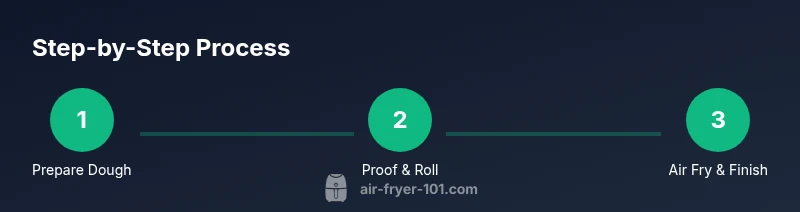
- 1
Gather ingredients and equipment
Assemble all dry and wet ingredients, along with your air fryer, parchment, rolling pin, and a sharp knife or pastry cutter. Having everything organized before you start saves time and keeps dough handling gentle.
Tip: Have ingredients at room temperature where possible to promote even mixing. - 2
Make yeast mixture and combine with dry ingredients
Dissolve a pinch of sugar in warm milk and sprinkle in yeast. Let it foam 5–10 minutes, then whisk into the flour mixture with melted butter, eggs, and vanilla. Mix until a soft, slightly sticky dough forms.
Tip: Avoid hot milk; it kills the yeast and sabotages rise. - 3
Knead and first proof
Knead until smooth and elastic (5–7 minutes by hand, 3–4 in a mixer). Place in a lightly oiled bowl, cover, and proof until doubled (60–90 minutes).
Tip: If dough resists, add a teaspoon of water or milk and continue kneading. - 4
Deflate, rest, and roll
Gently deflate the dough, let rest briefly, then roll to 1/4 inch thickness on a floured surface. Cut into squares/rectangles and arrange on parchment.
Tip: Keep dough厚 compact but not dense; uniform thickness ensures even cooking. - 5
Preheat air fryer and cook
Preheat to 350–360°F (175–180°C). Place dough on parchment in a single layer and cook 6–8 minutes, flipping once halfway.
Tip: Do not overcrowd; air needs access to all sides for even browning. - 6
Finish and serve
Dust warm beignets with powdered sugar or cinnamon sugar. Serve immediately with a dip or sauce if desired.
Tip: Dusting while warm helps sugar adhere and prevents clumping.
Got Questions?
Can I make beignets in the air fryer without yeast?
Yeast contributes the signature light, airy texture. You can try a quick biscuit-style beignet by using baking powder as a leavener, but the texture will differ from a yeast-raised dough.
Yeast gives the classic puff; a baking powder version will be crisper, but not the same softness.
Do air fryer beignets taste the same as fried beignets?
They’re similar in flavor, with the major difference being the oil-free, lighter exterior. The beignet interior stays tender, and you’ll notice less greasiness overall.
They taste great, just a bit lighter and less oily than fried beignets.
What temperature should I set for air fryer beignets?
Set your air fryer to 350–360°F (175–180°C). If your model runs hot, start at 350°F and adjust as needed for even browning.
Aim for about 350 to 360 degrees to get that golden exterior.
How long do beignets take to cook in the air fryer?
Most batches finish in 6–8 minutes, flipping once halfway. If your device runs cool, extend by 1–2 minutes while watching closely.
Typically around six to eight minutes per batch.
Can I freeze the dough or baked beignets?
Dough can be frozen after the first rise; bake or reheat from frozen. Baked beignets may lose some puff but can be reheated in the air fryer.
Yes to both dough and baked beignets, with some texture changes.
What toppings work best with air fryer beignets?
Powdered sugar is classic. Cinnamon-sugar, chocolate drizzle, or a berry compote provide different flavor profiles that pair nicely with the pastry’s light crumb.
Classic is powdered sugar; you can get creative with sauces.
Watch Video
Quick Summary
- Beignet dough should be light, elastic, and well-proofed
- Air fryer beignets cook quickly at 350–360°F; avoid overcrowding
- Finish with a generous dusting of sugar for classic flavor
- Experiment with toppings to personalize the flavor profile