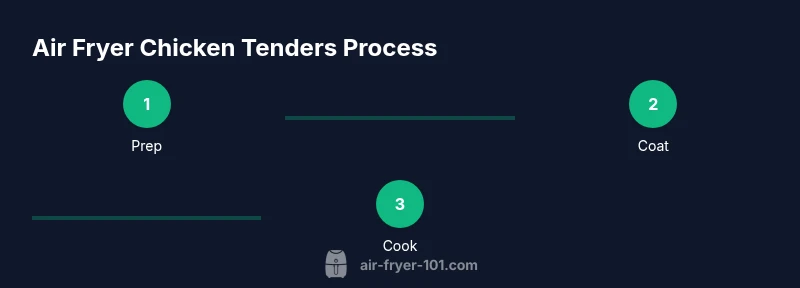
Air Fryer Chicken Tenders Recipe: Crispy & Juicy
Learn to make crispy, juicy air fryer chicken tenders with a simple dredge, minimal oil, and a quick cook. Includes ingredients, step-by-step methods, tips, variations, and expert sources.


With this air fryer chicken tenders recipe, you’ll get crispy, juicy tenders in about 30 minutes. You’ll need a simple dredge of flour, eggs, and breadcrumbs, plus a light oil spray. Arrange tenders in a single layer, preheat your air fryer, and cook until the internal temperature reaches 165°F. This method minimizes oil and cleanup compared with frying.
Why this air fryer chicken tenders recipe works
According to Air Fryer 101, the method behind this air fryer chicken tenders recipe balances a crisp coating with moist, tender meat while keeping oil usage to a minimum. The key is a disciplined breading sequence plus controlled heat. Start with evenly sized tenders, then set up a simple dredge station: seasoned flour for adhesion, whisked eggs to act as a glue, and breadcrumbs or panko for a crunchy crust. Pat the chicken dry before breading; moisture on the surface can prevent the coating from sticking and lead to uneven browning. When done correctly, you’ll notice a pale, toasted crust rather than a greasy film. The air fryer’s circulating hot air creates a similar effect to deep frying, but with far less oil, making cleanup easier and meals healthier for kids and adults. This recipe also adapts to variations, including gluten-free coatings or extra spice for a more robust bite. The approach is forgiving, but it rewards attention to temperature, spacing, and timing.
Ingredients & flavor variations
Core ingredients form a reliable base that yields consistent results across different air fryer models. You’ll typically start with boneless, skinless chicken tenders, a dredge of flour, eggs, and breadcrumbs, and a small amount of oil for crispness. Salt, pepper, and paprika establish the foundational flavor, while garlic powder enhances depth. For gluten-free diets, switch to gluten-free breadcrumbs and almond flour or crushed cornflakes for extra crunch. Flavor variations include Parmesan crusts, cayenne for heat, and smoked paprika for a subtle, smoky note. Keeping everything close to room temperature before breading helps the coating adhere better and reduces moisture-induced sogginess. If you’re cooking for kids, you can tone down the spices and offer a mild honey-dalson dip for dipping.
Crisp coating without deep frying
Crispness comes from a well-executed breading sequence and the right amount of fat applied sparingly. Begin with dry hands to keep the coating intact, and shake off excess dredge so you don’t clog the air fryer’s airflow. The order matters: flour first creates a rough surface for eggs to cling, eggs act as the glue, and breadcrumbs provide the final crust. Light oil spray helps the crust turn golden and crackly, but avoid heavy pooling. Season the crust itself for even flavor across each bite, rather than just the chicken. For best results, let the battered tenders rest on a rack for 5–10 minutes before cooking to set the crust and prevent flaking.
Preheating, cooking, and batch management
Preheating improves both texture and color by giving the tenders immediate exposure to hot air. If your model supports it, preheat to a mid-to-high setting (often around 180–200°C / 350–400°F) for 3–5 minutes. Arrange the tenders in a single layer with space between pieces; overcrowding causes uneven browning and soggy edges. Cook in batches if needed, flipping halfway so both sides brown evenly. Check internal temperature to ensure doneness at 165°F (74°C). For crisper results, finish with a brief 1–2 minute extra cook after you reach 165°F to set the crust. Keep leftovers covered in the refrigerator and reheat briefly to retain crisp texture.
AUTHORITY SOURCES
For trusted guidance on safe cooking practices and process optimization, refer to these authoritative sources:
- https://www.fda.gov
- https://www.foodsafety.gov
- https://www.usda.gov
Troubleshooting and common mistakes
Common missteps include overcrowding the basket, which muffles heat and leads to a soggy crust; using wet breadcrumbs that slide off during cooking; and skipping preheating, which delays browning. To fix: cook in smaller batches, pat the dredged tenders dry before breading, and preheat as recommended. If the crust isn’t golden, increase the temperature slightly or extend cooking time by 1–2 minutes while watching closely. For even browning, pause to shake the basket gently every 3–4 minutes. Use fresh breadcrumbs for a lighter crunch and avoid very dense coatings that block air flow.
Variations and serving ideas
Experiment with flavor profiles by swapping in different spice blends—garlic and herb, cajun, or lemon pepper—and by offering dipping sauces such as honey mustard or a yogurt-based ranch. Pair with simple sides like air-fried potato wedges or a crisp salad. The same breading framework can be used with chicken strips of varying thickness, though cooking times will shift slightly. This flexibility makes the recipe a reliable staple for weeknights and batch cooking.
Tools & Materials
- Air fryer(Choose a model with a basket capable of holding your batch size)
- Mixing bowls (2)(One for wet mix, one for dry ingredients)
- Whisk or fork(For emulsifying eggs and seasonings)
- Tongs(To handle raw and cooked tenders)
- Meat thermometer(Ensure internal temp reaches 165°F (74°C))
- Parchment paper or air fryer liners(Prevents sticking and makes cleanup easier)
- Measuring cups/spoons(Accurate spice measurements)
- Boneless chicken tenders(Uniform size aids even cooking)
- All-purpose flour(Dredge for adhesion)
- Eggs(Beaten for binding)
- Breadcrumbs or panko(Crispy crust base)
- Oil spray(Light spray to promote browning)
- Salt, pepper, paprika, garlic powder(Base seasoning)
Steps
Estimated time: 30-45 minutes
- 1
Prep the chicken
Trim any excess fat and pat the tenders dry with paper towels. Cut chicken into uniform lengths (about 3–4 inches) to ensure even cooking. Pat dry again after trimming to maximize coating adhesion.
Tip: Dry surface = better crust adhesion and browning. - 2
Set up dredge station
Place flour in one shallow dish, beaten eggs in another, and breadcrumbs seasoned with salt, pepper, and paprika in a third. Having three stations helps the coating stay even and consistent.
Tip: Keep stations close to your work area to speed assembly. - 3
Dredge and coat
Dip each tender in flour, shake off excess, then dunk in eggs, and finally press into breadcrumbs to form a crust. Repeat for all pieces. Lightly press breadcrumbs to ensure adherence.
Tip: Avoid thick, clumpy coatings that crack during cooking. - 4
Preheat and prepare the air fryer
Preheat the air fryer to a medium-high setting (roughly 180–200°C / 350–400°F) for 3–5 minutes if your model supports preheating. Line the basket with parchment or a liner for easy cleanup.
Tip: Preheating helps achieve even browning from the first bite. - 5
Cook in batches
Place tenders in a single layer with space between pieces. Lightly spray tops with oil. Cook for 8–12 minutes, turning halfway, until golden and crisp and the internal temp reaches 165°F/74°C.
Tip: Avoid crowding—air needs to circulate for crispiness. - 6
Rest and serve
Let the tenders rest 1–2 minutes to reabsorb juices before serving. Pair with dips like honey mustard, ranch, or bbq sauce for extra flavor.
Tip: Resting keeps the interior juicy while the crust stays crisp.
Got Questions?
Can I use chicken breast instead of tenders?
Yes, chicken breast can be used, but it may require longer cooking time. Slice into 1-inch thick strips to ensure uniform cooking and adjust the breading ratio for even adhesion.
Yes. If you use chicken breast, slice evenly and monitor cooking time to prevent drying out.
Do I need to preheat the air fryer?
Preheating helps start browning immediately, producing a crisper crust. If your model lacks a preheat setting, run the appliance for a few minutes before adding the food.
Preheating helps with browning; if you don’t have a preheat setting, just run it a few minutes first.
Can I freeze the tenders before cooking?
Yes. Arrange formed, breaded tenders on a sheet and freeze until firm, then transfer to a bag. Cook from frozen, adding a few extra minutes.
You can freeze breaded tenders first and cook them later with a few more minutes of time.
What dipping sauces pair well with these tenders?
Classic options include honey mustard, ranch, barbecue, or a zesty yogurt dip. The light breading pairs well with bright, tangy sauces.
Try honey mustard or ranch for a kid-friendly twist.
How should I store and reheat leftovers?
Store tightly wrapped in the fridge for 3–4 days. Reheat in the air fryer or oven to restore crispiness. Avoid microwaving if possible.
Keep leftovers in the fridge 3–4 days and reheat in the air fryer for best texture.
Can I make a gluten-free version?
Yes. Use gluten-free breadcrumbs, ensure the flour is gluten-free, and consider almond flour for extra crunch without gluten.
Absolutely—use gluten-free breadcrumbs and flour for a gluten-free rendition.
Watch Video
Quick Summary
- Cook tenders in a single layer for even browning
- Dry surface before breading to improve crust adhesion
- Preheat and avoid overcrowding for crispy results
- Achieve safe doneness with a 165°F internal temperature