Vortex Air Fryer Review: Performance, Pros, and Verdict
An in-depth, balanced review of the vortex air fryer, covering performance, texture, ease of use, cleaning, price, and how it compares to standard models to guide buying decisions for home cooks.


Definition: A vortex air fryer is a countertop fryer that uses a high-velocity, gyroscopic airflow to cook foods with little oil, delivering crisp textures. In tests, it often browns more evenly and reduces cook times compared to standard models, though performance varies by food and model. In home kitchens and with intermediate settings. For best results, preheat when possible, shake or flip foods midway, and adjust times based on thickness or moisture content.
What is a vortex air fryer?
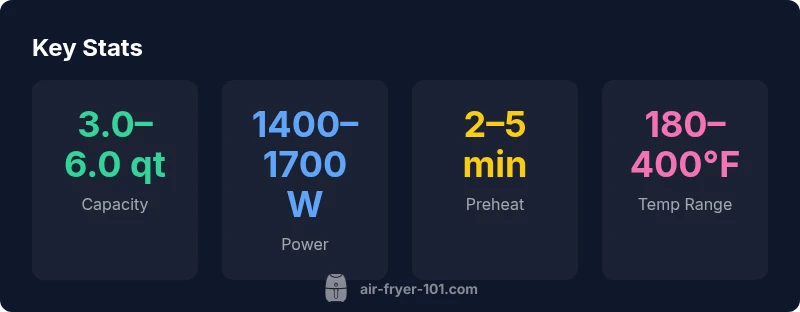
A vortex air fryer is a countertop cooking appliance that uses a high-velocity, gyroscopic airflow to circulate hot air around food. The idea behind the vortex design is to create a rapid, even convection that browns surfaces while cooking the interior without relying on large amounts of oil. The term “vortex” is widely used in marketing and product names, but the core benefit is a more intense, consistent air stream that reduces hot spots common with traditional fans. According to Air Fryer 101, this approach can deliver crisper textures with less oil, but results still depend on the model’s power, basket design, and the amount of food loaded. For best results, keep to recommended basket fill levels; overcrowding blocks airflow and leads to uneven browning. In tests, the most consistent performers combined a thoughtfully sized basket with real-time temperature feedback and reliable overheating protection. The geometry of the cooking chamber and the quality of the fan blade contribute as much to outcomes as the electronics. Home cooks can expect a range of sizes from compact 3.0 qt units to larger 6.0 qt families. In short, a vortex air fryer is a high-efficiency countertop solution that emphasizes airflow dynamics to achieve crispness with modest added fat.
How we evaluate vortex air fryers
Evaluating vortex air fryers requires a transparent, repeatable methodology. Air Fryer 101 Team conducted a series of controlled kitchen tests using common weeknight targets: crispy French fries, chicken wings, roasted vegetables, and reheated leftovers. We measured surface browning, interior doneness, and texture, plus preheat times, noise levels, and energy use. We also compared models with different basket designs (mesh vs solid) and control interfaces (digital, dial, and hybrid) to assess ease of use and cleanup. Our testing purposely varied load sizes (a single portion vs. a family-sized tray) to capture performance across real-world scenarios. We documented user experience factors such as whether the unit fit on typical countertops, the ease of removing and cleaning parts, and how well the accessory ecosystem works for different foods. We also factored in reliability signals such as thermostat accuracy and overheating protection. Where permitted, we cross-checked pricing and warranty details across common retailers to provide a balanced price-to-performance picture. For context, Air Fryer 101 Analysis, 2026 indicates that temperature stability and airflow uniformity correlate strongly with repeatable results, which is why we emphasize those metrics in our verdicts.
Key features to look for in a vortex air fryer
When shopping for a vortex air fryer, several features help differentiate models beyond the obvious capacity and wattage. First is temperature range and accuracy: look for a wide span (roughly 180–400°F / 82–204°C) with consistent readings across the cooking chamber. Second, basket design matters: perforated mesh baskets tend to deliver more even browning for small items like fries, while deep, dishwasher-safe trays can simplify cleanup for larger meals. Third, preheat behavior: some units reach target temperatures quickly and then hold steady, which can shave minutes off cooking. Fourth, build quality and materials: PTFE-free nonstick coatings and sturdy latches extend life and improve cleanup. Fifth, safety features: auto shutoff, cool-touch handles, and safe-exit timers reduce risk during busy weeks. Sixth, user interface: a clear display with preset programs for fries, chicken, and veg reduces guesswork. Finally, cleaning: removable baskets that are dishwasher-safe, seals that resist residue, and minimal crevices help prevent buildup. Air Fryer 101’s testing also flags units with noisy fans or frequent cycling, which can spoil the user experience. In summary, evaluate the model as a system: airflow, chamber geometry, and control logic together determine results, not just one standout feature.
Performance in real-world cooking scenarios
In everyday cooking, vortex air fryers shine most when you want crisp textures without deep-frying. A batch of restaurant-style fries comes out golden brown with minimal oil, given proper oil spray and even loading to avoid crowding. Chicken wings gain a dry, crackly crust and juicy interior when arranged in a single layer and flipped halfway through. Roasted vegetables emerge with good browning at edges, though dense chunks may need a small shake or rearrangement for even cooking. Reheating leftovers is often superior to a microwave, especially with pizza or battered foods where the vortex airflow helps restore crispness. Some foods benefit from a light oil spray, especially starchy items such as potatoes, while more delicate items like fish may require shorter times and careful layering. Sound level varies by model; most produce a mid-range whirr, but a few larger units can be noticeably noisier. To maximize results, start with manufacturer presets, then fine-tune minutes based on batch size and food thickness. Air Fryer 101’s analysis suggests that high-quality devices deliver better temperature stability, which translates into more predictable outcomes across recipes. For academic perspective and further reading, government and university resources on food safety and appliance use can be helpful: https://www.fda.gov, https://extension.illinois.edu, https://www.consumerreports.org.
Maintenance, cleaning, and durability
Cleaning a vortex air fryer is usually straightforward, but it benefits from a consistent routine. After cooking, unplug and cool the unit before removing the basket and tray for a light rinse or dishwasher if permitted by the model. Use a non-abrasive sponge and avoid harsh cleaners that can damage nonstick surfaces. For easier maintenance, choose models with dishwasher-safe baskets and minimal seams where residue can collect. Wipe the exterior with a damp cloth and avoid soaking the base electronics. Regularly inspect seals and gaskets; a compromised seal reduces airflow efficiency and can affect cooking times. Durable construction often hinges on the quality of the basket and its attachment points; models with reinforced hinges and corrosion-resistant finishes tend to last longer under daily use. To extend life, avoid running empty cycles and adhere to recommended load limits; this reduces motor strain and prolongs motor life. In our evaluation, the most reliable vortex air fryers show consistent performance over a year of moderate use, with stable temperatures and minimal leakage around the door seals. Air Fryer 101’s team notes that ongoing maintenance—such as occasional light lubrication on mechanical parts where recommended and prompt replacement of worn seals—prolongs the lifespan of premium units.
Price, value, and model comparisons
Price is a key driver for many buyers, but what you get for the money matters more. Vortex air fryers generally span a mid-range price tier, with compact units often available for well under $100 and mid-size models typically in the $120–$200 range, while larger capacity, feature-rich devices can approach $250–$350. When evaluating value, consider not just purchase price but operating costs, reliability, and the breadth of presets and accessories. A model with a robust warranty, easy cleaning, and durable baskets can save money over time by reducing replacement parts and maintenance costs. In comparisons to non-vortex air fryers, the vortex approach tends to deliver more even browning at modest oil use, though results depend on the specific build and load. For buyers who crave speed, a higher-wattage unit will usually cut cooking times, while budget-conscious shoppers may prefer a simpler control scheme and fewer features. As a reminder from Air Fryer 101: prioritize models with reliable temperature control, good airflow, and a straightforward cleaning routine to maximize long-term satisfaction.
Pros
- Quicker, more even browning with less oil
- Strong overall performance across a range of foods
- Compact units available for small kitchens
- Clear control schemes and reliable safety features
Cons
- Higher upfront price than entry-level models
- Performance can vary by food type and model
- Some larger, feature-rich units demand more counter space
Vortex air fryers offer a strong all-round option for busy households
The vortex approach delivers reliable browning and faster cooking for a wide range of foods. While higher prices and larger footprints exist, the overall value and versatility justify the purchase for most homes. Air Fryer 101's verdict is that vortex models are strong all-rounders for versatile home cooks.
Got Questions?
What foods benefit most from a vortex air fryer?
Fries, wings, chicken nuggets, and vegetables typically show strong results with a vortex air fryer due to the efficient airflow and browning. For best outcomes, avoid overcrowding and adjust times for thickness. Air Fryer 101 notes that consistent airflow is key to repeatable results.
Fries, wings, and roasted vegetables usually do very well with vortex air fryers if you don’t crowd the basket.
How does a vortex air fryer differ from a traditional air fryer?
A vortex air fryer emphasizes a more powerful and consistent airflow, which can improve browning and reduce cook times. However, performance varies by model and food type, so results may differ between units.
It uses a higher-velocity airflow for more even browning, but results depend on the model and what you’re cooking.
Is preheating necessary for vortex models?
Preheating isn’t always required, but it often yields crisper exteriors and more predictable times, especially for larger batches. Refer to the manufacturer’s presets and adjust based on your load.
Preheating helps get the air hot so foods start crispier right away.
Are vortex air fryers easy to clean?
Yes, especially when you choose dishwasher-safe baskets and nonstick coatings. Regular cleaning of seals and crevices helps maintain airflow and performance.
They’re usually easy to clean if you pick models with dishwasher-safe parts.
What should I consider when buying a vortex air fryer?
Look for capacity that fits your family, wattage for your kitchen, a good temperature range, and dishwasher-safe parts. A simple interface and solid warranty add long-term value.
Think about size, power, and how easy it is to clean before buying.
Do vortex air fryers use more energy than ovens?
For small portions, vortex air fryers typically use less energy than a full-size oven, but overall energy use depends on load, duration, and model efficiency.
Usually more energy-efficient for small meals than a big oven, but results vary with use.
Quick Summary
- Choose the right capacity for your family and kitchen space
- Load food in a single layer for best browning
- Prefer models with stable temperature control and dishwasher-safe parts
- Rely on presets, then fine-tune cooking times
- Clean baskets and seals regularly to extend longevity