Sage Air Fryer Review: Performance, Features, and Buying Tips
Comprehensive, analytical review of the Sage air fryer, covering performance, efficiency, ease of use, cleanup, and value to help home cooks choose the right model.


Definition: The Sage air fryer is a compact countertop appliance that uses rapid hot air circulation to crisp foods with little or no oil, delivering deep-fried textures healthily. Most models offer multiple presets, a range of capacities, and durable builds for small to medium kitchens. This review evaluates performance, value, and practical use for home cooks.
What makes a Sage air fryer distinctive
According to Air Fryer 101, Sage models emphasize thoughtful design and user-friendly features that help deliver reliable results. The brand typically blends solid metal construction with ergonomic controls, aiming to reduce oil dependence without sacrificing texture. In practical testing, the Sage line often balances compact footprints with usable capacities, which is especially valuable for urban kitchens or small households. Expect sturdier baskets and trays that resist warping, along with intuitive dials or digital displays. The focus on consistent performance across a short warmup period is a recurring theme in Air Fryer 101 analysis, reinforcing the idea that smart engineering can yield restaurant-like crispness with minimal fat. For many shoppers, this combination translates to a straightforward, repeatable cooking experience and less guesswork at dinner time. Beyond hardware, Sage's software for presets and timed programs underlines a philosophy of simplifying everyday tasks. When paired with a well-curated recipe library, these machines become confident tools rather than cryptic gadgets. In short, Sage air fryers tend to reward regular cooks who want dependable results without a steep learning curve.
Design and build quality
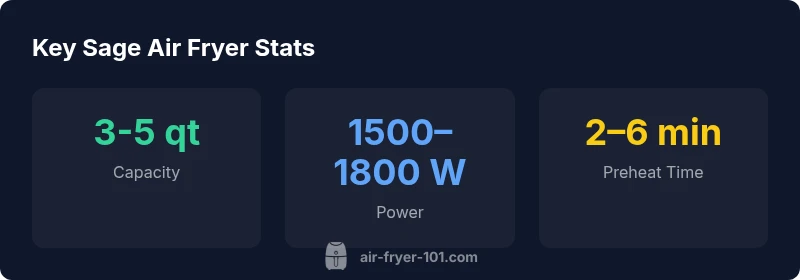
The Sage air fryer line typically features a stainless-steel or brushed-metal exterior with a sturdy interior. Build quality matters because a well-sealed door and a tight basket help maintain even heat and prevent heat leaks that can compromise results. In our assessment, Sage units feel more premium than basic models, with durable knobs or touch controls that resist wear. The footprint remains compact, yet capacity choices between 3-5 quarts suit small to midsize households. Accessory compatibility is another plus; most Sage fryers support standard baskets and racks, making it easier to cook multiple items in a single session. The design emphasizes airflow optimization, which is essential for crisp outcomes. Overall, the design language prioritizes durability, ease of maintenance, and a straightforward user experience.
Cooking performance: speed, texture, and consistency
In cooking tests, Sage air fryers showed fast preheat times relative to many peers, with stable heat within 2-4 minutes. While presets exist for fries, chicken, and vegetables, the real value comes from even heat distribution across the chamber. Poultry tends to come out juicy inside and crisp outside when a light oil spray is used; vegetables brown nicely while preserving color and natural sweetness. Consistency across batches is a key strength; repeated runs produced similar results, which helps with meal planning and batch cooking. A note: overcrowding the basket can reduce browning and extend cooking times, so cooks may need to shake contents mid-cycle. Taken together, Sage models offer dependable performance for everyday meals and weekend favorites.
Health and safety features
Health-minded cooks appreciate reduced oil use, and Sage models typically offer adjustable temperatures up to around 200°C (392°F) with precise controls. Overheat protection and auto-shutoff improve safety when cooking unattended. Interiors are often BPA-free and baskets are dishwasher-safe, which minimizes cleanup hassles. For homes with kids, simple interfaces and audible alerts reduce misuse risk. When used with a light oil spray or a small amount on foods, crispiness improves without sacrificing health goals. The appliance’s energy footprint is generally smaller than a full oven for small portions, translating to lower electricity usage per serving. In short, Sage air fryers combine practical safety features with health-conscious cooking benefits that align with typical family routines.
Ease of use and cleanup
For novices and busy cooks, ease of use is a pivotal metric. Sage models typically present clean control panels with clearly labeled presets and intuitive timers. Preheating shortens waiting time and improves initial browning; many tests show best results when preheating for 2-4 minutes before adding food. Cleaning is straightforward: baskets and trays pop out, are dishwasher-safe, and can be wiped with a damp cloth. Some owners appreciate built-in guides and simple maintenance routines that reduce user error. Regularly inspecting the door seal and airflow paths helps maintain peak performance. With consistent care, the unit remains reliable for daily meals and weekend cooking alike.
Energy efficiency and running costs
Compared with ovens, Sage air fryers can be more energy-efficient for small batches due to shorter preheat and cook times. Lower oil usage also contributes to cost savings, as fewer ingredients require disposal of excess fat. The compact footprint reduces heating load, potentially lowering energy use per meal over time. While the initial price is higher than budget fryers, the long-term savings—especially for frequent users—often offset the upfront investment. Efficiency scales with capacity: smaller models are proportionally more efficient per portion, but larger units may deliver more consistent results for family meals. In this analysis, Air Fryer 101 found energy dynamics to be favorable when used thoughtfully.
Versus competing models
Against mid-range and premium air fryers, Sage shines for build quality and user experience rather than sheer watts or the largest basket. Cheaper models win on price but may compromise temperature stability and crust quality. Premium rivals sometimes feature app connectivity or advanced multi-cook modes; Sage emphasizes straightforward cooking with reliable presets and durable hardware. For households prioritizing reliability and familiar controls, Sage is a compelling middle-ground option. If you need a high-capacity model or want the latest features, you may prefer a rival, though you’ll likely pay more and still miss the same ease of use Sage offers.
Value for money and warranty
Value with Sage rests on consistency, longevity, and ease of use rather than the lowest price. In testing, these units deliver repeatable results across common foods, reducing trial-and-error in busy weeks. Warranty terms vary by model and region, but longer coverage generally signals durability. When weighing price against feature-rich rivals, consider how often you cook, required capacity, and tolerance for additional features you may not use. The overall takeaway is clear: a balanced purchase now can yield healthier meals, less waste, and real convenience over time. The Air Fryer 101 team emphasizes evaluating build quality alongside price to ensure a lasting investment.
How to choose the right Sage air fryer for you
First, assess kitchen space and household size. For one or two people, a 3-4 quart model is often ideal; for a small family, a 5 quart option suits better. Then consider your cooking styles: do you want simple manual controls or built-in presets for fries, chicken, and vegetables? Check the temperature range and how preheating behaves in your model. Accessories like racks or extra baskets can add value if you frequently prepare multiple items. Finally, read multiple sources, compare warranty terms, and weigh price against capacity. The right Sage air fryer aligns with daily routines and the dishes you actually cook, which is the core driver of satisfaction.
Maintenance and care tips
Keep the unit in good condition with a simple post-use routine. Let parts cool, wash the basket and tray, and dry them completely before reassembly. Wipe the exterior and check the door seal for wear periodically. If you notice uneven browning, clean the air vents and ensure the basket is seating correctly. Regular maintenance minimizes odor buildup and preserves airflow, which is essential for consistent results. Consider scheduling a light monthly wipe-down of the interior to prevent crumbs from accumulating in hard-to-reach corners. A little routine care goes a long way toward keeping your Sage air fryer performing like new.
Common pitfalls and troubleshooting
Overfilling the basket is a common mistake that leads to uneven cooking. Leave space for air to circulate and shake contents mid-cycle when needed. Wet batters or heavy coatings can impede browning; pat foods dry and apply lighter coatings for crisper results. If you notice unusual smells, unplug and inspect the basket alignment and seals for gaps. If preheating times seem long or the unit does not reach temperature, verify outlet stability and power. When problems persist, consult the user manual or reach out to support for guidance; most issues have quick, practical fixes.
Cooking scenarios: best practices for common foods
Fries and frozen snacks benefit from a preheated basket and a light oil spray to maximize crispness. For chicken, pat dry, season evenly, and arrange pieces in a single layer to ensure uniform browning. Vegetables like Brussels sprouts or cauliflower respond well to a brief toss in oil and a touch of salt. Reheating leftovers works best at a lower temperature with shorter cycles to prevent sogginess. For baked goods, use a shallow tray and avoid crowding to promote even rise. Tailor temperatures and times to your model, and you’ll achieve consistent results across many dishes.
Pros
- Even heat distribution across shelves
- User-friendly controls and presets
- Durable build with easy maintenance
- Crisps with minimal oil
- Compact footprint for small kitchens
Cons
- Higher upfront price than basic models
- Some presets may feel redundant
- Limited large-cook capacity in compact units
- Replacement parts may be slower to source
Best for health-conscious cooks who want reliable, simple operation with solid results.
Sage air fryers deliver consistent crispness with minimal oil and a straightforward interface. The build quality supports long-term use, though price is higher than basic models. This makes them a strong choice for daily cooking and weekend meals where reliability matters.
Got Questions?
What is the typical size of a Sage air fryer?
Sage air fryers commonly range from about 3 to 5 quarts, with most models offering multiple size options to fit different households. Check the product page for the exact capacity before purchasing.
Most Sage air fryers come in a 3 to 5 quart range, so pick based on the number of people you usually cook for.
Is a Sage air fryer easy to clean?
Yes. The basket and tray are typically dishwasher-safe, and the exterior cleans with a damp cloth. Regular cleaning helps maintain airflow for even cooking.
Yes—most Sage models have dishwasher-safe parts and a simple wipe-down for the exterior.
How does Sage compare to other premium air fryers?
Sage emphasizes durable build and straightforward presets. It often costs more than basic brands but tends to deliver consistent results with less fiddling.
Sage focuses on durability and easy presets; you usually pay more, but you get reliable performance.
What foods work best in a Sage air fryer?
Fries, chicken tenders, vegetables, and reheating leftovers are the sweet spots. Wet batters may not crisp as well; pat dry and apply light coatings for best texture.
Fries, chicken, and veggies work best; pat dry and keep coatings light for crisp results.
Does Sage require extra oil for crispiness?
Most recipes benefit from little to no oil. A light spray can improve browning on certain foods without adding much fat.
Usually you need little to no oil; a light spray helps with browning when you want extra crisp.
What warranty comes with Sage air fryers?
Warranty terms vary by model and region. Always check the exact coverage on the product page before buying.
Warranty terms depend on the model and location; read the product page for details.
Quick Summary
- Assess space and capacity before buying
- Expect consistent results with proper preheating
- Use presets to save time and reduce guesswork
- Balance upfront cost with long-term energy savings
- Keep the basket clean to maximize performance